newsdesk@dailyround.news
Global Care Stories

Discover the latest international news, inspiring frontline stories, innovation, best practice and real experiences shaping health and social care across the globe.
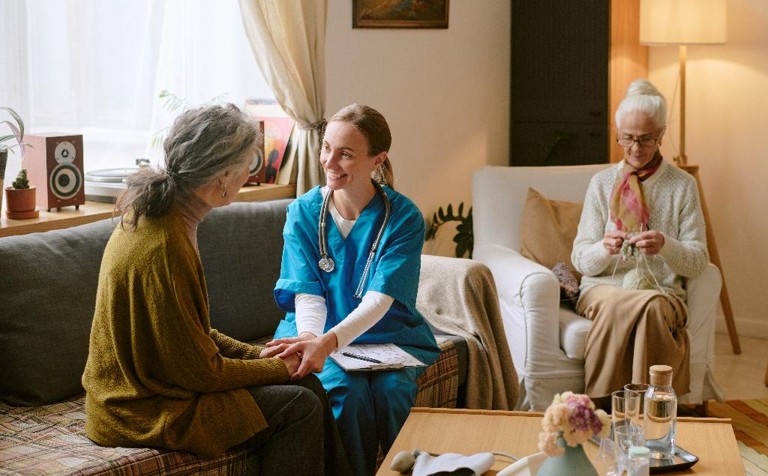
People are living longer than ever before. It is one of humanity’s greatest achievements.
Advances in medicine, public health, nutrition and technology mean that millions of people are now living well into their 80s, 90s and beyond. Around the world, life expectancy has increased dramatically over the past century, transforming how societies work, live and age.
But with this success comes a challenge. Are our health and social care systems prepared for what comes next?
As populations age across Europe, North America and Asia, governments, healthcare providers and communities are facing growing pressure to support increasing numbers of older adults with complex health and care needs.
Some experts have described this demographic shift as a “silver tsunami” – a wave of ageing that is already reshaping societies around the globe.
Population ageing is not limited to one country or region. Across Europe, the proportion of people aged 65 and over continues to rise as birth rates decline and life expectancy increases.
In North America, the large post-war generation is reaching later life, increasing demand for healthcare and support services.
Meanwhile, countries across Asia, including Japan, South Korea and China, are experiencing some of the most rapid demographic changes in history.
Japan already has one of the oldest populations in the world, with nearly one-third of its population aged 65 or older. Other nations are following a similar trajectory.
For the first time in history, many countries are seeing older adults outnumber children. The implications are profound.
Living longer is something to celebrate. However, longevity often brings increased demand for support.
More people are living with dementia, frailty, long-term health conditions and complex care needs. Many wish to remain independent and continue living in their own homes for as long as possible.
As a result, demand for home care, supported living and community-based services continues to increase.
Across many countries, policymakers are actively seeking ways to reduce reliance on hospitals and residential care by supporting people within their local communities.
For individuals and families, this often aligns with personal preferences. Most people would choose to remain in familiar surroundings, close to friends, family and community connections whenever possible.
While demand continues to grow, funding remains a significant concern. Healthcare and social care systems across the world are facing increasing financial pressure.
Rising demand, workforce shortages, inflation and growing complexity of care are all contributing to higher costs.
Governments face difficult decisions about how services should be funded and delivered in the future.
Many providers report that demand is increasing faster than available resources, creating pressure on both public and private services.
The challenge is not simply providing more care. It is providing sustainable, high-quality care in a way that remains affordable for future generations.
Faced with these challenges, countries are experimenting with innovative approaches.
In parts of Europe, integrated care models are bringing health and social care services together to improve coordination and reduce duplication.
Japan has developed community-based integrated care systems designed to support older adults within their local neighbourhoods.
Across North America, technology-enabled care is helping individuals remain independent through remote monitoring, telehealth services and digital support tools.
Intergenerational housing schemes are also gaining attention, creating opportunities for younger and older generations to live alongside and support one another.
Meanwhile, many providers are investing in preventative approaches that focus on wellbeing, social connection and early intervention rather than waiting for people to reach crisis point.
The common theme is clear. The future of care is increasingly centred on helping people live independently for longer.
When discussions about ageing populations take place, healthcare often dominates the conversation.
Yet social care is equally important.
A hospital can treat illness. Social care helps people live their lives. Whether it is support with daily activities, maintaining independence, building social connections or enabling people to remain in their own homes, social care plays a vital role in quality of life.
As populations continue to age, the importance of these services will only increase. The future sustainability of healthcare systems may depend as much on strong social care provision as it does on medical advances.
The ageing of the world’s population is not a future challenge. It is happening now.
Every country is at a different stage of the journey, but the direction of travel is remarkably similar. People are living longer, demand for support is increasing and expectations around quality of life remain high.
The question is not whether societies can afford to invest in social care. It may be whether they can afford not to. Because while ageing is often discussed as a problem to be solved, it is really a sign of progress. The challenge facing policymakers, providers and communities is ensuring that longer lives are not only possible, but meaningful, independent and fulfilling.
People are living longer than ever before, but are health and social care systems keeping pace with the needs of ageing populations? What changes do you believe are needed to ensure older people can live independently, safely and with dignity in later life? We’d love to hear your views. Email editorial@dailyround.news
Posted by:
Mehala
Editorial Assistant – The Daily Round



Busy day? We’ve got you covered. Get FREE daily news, practical insights, opportunities and wellbeing content, carefully curated for busy health and social care professionals. Just enter your details below to get The Daily Briefing delivered straight to your inbox.
Busy day? We’ve got you covered. Get FREE daily news, practical insights, opportunities and wellbeing content, carefully curated for busy health and social care professionals. Just enter your details below to get The Daily Briefing delivered straight to your inbox.