newsdesk@dailyround.news
Global Care Stories

Discover the latest international news, inspiring frontline stories, innovation, best practice and real experiences shaping health and social care across the globe.
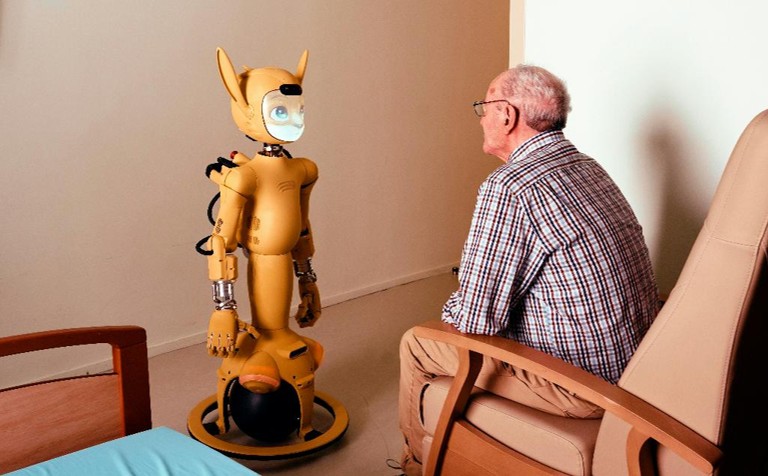
Imagine receiving a call from your mother’s care provider. She’s taking her medication on time. Her daily wellbeing is being monitored. Her care records are automatically updated. A companion robot reminds her to drink water, encourages exercise and even holds simple conversations when she feels lonely.
The question is no longer whether this technology exists. The question is whether we are comfortable using it.
Across the world, artificial intelligence, robotics and digital monitoring technologies are beginning to transform health and social care. Supporters believe these innovations could help people remain independent for longer and ease workforce pressures. Critics worry they could reduce human contact at a time when loneliness and social isolation are already growing concerns.
As the technology advances, one question sits at the centre of the debate: Would you trust a robot to support someone you love?
When many people think of care robots, they imagine scenes from science fiction. The reality is far more practical.
In Japan, one of the world’s oldest populations has driven significant investment in care technology. Robotic devices are already being used to support mobility, assist with lifting and transfers, monitor wellbeing and provide companionship to older adults.
Robotic companion devices such as Paro, a therapeutic robotic seal, have been used in care settings to help reduce anxiety, encourage engagement and provide comfort for people living with dementia.
For a country facing significant workforce shortages and a rapidly ageing population, technology is increasingly viewed as part of the solution.
While robots often attract attention, artificial intelligence may have a bigger impact on care services in the near future. AI-powered systems are already helping providers analyse care records, identify emerging risks and streamline care planning.
Tasks that once required hours of paperwork can increasingly be completed in minutes.
Supporters argue that reducing administrative burdens allows care professionals to spend more time supporting people and less time sitting behind screens.
For a workforce already under pressure, that could be transformative.
One of the most promising areas of innovation is medication support.
Digital medication monitoring systems can remind people when medication is due, alert carers when doses are missed and provide real-time information to family members and professionals.
For individuals living independently, these technologies can help improve safety while reducing the need for constant supervision.
Used appropriately, they can support independence rather than restrict it.
Advocates of care technology point to several advantages. Technology can help people remain in their own homes for longer.
It can support earlier identification of health concerns. It can improve communication between professionals, families and care providers. It can reduce paperwork and administrative tasks.
Most importantly, it can help overstretched care services focus their resources where they are needed most.
With healthcare systems across the world facing workforce shortages, many experts believe technology will become an increasingly important part of delivering sustainable care.
Despite these benefits, concerns remain. Loneliness is already recognised as a significant public health challenge. Research continues to demonstrate the importance of meaningful social interaction for physical health, mental wellbeing and quality of life.
Critics fear that an overreliance on technology could unintentionally reduce opportunities for human contact. A robot may remind someone to take medication. It cannot genuinely understand grief. An AI system may identify a potential risk. It cannot offer reassurance after a difficult diagnosis.
Technology can process information, but care is about relationships. For many families, that distinction matters.
Perhaps the debate is not about choosing between people and technology. Perhaps it is about deciding how technology can best support people.
The most successful care services of the future may not be those that replace human interaction with machines. They may be those that use technology to enhance human care.
If artificial intelligence can reduce paperwork, carers gain more time with the people they support. If digital monitoring can identify problems earlier, interventions can happen sooner.
If robotic assistance can help people remain independent for longer, quality of life may improve.
The goal should not be replacing carers. The goal should be helping them do what only humans can do.
As technology continues to evolve, more advanced robots are likely to enter healthcare environments. Companies around the world are investing billions into humanoid robotics and artificial intelligence, raising new possibilities for the future of support services.
But even the most advanced machine cannot replicate empathy, compassion or genuine human connection.
The future of care may involve more technology than ever before. Yet the heart of care will remain unchanged. Because while robots may help people live more independently, it is people who help them feel valued, understood and cared for.
What do you think? Would you feel comfortable if a robot helped support a loved one, or do you believe care should always remain a human responsibility? Could technology help carers spend more time caring, or does it risk reducing the personal connections that matter most? We’d love to hear your views. Email editorial@dailyround.news and tell us where you stand on one of the biggest debates facing the future of health and social care.
Posted by:
Mehala
Editorial Assistant – The Daily Round
Sign up to receive daily insights, sector news, and opportunities. Tell us a little about yourself below so we can personalise what you receive.
Sign up to receive daily insights, sector news, and opportunities. Tell us a little about yourself below so we can personalise what you receive.