newsdesk@dailyround.news
Global Care Stories

Discover the latest international news and developments affecting health and social care worldwide. From rising measles cases in the US to major global events, including the death of the world’s youngest reigning monarch at 34, explore the stories shaping communities and making headlines around the world.
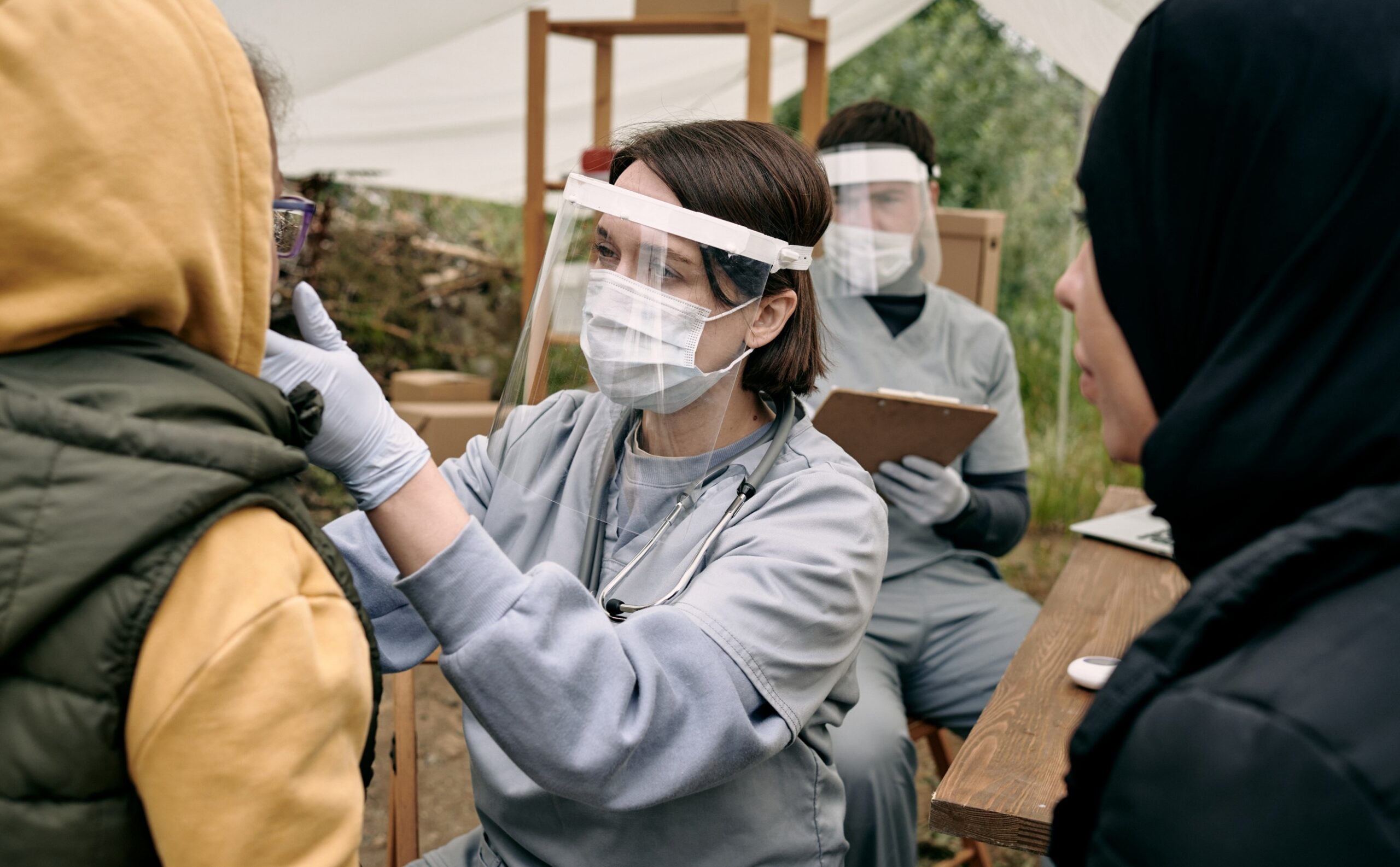
War does not affect everyone’s health in the same way. For women and girls, the destruction or destabilisation of a healthcare system can remove access to services that cannot simply be postponed until a conflict is over, including maternity care, contraception, menstrual healthcare and treatment following sexual and gender-based violence.
A new analysis published in The BMJ examines how conflict and political instability affect women’s health, drawing on experiences from countries and territories including Afghanistan and Gaza to argue that protecting women’s healthcare must be treated as an essential part of humanitarian response rather than an additional service to be restored later.
The problem extends considerably beyond the immediate injuries caused by conflict. Hospitals can be damaged or become inaccessible, healthcare workers may be displaced, medical supplies can become scarce and transport networks may break down. At the same time, families can lose their incomes, communities can be displaced and existing inequalities affecting women’s ability to access healthcare can become substantially worse.
Pregnancy makes those consequences particularly stark. Babies continue to be born during wars and political crises, while complications including haemorrhage, infection, pre-eclampsia and obstructed labour continue to require timely medical treatment. When maternity services become inaccessible, a complication that might normally be manageable can become life-threatening.
Afghanistan demonstrates how political decisions can compound the effects of an already fragile healthcare system. Restrictions imposed on women and girls have affected education, employment and freedom of movement, while the exclusion of women from medical education threatens the future supply of female healthcare professionals.
That has particular consequences in a country where cultural and social factors can make it difficult or unacceptable for some women to receive intimate or reproductive healthcare from male professionals. Removing women from the healthcare workforce can therefore simultaneously prevent women from becoming doctors, nurses and midwives while making it more difficult for female patients to access care.
Recent modelling illustrates the potential scale of the problem. Researchers examining the effects of restrictions on women’s nursing and midwifery education projected that use of maternal and reproductive health services could eventually fall to between 50% and 55% of current levels even under their more favourable scenarios. Under the most severe scenarios modelled, utilisation could fall to between 33% and 35%.
The researchers estimated that the resulting reduction in access could increase Afghanistan’s maternal mortality ratio by between 29% and 41%, depending on how quickly the existing female workforce declines and the extent to which male healthcare workers could replace female professionals. The researchers stressed that these figures are scenario-based projections rather than predictions of what will definitely happen, but warned that restrictions on women’s medical education threaten to reverse previous improvements in maternal and newborn survival.
Research conducted since the Taliban returned to power has already identified significant pressures on maternal healthcare. Healthcare professionals have reported shortages of female staff, medicines and funding alongside poverty and restrictions affecting women’s ability to seek treatment. Afghanistan had made substantial progress in reducing maternal and neonatal mortality during the two decades before 2021, making the possibility of those gains being reversed particularly concerning.
In Gaza, the pressures on women’s health have emerged through a different set of circumstances but again demonstrate how quickly essential healthcare can deteriorate during prolonged conflict.
Research involving more than 1,000 young people in Gaza, alongside in-depth interviews with girls, young women and healthcare professionals, found substantial difficulties accessing clean water, sanitation, menstrual products and sexual and reproductive healthcare. Displacement and poverty further affected women’s ability to meet basic health needs, while disruption to maternity services created additional risks for pregnant women and babies.
Menstrual health can easily disappear from discussions about healthcare during war, yet it provides one of the clearest examples of how displacement affects women differently. Menstruation does not stop because someone has been forced from their home, but access to sanitary products, clean water, toilets, washing facilities and somewhere private to change can disappear almost immediately.
Research involving women displaced in Gaza has documented shortages of menstrual products, limited access to water and sanitation and a severe lack of privacy. Those conditions can affect physical health while also creating considerable psychological distress and undermining women’s dignity.
Sexual and reproductive healthcare faces similar problems. Access to contraception may be interrupted, antenatal appointments missed and routine screening suspended, while women who experience sexual or gender-based violence may struggle to reach medical care, emergency contraception, infection prevention or psychological support.
The consequences can persist long after the immediate emergency. A woman who cannot obtain appropriate care during pregnancy may experience complications affecting her future health, while interrupted contraception, untreated infections, malnutrition and prolonged psychological trauma can continue to affect individuals and families after fighting has stopped.
Conflict can also magnify inequalities that existed beforehand. Women living in poverty, adolescents, people with disabilities, displaced women and those living in rural areas may already have faced barriers to healthcare before a crisis began. When services become scarce, those with the least ability to travel, pay or advocate for themselves can be among the first to lose access.
Healthcare workers themselves are another part of the equation. Female doctors, nurses, midwives and community health workers can be displaced or killed during conflict, prevented from working or forced to care for patients without adequate equipment, medicines or safe facilities. Losing those professionals does not only affect today’s patients; it can weaken a country’s healthcare workforce for years.
Protecting women’s health during conflict therefore requires more than keeping emergency departments functioning. Maternity care, contraception, menstrual health supplies, sexual health services and support following gender-based violence all need to be regarded as essential healthcare within humanitarian planning.
There is also no single solution that can simply be transferred between countries. The barriers facing a pregnant woman in Afghanistan may be very different from those facing a displaced woman in Gaza. Cultural expectations, restrictions on women’s movement, the availability of female healthcare professionals, the condition of health infrastructure and the nature of the conflict all influence what support is possible and what women need.
What these situations have in common is that women’s healthcare cannot wait for stability to return. Pregnancies continue, babies are delivered, periods happen and medical emergencies occur regardless of whether hospitals are functioning normally or whether a country is at peace.
Protecting women during conflict therefore means recognising that sexual, reproductive and maternal healthcare is not secondary to emergency medicine. It is emergency medicine for the millions of women and girls whose health needs continue even when almost everything around them has been disrupted.
Posted by:
Mehala
Editorial Assistant – The Daily Round

Busy day? We’ve got you covered. Get FREE daily news, practical insights, opportunities and wellbeing content, carefully curated for busy health and social care professionals. Just enter your details below to get The Daily Briefing delivered straight to your inbox.
Busy day? We’ve got you covered. Get FREE daily news, practical insights, opportunities and wellbeing content, carefully curated for busy health and social care professionals. Just enter your details below to get The Daily Briefing delivered straight to your inbox.