newsdesk@dailyround.news

Global Care Stories

Discover the latest international news and developments affecting health and social care worldwide. From rising measles cases in the US to major global events, including the death of the world’s youngest reigning monarch at 34, explore the stories shaping communities and making headlines around the world.

Health officials in Florida are monitoring a rise in locally acquired dengue fever after dozens of people contracted the mosquito-borne virus without travelling outside the United States.
Dengue, sometimes known as “breakbone fever” because of the severe muscle and joint pain it can cause, is much more commonly associated with tropical and subtropical countries. Most cases diagnosed in the United States are linked to international travel, but Florida has increasingly recorded infections transmitted by mosquitoes within the state.
The latest reports indicate that locally acquired infections have been identified across several Florida counties during 2026, with particular concern around the Tampa Bay area. Hillsborough and Pinellas counties have both been placed under mosquito-borne illness alerts, while locally acquired infections have also been identified elsewhere in the state.
Hillsborough County has experienced a notable cluster of infections this summer. Florida’s surveillance programme reported 15 locally acquired cases in the county by mid-August, while five groups of Aedes aegypti mosquitoes collected in Hillsborough also tested positive for dengue virus.
Pinellas County has also recorded locally acquired infections after going more than 15 years without a case of dengue being contracted within the county. The Florida Department of Health initially announced two cases on 11 August, before state surveillance subsequently recorded a third.
A locally acquired infection means the person was infected by a mosquito in Florida rather than contracting dengue while travelling overseas. This can happen when a mosquito bites somebody who has dengue after they return from an affected country. The infected mosquito can then transmit the virus when it bites another person locally.
Dengue does not normally spread directly from one person to another. It is predominantly transmitted through the bite of infected Aedes mosquitoes, particularly Aedes aegypti, which is established in Florida and is also capable of transmitting viruses including Zika.
Unlike some mosquitoes which are most active around dawn and dusk, Aedes aegypti mosquitoes commonly bite during the daytime. They can also breed in very small amounts of standing water around homes, including water collected in buckets, plant pots, children’s toys, bird baths, gutters and other containers.
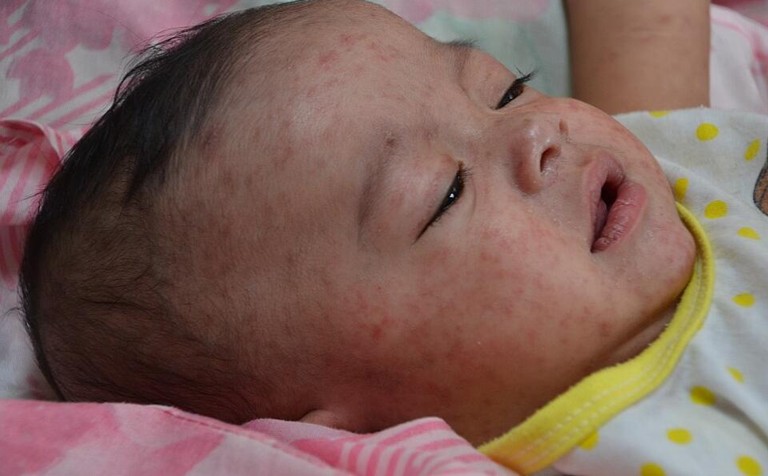
Dengue infections do not always cause illness. Many people experience no symptoms or only mild disease, but those who do become unwell can develop a high fever, severe headache, pain behind the eyes, nausea, vomiting, rash and intense muscle, bone and joint pain.
It is the severity of this body pain that gave dengue its nickname “breakbone fever”, although the infection does not actually cause bones to break.
Most people recover, but a small proportion can develop severe dengue. Warning signs can include severe abdominal pain, persistent vomiting, bleeding from the nose or gums, blood in vomit or stools and extreme tiredness or restlessness. Severe cases can become life-threatening and require urgent medical treatment.
The increase in local transmission does not mean dengue has become endemic across Florida. Health officials continue to record considerably more travel-associated infections than locally acquired cases, and the current numbers remain relatively small compared with outbreaks experienced in some tropical countries.
However, the appearance of locally acquired cases is significant because it demonstrates that infected mosquitoes are capable of sustaining pockets of transmission within Florida communities.
Recent heavy rainfall has also created additional breeding grounds for mosquitoes across parts of the Tampa Bay region. Local mosquito control teams have responded with increased surveillance and treatments including truck fogging, aerial larviciding and inspections for potential breeding sites.
Officials are encouraging residents to use insect repellent, wear clothing that covers exposed skin where practical and regularly empty containers containing standing water around homes and gardens.
Florida is particularly vulnerable to dengue because of its warm climate, established Aedes mosquito population and large numbers of people travelling between the state and parts of the Caribbean, Central America and South America where dengue circulates more widely.
Dengue has also become an increasing global public health concern. Changing temperatures, urbanisation, international travel and the expanding geographical range of mosquitoes capable of carrying the virus have contributed to concerns that transmission could become more common in areas where dengue has historically been unusual.
For Florida, the current numbers do not represent a statewide dengue epidemic, but the emergence of locally acquired infections in areas with little recent history of transmission has put public health officials on alert.
With Florida’s mosquito season continuing through the warmer months, health authorities are urging residents not to panic but to take simple precautions against bites and remove standing water around their homes to reduce opportunities for mosquitoes to breed.
Posted by:
Mehala
Editorial Assistant – The Daily Round


Busy day? We’ve got you covered. Get FREE daily news, practical insights, opportunities and wellbeing content, carefully curated for busy health and social care professionals. Just enter your details below to get The Daily Briefing delivered straight to your inbox.
Busy day? We’ve got you covered. Get FREE daily news, practical insights, opportunities and wellbeing content, carefully curated for busy health and social care professionals. Just enter your details below to get The Daily Briefing delivered straight to your inbox.