

Leadership in Practice

Book recommendations, reviews and key takeaways to inspire leadership, personal growth, business success and professional development across the care sector. Discover titles such as Atomic Habits by James Clear, which examines how small changes can lead to lasting improvements, and Surrounded by Idiots by Thomas Erikson, which looks at different communication styles and how to better understand the people around you.
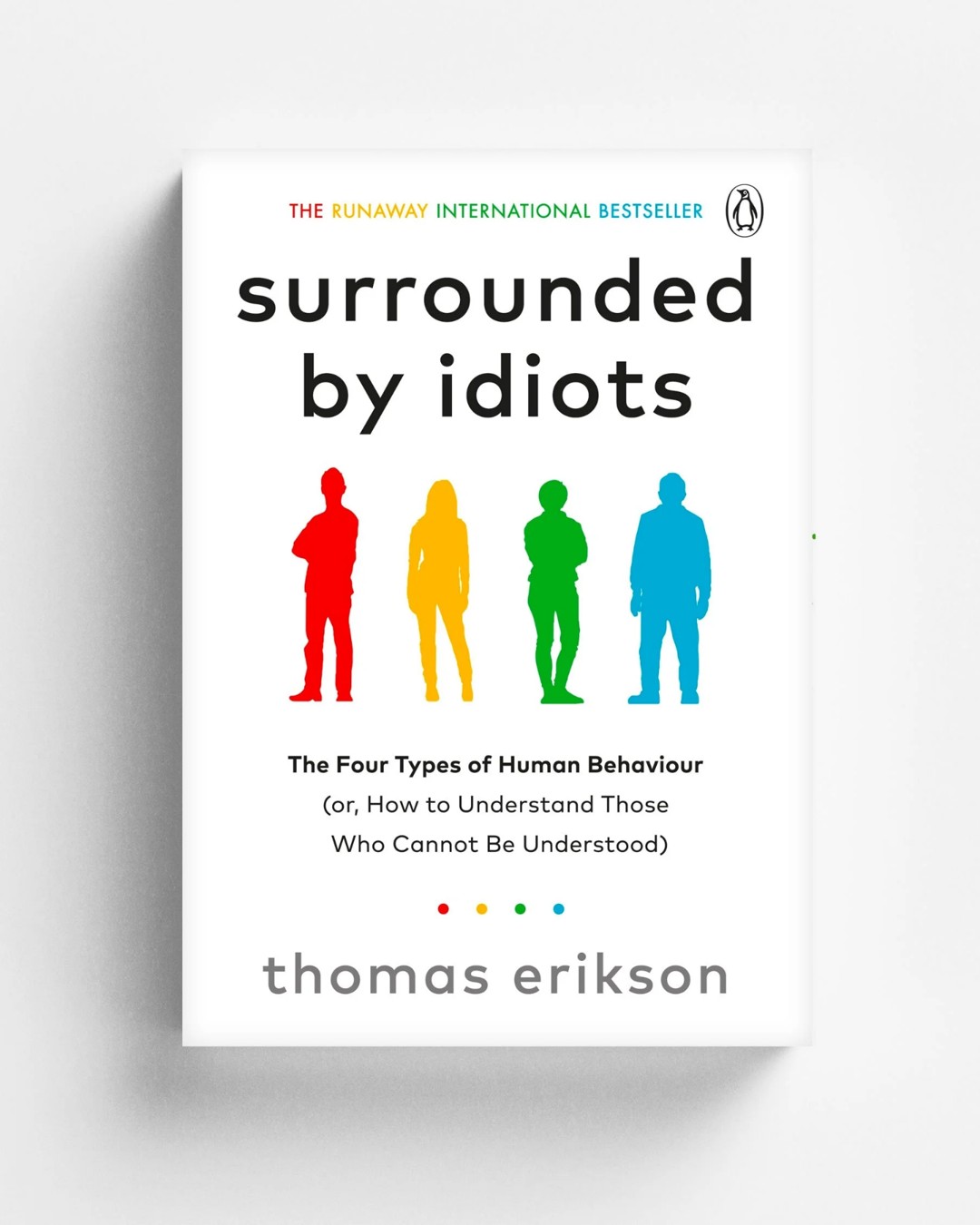


I can’t actually take the credit for choosing this book. Max, my son, picked it up from the bookshelf, looked at the title and told me I should buy it because he thought it was funny. Cheeky as he is.
Admittedly, Surrounded by Idiots is a pretty difficult title to walk past without at least wondering what it’s about. But once I started reading it, I actually found it quite good.
Thomas Erikson’s book is essentially about something every leader has probably experienced: why is it that you can communicate brilliantly with one person, yet another person seems to completely misunderstand everything you say?
His answer is to group different behavioural and communication styles into four colours: Red, Yellow, Green and Blue.
Very broadly, the model looks at people who are more dominant and decisive, those who are outgoing and enthusiastic, those who are calmer and more relationship-focused, and those who tend to be analytical and detail-oriented.
Now, I wouldn’t read this book and start diagnosing your entire workforce by colour. Human beings are obviously considerably more complicated than four boxes, and the model should be treated as a simple communication tool rather than established personality science. But I don’t think you have to accept every element of the model to get something useful from the book.
Because the bigger message is a good one – People don’t necessarily communicate in the same way you do.
This was the part that interested me. When you’re leading people, it’s very easy to communicate with them in the way that you like to be communicated with.
If you like quick decisions and straight answers, you might become frustrated with someone who wants time to consider all the details. If you’re naturally enthusiastic and love talking ideas through, someone quieter might appear disengaged when they’re actually just processing what you’ve said. If you want lots of information before making a decision, someone who prefers to get straight to the point might find your communication overwhelming.
Neither person is necessarily an idiot. They are just different, and that, despite the title, is probably one of the most useful messages in the book.
Good leadership isn’t only about being able to communicate clearly. It’s about recognising whether the person on the receiving end actually needs you to communicate differently.
That matters enormously when you’re managing a diverse team. The same email, feedback or instruction can land completely differently with two people. One member of your team might appreciate direct feedback. Another might need more context and reassurance. Someone else may want you to skip the conversation entirely and just tell them exactly what needs doing.
Understanding that can make us better managers. It can also make work considerably less frustrating. Understanding the cost of a toxic team member can also help leaders recognise how difficult behaviours can affect communication, relationships and the wider team culture.
I do think this book is best read with a little perspective. The four-colour framework is deliberately simple, and I wouldn’t use it as a scientific assessment of someone’s personality or make serious management decisions based on which colour you think somebody is. People are far too complicated for that.
What I would take from it is the encouragement to become more observant. How does this person like to receive information? Do they need detail or brevity? Do they think aloud or need time before responding? What motivates them? How does my own communication style affect the people around me? Those are useful questions for any leader to ask. And if a slightly cheekily titled book makes you think about them, then I’d say it has done its job.
Surrounded by Idiots is easy to read, entertaining and surprisingly useful when you approach it for what it is: a simple way of thinking about different communication styles rather than a definitive guide to human personality.
I certainly wouldn’t start walking around the office deciding everyone is Red, Yellow, Green or Blue. Although you may find yourself doing it in your head for a few days after you’ve finished it.
For me, the real takeaway was much simpler: if someone isn’t responding to the way you’re communicating, perhaps they’re not the idiot. Perhaps you just need to change the way you’re communicating.
And considering Max made me buy it because he thought the title was funny, I got considerably more out of it than I expected.
Daily Round Rating: ★★★★☆ – 4 out of 5 stars.
For more leadership and wellbeing book recommendations, explore the latest titles selected to support personal and professional growth. For more leadership books, ideas and practical resources, explore the Leadership Library from The Daily Round.
Jill NeweyEditor-in-Chief
Posted by:
M Ramalani
Editorial Assistant – The Daily Round
Busy day? We’ve got you covered. Get FREE daily news, practical insights, opportunities and wellbeing content, carefully curated for busy health and social care professionals. Just enter your details below to get The Daily Briefing delivered straight to your inbox.
 newsdesk@dailyround.news