

Wellbeing for Leaders

Practical advice, strategies, and insights to help leaders across the care sector attract, recruit, retain, and develop exceptional teams.




Every workplace has conversations between colleagues. Sharing experiences, offering support and catching up socially are all part of healthy working relationships.
Gossip, however, is different.
When conversations involve speculation, rumours or negative discussions about colleagues who are not present, they can quickly damage trust, affect morale and create an unhealthy working environment.
In health and social care, where teamwork, communication and professionalism are essential, reducing workplace gossip is not simply about improving culture—it can also support better care for the people who rely on your service.
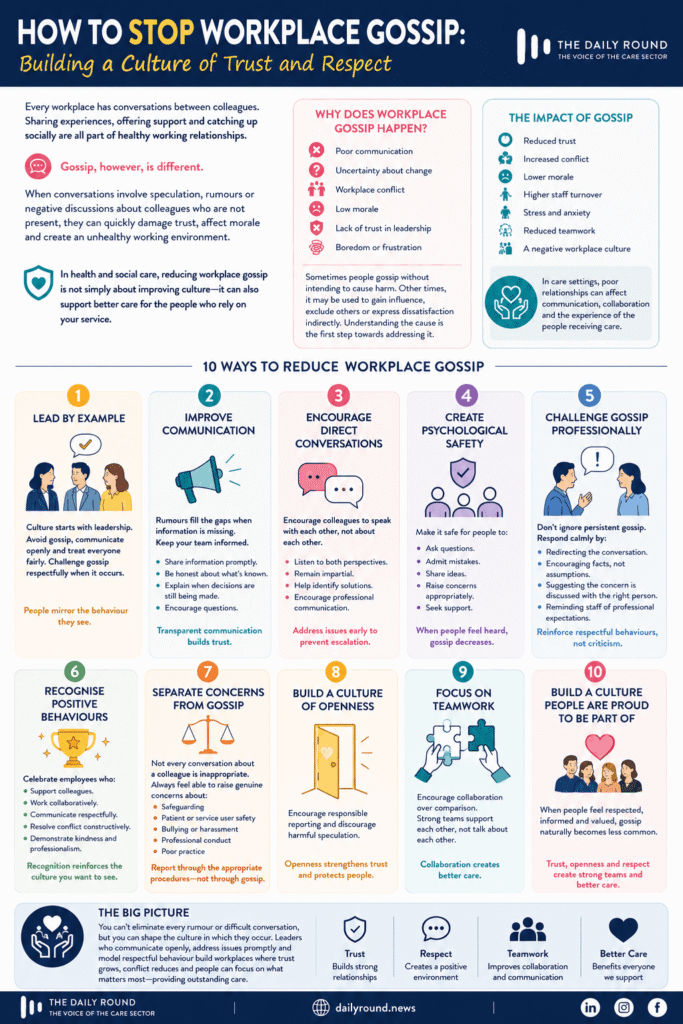
Gossip often develops when there is:
Sometimes people gossip without intending to cause harm. Other times, it may be used to gain influence, exclude others or express dissatisfaction indirectly.
Understanding the cause is the first step towards addressing it.
Persistent workplace gossip can lead to:
In care settings, poor relationships between colleagues can also affect communication, collaboration and ultimately the experience of the people receiving care.
Culture starts with leadership. Managers who avoid gossip, communicate openly and treat everyone fairly set the standard for the rest of the team. Leaders should avoid discussing colleagues inappropriately and challenge gossip respectfully when it occurs.
Employees are more likely to mirror the behaviours they see from those around them.
Rumours often fill the gaps when information is missing. Regular updates about organisational changes, staffing, policies and decisions help reduce uncertainty and prevent unnecessary speculation.
Where possible:
Transparent communication builds trust.
If two colleagues have a disagreement, encourage them to speak with each other rather than discussing the issue with everyone else.
Managers can support respectful conversations by:
Addressing issues early often prevents them from escalating.
Employees should feel able to raise concerns without fear of criticism or embarrassment.
A psychologically safe workplace encourages people to:
When people feel heard, they are often less likely to express frustrations through gossip.
Ignoring persistent gossip can allow it to become part of the workplace culture. If gossip occurs, managers should respond calmly by:
The aim is not to criticise individuals, but to reinforce respectful behaviours.
Culture grows when positive behaviours are noticed. Celebrate employees who:
Recognition helps reinforce the behaviours you want to see across the team.
Not every conversation about a colleague is inappropriate. Employees must always feel able to raise genuine concerns about:
These issues should be reported through the appropriate organisational procedures rather than dismissed as gossip. Creating a culture of openness means encouraging responsible reporting while discouraging harmful speculation.
The most effective way to reduce workplace gossip is to create an environment where people feel respected, informed and valued.
When communication is open, leaders are approachable and colleagues trust one another, gossip naturally becomes less common. Teams that focus on collaboration rather than rumours are more resilient, more engaged and better able to deliver safe, compassionate care.
You cannot eliminate every rumour or difficult conversation, but you can shape the culture in which they occur. Leaders who communicate openly, address issues promptly and model respectful behaviour create workplaces where trust grows, conflict reduces and people feel safe to focus on what matters most—providing outstanding care.
Join organisations across health and social care that are investing in happier, healthier workplaces with the Daily Round Wellbeing Employer programme.
Download our Employer Wellbeing Brochure to discover what’s included, or become a Daily Round Wellbeing Employer today.
Posted by:
M Ramalani
Editorial Assistant – The Daily Round
Busy day? We’ve got you covered. Get FREE daily news, practical insights, opportunities and wellbeing content, carefully curated for busy health and social care professionals. Just enter your details below to get The Daily Briefing delivered straight to your inbox.
 newsdesk@dailyround.news