

Women's Health

Practical advice, tools, and resources to support men’s physical and mental wellbeing, helping you stay healthy, resilient, and at your best.
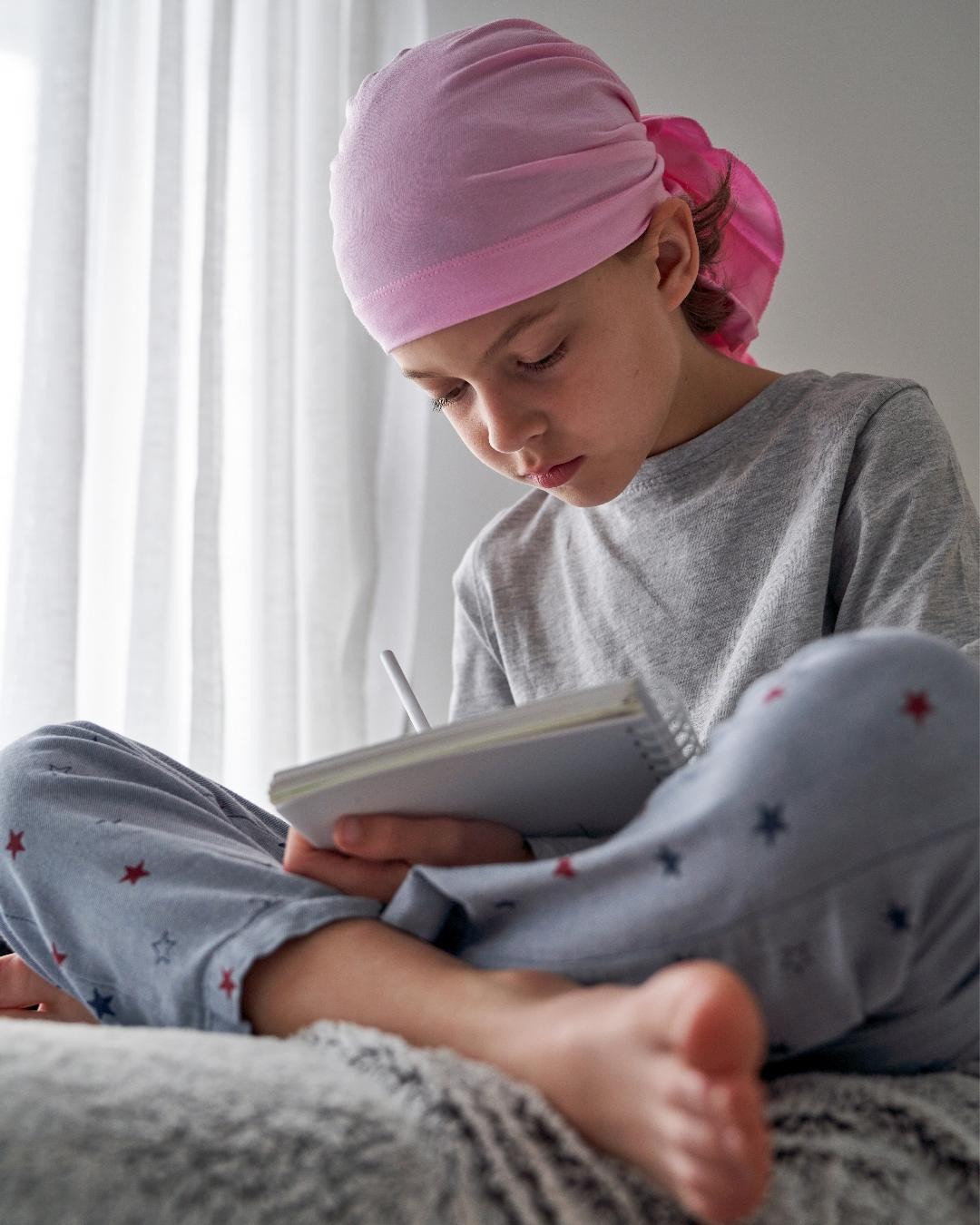



When you are a child receiving cancer treatment, becoming a parent belongs to a distant future. Your immediate world may revolve around hospital appointments, getting back to school and feeling well enough to see your friends. Conversations about fertility might happen around you, involve words you do not fully understand or leave memories that become less clear as you grow older.
Years later, those conversations can take on a different weight. A relationship becomes serious, friends start having children or someone casually asks whether you want a family. You realise you are unsure what your treatment meant for your fertility—and whether anything you remember being told still applies.
Research published in JAMA Network Open on 9 October has brought renewed attention to these questions. A study of 221 male childhood-cancer survivors examined how reproductive hormone measurements during puberty related to testicular function in adulthood. The findings suggest that these measurements may help inform fertility counselling, with different patterns depending on treatment exposure. The study does not provide a single test that can predict whether an individual will become a father.
The research also has important limits. Participants received childhood cancer treatment in Helsinki between 1964 and 2000, so the findings need to be understood in the context of those treatments and that group of survivors. Their value lies in improving understanding and conversations about risk, rather than offering certainty about everyone treated for cancer today.
For an adult living with unanswered questions, the practical starting point is your own treatment history. Cancer treatment can affect fertility, but the risk varies according to the medicines, doses, radiotherapy or surgery involved. Having had childhood cancer does not automatically mean you are infertile. Equally, feeling well now cannot establish whether your fertility was affected.
One distinction is particularly important: sperm production and testosterone production are related but different functions. The recent study found that the cells involved in sperm production could be more vulnerable to treatment than those producing testosterone. Going through puberty or having apparently normal testosterone levels therefore does not, by itself, answer questions about sperm production.
That uncertainty can be difficult to carry. You may remember being told that having children could be harder, without knowing whether that meant a small possibility or a substantial risk. You might have assumed the subject would be raised again when you were older. Somewhere between childhood services, adult life and other priorities, the conversation may never have happened.
There is no need to feel embarrassed about returning to it now. The Children & Young People’s Cancer Association, CCLG, advises survivors to discuss their individual circumstances with their long-term follow-up team. Many people do have children after childhood cancer treatment, but advice needs to reflect the treatment each person received.
If you no longer attend follow-up appointments, you can ask your GP how to reconnect with appropriate services. CCLG also advises that survivors who have not received follow-up care can contact the long-term follow-up clinic at the hospital where they were treated. A treatment summary, if available, can help clinicians understand which late effects may be relevant.
You can begin with a straightforward explanation: “I had cancer treatment as a child, and I don’t know how it affected my fertility.” You do not need to be actively trying for a baby to ask for information. Understanding your circumstances can matter when planning relationships and future decisions, or simply because an unanswered question has been worrying you.
Assessment may include a semen analysis to look at whether sperm are present, how many there are and their characteristics. Your clinician may also recommend hormone tests or other investigations, depending on your history. Macmillan explains that fertility testing after cancer treatment can help establish how treatment has affected sperm production. Results need professional interpretation and may lead to further testing or specialist advice.
A result can bring relief, further questions or news that is hard to absorb. It is reasonable to ask what it means, whether anything could change over time and what options might be relevant. You can also ask for another appointment if you need time before discussing decisions. Receiving information does not oblige you to decide immediately what your future should look like.
Talking to a partner can feel equally complicated. You may worry about disappointing them or introducing uncertainty into a relationship that otherwise feels secure. It can help to distinguish what you know from what you fear. “My treatment may have affected my fertility, but I haven’t had an assessment” gives a clearer picture than presenting an assumption as a settled fact.
There is room to say that the subject is upsetting, even if you are unsure whether you want children. Fertility can be tied to choice, identity and expectations about adulthood. Learning that a choice may have been affected by treatment received years earlier can stir feelings that deserve attention in their own right.
You may also feel uncomfortable being distressed about a late effect when treatment saved your life. Gratitude and difficulty can exist together. Surviving cancer does not create an obligation to remain positive about every consequence, and asking for support does not diminish what treatment achieved.
Where fertility has been affected, the options depend on individual circumstances. Some people may be able to use sperm stored before treatment; others may discuss assisted reproduction or different routes to parenthood with a specialist. These conversations require personalised advice, including an honest explanation of uncertainty, eligibility and costs. Macmillan provides information about using stored sperm and fertility treatment after cancer.
It is also important not to assume that a possible fertility problem means pregnancy cannot happen. If you do not want to conceive, ask for contraception advice rather than relying on an old warning about treatment-related infertility. Fertility can be difficult to predict after cancer treatment.
For healthcare professionals supporting adult survivors, the subject deserves more than a passing question about whether someone is planning children. A person may need a clear explanation of their history, an opportunity to speak privately or help finding the right service. Revisiting the conversation at different stages of adulthood gives people room to ask questions when those questions become relevant to them.
If childhood cancer is part of your history and fertility remains unclear, you are allowed to reopen the conversation. Start with what you remember, explain what you want to understand and ask what assessment is appropriate now. You deserve information about your adult life that you can understand and use.
This article provides general health information and is not a substitute for individual medical advice. Speak to your GP, long-term follow-up team or a fertility specialist about your treatment history, testing and reproductive options.
Posted by:
M Ramalani
Editorial Assistant – The Daily Round
Busy day? We’ve got you covered. Get FREE daily news, practical insights, opportunities and wellbeing content, carefully curated for busy health and social care professionals. Just enter your details below to get The Daily Briefing delivered straight to your inbox.
 newsdesk@dailyround.news