newsdesk@dailyround.news
Global Care Stories

Discover the latest international news, inspiring frontline stories, innovation, best practice and real experiences shaping health and social care across the globe.
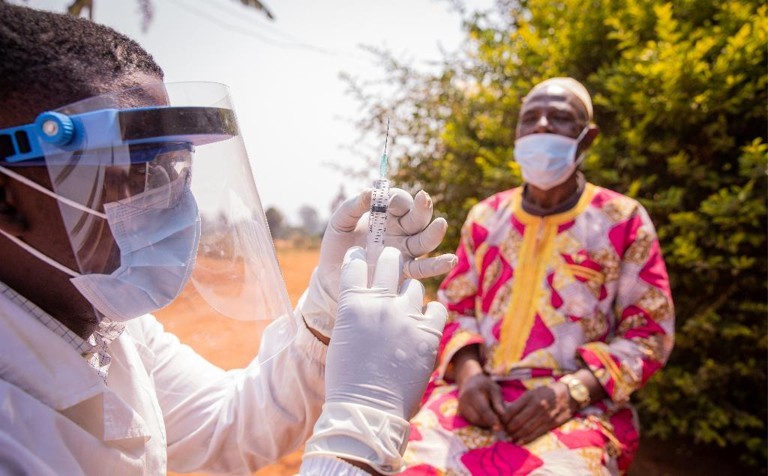
Uganda has been declared free of Ebola linked to its latest outbreak after completing 42 days without a new confirmed case, as scientists continue efforts to develop the world’s first vaccine specifically targeting the Bundibugyo strain of the virus.
The World Health Organization and Africa Centres for Disease Control and Prevention confirmed the end of the outbreak on 27 August. The 42-day period represents twice the maximum incubation period for Ebola and is the internationally established benchmark used to determine that transmission associated with an outbreak has ended.
Uganda recorded 20 confirmed cases during the outbreak, including 15 imported infections and five secondary cases among contacts and healthcare workers linked to people who had travelled from the neighbouring Democratic Republic of the Congo. Two deaths occurred among imported cases, while another probable case resulted in death. All confirmed cases were reported in Kampala and WHO said there had been no community transmission within Uganda.
The outbreak was caused by Bundibugyo virus, one of the viruses capable of causing Ebola disease. Unlike the better-known Zaire strain, there is currently no licensed vaccine specifically protecting against Bundibugyo Ebola. The existing WHO-prequalified Ervebo vaccine targets Ebola disease caused by the Zaire virus, and WHO does not recommend its use against Bundibugyo because there is insufficient evidence that it would provide protection.
The lack of an approved vaccine has prompted an accelerated international research effort. The University of Oxford launched the world’s first Phase I clinical trial of a Bundibugyo Ebola vaccine in July, testing its ChAdOx1 BDBV candidate in 50 healthy adults aged between 18 and 55. Researchers are initially assessing the vaccine’s safety, tolerability and the immune response it produces.
The candidate uses the ChAdOx1 viral vector platform, technology that was also used in the Oxford-AstraZeneca covid vaccine. It is one of several potential Bundibugyo vaccines being developed after more than $60 million in funding was announced to accelerate three candidates involving Oxford, the International AIDS Vaccine Initiative and Moderna.
However, some doctors and researchers have expressed reservations about how trials of experimental vaccines should be conducted during an active and rapidly evolving Ebola emergency. The urgency to develop protection against a deadly disease has to be balanced against the need for rigorous evidence about safety and effectiveness, particularly when research could ultimately involve communities directly affected by an outbreak.
The ethical and practical difficulties are considerable. Vaccine trials during Ebola outbreaks must be designed quickly enough to generate useful evidence while transmission is still occurring, but researchers also have to ensure that participants give properly informed consent and that the scientific design is robust enough to establish whether a vaccine genuinely works. Conducting research during an emergency can become even more complicated when communities are frightened, health systems are under pressure and the course of an outbreak is difficult to predict.
The Bundibugyo strain presents an additional challenge because outbreaks have historically been rare. Before the current emergency, the virus had only been detected during two previous outbreaks, meaning researchers have had fewer opportunities to study potential vaccines than they have with the Zaire strain of Ebola. A successful vaccine could therefore provide an important tool for responding to future outbreaks as well as the current crisis.
Uganda itself has experience of conducting Ebola vaccine research during outbreaks. Its research infrastructure and experience have made it an important location for studying vaccines against different Ebola viruses, and the Uganda Virus Research Institute announced earlier this year that discussions were underway to test candidate vaccines targeting Bundibugyo.
Although Uganda has now ended transmission associated with its outbreak, the regional threat has not disappeared. The outbreak in the Democratic Republic of the Congo has been considerably larger, and WHO classified the Bundibugyo Ebola emergency as a Public Health Emergency of International Concern in May because of the severity of the disease and the potential for international spread.
Uganda’s achievement demonstrates that established public health measures including surveillance, rapid identification of cases, isolation, contact tracing and infection prevention can stop transmission even when a strain-specific vaccine is unavailable. At the same time, the outbreak has exposed an important gap in the world’s defences against Ebola: vaccines exist for one major strain of the disease, but not for all of the viruses capable of causing it.
The development of a Bundibugyo vaccine could help close that gap, but the debate surrounding trials is a reminder that speed cannot be the only measure of success during a public health emergency. Researchers will need to demonstrate that any new vaccine is both safe and effective, while ensuring that the communities most affected by Ebola are properly protected throughout the research process.
Register with The Daily Round for the latest sector news, inspections & reports, wellbeing content, workforce insights, expert features and practical updates—delivered free to your inbox.
Posted by:
M Ramalani
Editorial Assistant – The Daily Round



Busy day? We’ve got you covered. Get FREE daily news, practical insights, opportunities and wellbeing content, carefully curated for busy health and social care professionals. Just enter your details below to get The Daily Briefing delivered straight to your inbox.
Busy day? We’ve got you covered. Get FREE daily news, practical insights, opportunities and wellbeing content, carefully curated for busy health and social care professionals. Just enter your details below to get The Daily Briefing delivered straight to your inbox.