
 newsdesk@dailyround.news
UK News

Stay up to date with the latest health and social care news from across the UK. From breaking stories and sector developments to the people, organisations and issues making the news.
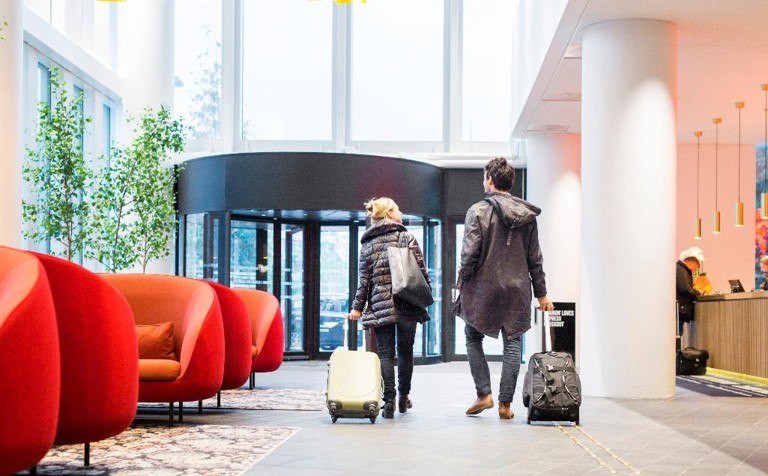
The number of asylum seekers being accommodated in UK hotels has fallen by 50% in the space of a year, according to newly published Home Office figures.
A total of 16,021 people were living in hotel accommodation at the end of June 2026, compared with 32,059 at the same point in 2025.
The latest figure is also 71% below the record high of 56,018 recorded in September 2023, when hotels were being used extensively to meet growing demand across the asylum system.
Hotels now accommodate 17% of people receiving asylum support, down from 30% one year earlier.
However, the fall has been accompanied by an increase in the use of other forms of accommodation. There were 73,068 asylum seekers living in non-hotel provision, including dispersal, initial and other contingency accommodation, at the end of June. This was 3% higher than a year earlier.
A further 4,204 people were receiving financial support without accommodation, representing a year-on-year increase of 31%.
Overall, 93,293 people were receiving asylum support at the end of June 2026. This was 12% lower than in June 2025 and 25% below the September 2023 peak of 123,758.
The Home Office said many of those receiving support were no longer waiting for an initial asylum decision but remained elsewhere in the system, including people awaiting the outcome of an appeal and unsuccessful applicants who could not yet leave the UK.
At the end of June, 40,168 people were awaiting an initial decision on an asylum claim.
The North East and North West had the highest numbers of supported asylum seekers relative to their populations, with 26 and 24 people respectively for every 10,000 residents.
Glasgow accommodated the largest number of supported asylum seekers of any UK local authority, at 3,938. It was followed by Birmingham with 2,136, Liverpool with 1,961, Coventry with 1,700 and Belfast with 1,540.
The government has pledged to end the use of asylum hotels before the end of the current Parliament in 2029. Former military sites are among the alternative accommodation being used, with 744 people housed at Wethersfield in Essex and 418 at Crowborough Training Camp in East Sussex at the end of June.
Critics have warned that closing hotels does not necessarily reduce the number of people requiring accommodation and may instead shift demand towards houses in multiple occupation, military sites and other forms of temporary housing.
Asylum applications fell by 21% to 85,891 during the year ending June 2026, although the total remained above levels recorded before the Covid-19 pandemic.
Home Office expenditure on the asylum system also declined by 8% to approximately £4.36 billion. Hotel accommodation has previously been estimated to cost several times more than other forms of asylum housing.
The latest figures follow sustained political and community pressure over the cost, location and suitability of hotels being used to accommodate asylum seekers.
Register with The Daily Round for the latest sector news, inspections & reports, wellbeing content, workforce insights, expert features and practical updates—delivered free to your inbox.
Posted by:
M Ramalani
Editorial Assistant – The Daily Round



Busy day? We’ve got you covered. Get FREE daily news, practical insights, opportunities and wellbeing content, carefully curated for busy health and social care professionals. Just enter your details below to get The Daily Briefing delivered straight to your inbox.
Busy day? We’ve got you covered. Get FREE daily news, practical insights, opportunities and wellbeing content, carefully curated for busy health and social care professionals. Just enter your details below to get The Daily Briefing delivered straight to your inbox.