
 newsdesk@dailyround.news
UK News

<p>Stay up to date with the latest health and social care news from across the UK. From breaking stories and sector developments to the people, organisations and issues making the news.</p>
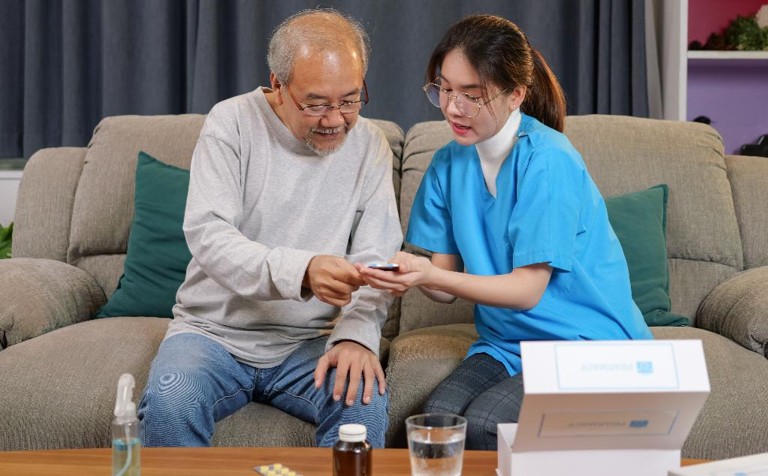
NHS hospitals across England are beginning to introduce a new home bladder cancer test that could improve early diagnosis and reduce the need for invasive procedures for some patients.
The test, known as UroFollow, allows patients to provide a urine sample from home, which is then analysed for genetic markers associated with bladder cancer. The approach has been developed to help monitor patients who have previously been treated for bladder cancer and are at risk of the disease returning.
The rollout follows promising trial results that suggest the test may be more accurate than some current monitoring methods and could help identify recurrence earlier.
Healthcare leaders hope the innovation will improve patient experience while helping NHS services manage growing demand.
Patients receive a testing kit at home and provide a urine sample, which is then sent to a laboratory for analysis.
The test looks for specific genetic changes that may indicate the presence or return of bladder cancer.
Traditionally, many bladder cancer patients require regular cystoscopies – a procedure in which a thin camera is inserted through the urethra to examine the bladder.
While cystoscopy remains an important diagnostic tool, it can be uncomfortable for patients and requires hospital appointments.
Researchers believe home testing could reduce the number of invasive procedures required for some patients while still maintaining high levels of clinical oversight.
Bladder cancer is one of the most common cancers in the UK, with around 10,000 people diagnosed each year.
Like many forms of cancer, outcomes are generally better when the disease is detected early.
Patients who have previously experienced bladder cancer often require years of follow-up monitoring because recurrence is relatively common.
Earlier identification of recurrence can allow treatment to begin sooner, potentially improving outcomes and reducing the need for more intensive interventions.
Healthcare experts have repeatedly highlighted the importance of improving cancer detection and reducing delays in diagnosis as part of wider NHS efforts to improve cancer survival rates.
For many patients, the introduction of home testing could mean:
The NHS hopes the approach will also help reduce pressure on diagnostic services while ensuring patients continue to receive appropriate monitoring and follow-up care.
However, experts stress that home testing is not expected to replace all existing diagnostic procedures, particularly where symptoms or clinical concerns require further investigation.
Although the test has been developed within cancer services, its impact could extend far beyond hospital settings.
Many people living with bladder cancer are older adults who may also receive support from domiciliary care providers, residential care homes, community nursing teams and other health and social care services.
Reducing the need for frequent hospital visits may help minimise disruption for individuals who rely on support services, while also reducing transport challenges and the stress associated with repeated appointments.
For social care providers, the continued shift towards home-based monitoring and diagnostic technologies highlights the growing importance of understanding how healthcare is increasingly being delivered closer to home.
As more conditions are monitored remotely, care providers may find themselves playing a greater role in supporting people to access, understand and complete diagnostic testing safely and effectively.
The introduction of home cancer testing reflects a broader trend across healthcare.
From virtual consultations and remote monitoring to home diagnostic kits, health services are increasingly exploring ways to deliver care outside traditional clinical settings.
Supporters believe these innovations can improve patient experience, increase access to services and help healthcare systems use resources more effectively.
For patients living with long-term conditions, the ability to receive more care at home may represent a significant step forward.
This article is intended for information purposes only and should not be considered medical advice. Anyone concerned about symptoms or cancer risk should seek advice from a qualified healthcare professional.
Posted by:
Mehala
Editorial Assistant – The Daily Round
Busy day? We’ve got you covered. Get FREE daily news, practical insights, opportunities and wellbeing content, carefully curated for busy health and social care professionals. Just enter your details below to get The Daily Briefing delivered straight to your inbox.
Busy day? We’ve got you covered. Get FREE daily news, practical insights, opportunities and wellbeing content, carefully curated for busy health and social care professionals. Just enter your details below to get The Daily Briefing delivered straight to your inbox.