newsdesk@dailyround.news
Global Care Stories

Discover the latest international news, inspiring frontline stories, innovation, best practice and real experiences shaping health and social care across the globe.
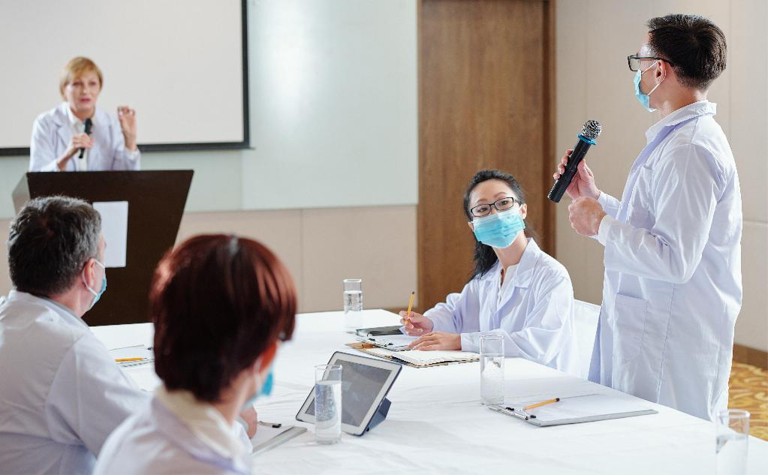
Global health leaders have warned that the opportunity to fundamentally reform the international health system is narrowing, calling for countries to have greater control over their own health priorities as funding pressures expose weaknesses in the existing model.
A new paper published in Nature Medicine argues that the global health system was designed for a world that no longer exists and needs to become simpler, more accountable and increasingly led by the countries it is intended to support.
The proposals have been developed by health leaders with experience across governments, research organisations, funders and civil society in Africa, Asia, Europe and the Americas. Rather than international organisations determining priorities from the top down, they argue that countries and their national health systems should become the primary drivers of action.
Under the proposed approach, international funding and technical assistance would increasingly support national health plans rather than operating through separate programmes and structures. Global and regional organisations would concentrate on areas where countries cannot act effectively alone, including cross-border threats and other shared health challenges.
John-Arne Røttingen, chief executive of Wellcome and one of the paper’s authors, said the debate now needs to move beyond whether reform is necessary and towards the practical decisions required to make it happen. He said putting countries in the driving seat and aligning external funding behind their plans could create a simpler and more accountable system.
The debate has become increasingly urgent as reductions in development assistance place health programmes under pressure. Global health leaders have also raised concerns about fragmentation, with countries sometimes required to work with numerous international organisations, funding mechanisms and reporting systems rather than having resources integrated into their existing health services.
Strengthening primary healthcare is expected to be an important part of that shift. The World Health Organization has separately highlighted the need to integrate public health functions more closely into national health systems, including primary care and other frontline services, rather than planning and funding programmes separately.
More than 120 countries have identified stronger institutional capacity to deliver essential public health functions as a medium-to-high priority for WHO support. These functions include preventing illness, promoting health, protecting populations from health risks and preparing for emergencies.
However, the authors acknowledge that major questions remain unanswered. These include how reforms would work in practice, how health inequalities would be protected against when resources are limited, and how marginalised communities would retain a meaningful voice as responsibilities and funding arrangements change.
The direction of travel is becoming clearer: away from a system built around multiple externally driven programmes and towards one in which countries determine their priorities, strengthen their own health systems and use international cooperation where it adds the greatest value.
With funding becoming more constrained and existing structures under growing pressure, global health leaders argue that the decisions being made now could determine how effectively the world responds not only to everyday healthcare needs, but to the next major international health threat.
Register with The Daily Round for the latest sector news, inspections & reports, wellbeing content, workforce insights, expert features and practical updates—delivered free to your inbox.
Posted by:
M Ramalani
Editorial Assistant – The Daily Round




Busy day? We’ve got you covered. Get FREE daily news, practical insights, opportunities and wellbeing content, carefully curated for busy health and social care professionals. Just enter your details below to get The Daily Briefing delivered straight to your inbox.
Busy day? We’ve got you covered. Get FREE daily news, practical insights, opportunities and wellbeing content, carefully curated for busy health and social care professionals. Just enter your details below to get The Daily Briefing delivered straight to your inbox.