newsdesk@dailyround.news
Global Care Stories

Discover the latest international news and developments affecting health and social care worldwide. From rising measles cases in the US to major global events, including the death of the world’s youngest reigning monarch at 34, explore the stories shaping communities and making headlines around the world.
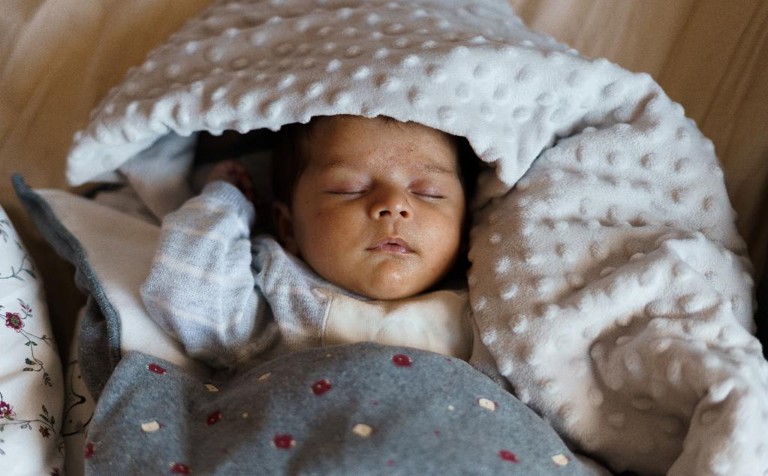
A coroner has confirmed that measles caused the death of an infant in Pennsylvania, while the United States’ national public health agency continues to record no confirmed deaths from the disease this year amid a dispute over how recent fatalities should be classified.
Lancaster County Coroner Dr Stephen Diamantoni concluded that measles caused the death of an infant girl during an outbreak in Pennsylvania, where hundreds of infections have been recorded.
The child also had Amish lethal microcephaly, a rare genetic neurological disorder which causes an abnormally small head and underdeveloped brain and significantly limits life expectancy.
Diamantoni said children born with the condition are seriously unwell from birth and are particularly vulnerable to respiratory infections. The infant had been receiving palliative care and her death was not considered unexpected.
Nevertheless, following examination of the circumstances, the coroner determined that measles was the cause of her death.
The finding has intensified an unusual dispute over how measles fatalities are being recorded in the United States.
Pennsylvania’s Department of Health previously announced two measles-associated deaths connected with the state’s outbreak. However, neither is currently included in the Centers for Disease Control and Prevention’s national measles death total for 2026.
The CDC continues to report zero confirmed measles deaths this year while it reviews additional information surrounding the Pennsylvania cases.
The distinction between a death caused by measles and a measles-associated death has become central to the disagreement.
The first of the two Pennsylvania cases involved a newborn whose mother had measles and transmitted the infection to the baby. Measles was detected in the infant, but Diamantoni has said the child died from a ruptured spleen and that measles was not the cause of death.
His conclusion on the second infant is different: measles caused the death, although the child was already living with a severe and life-limiting condition.
Pennsylvania health officials continue to classify both fatalities as measles-related.
The disagreement has now extended to the highest levels of US health policy.
Health Secretary Robert F. Kennedy Jr previously asked the CDC’s director to remove the two Pennsylvania deaths from its national measles figures after questioning whether the disease was responsible.
CDC staff had already accepted Pennsylvania’s classification of the deaths as being associated with measles before the request was made, according to Reuters.
Kennedy has since acknowledged that the Lancaster County coroner concluded measles caused the second infant’s death, while highlighting the child’s underlying condition and the coroner’s different finding in the first case.
The CDC says it is re-evaluating how measles deaths are classified in order to achieve consistent reporting between different jurisdictions.
The disagreement comes during a major resurgence of a disease that the United States declared eliminated from continuous domestic transmission more than two decades ago.
More than 3,100 confirmed measles cases have been recorded across the country so far in 2026, the highest annual total in more than 35 years.
Pennsylvania has become one of the centres of the current outbreak. More than 570 cases have been reported in the state, with Lancaster County particularly affected.
Nationally, the overwhelming majority of infections have occurred among people who were unvaccinated or whose vaccination status was unknown.
The MMR vaccine remains the principal means of preventing measles. Two doses provide around 97% protection against infection.
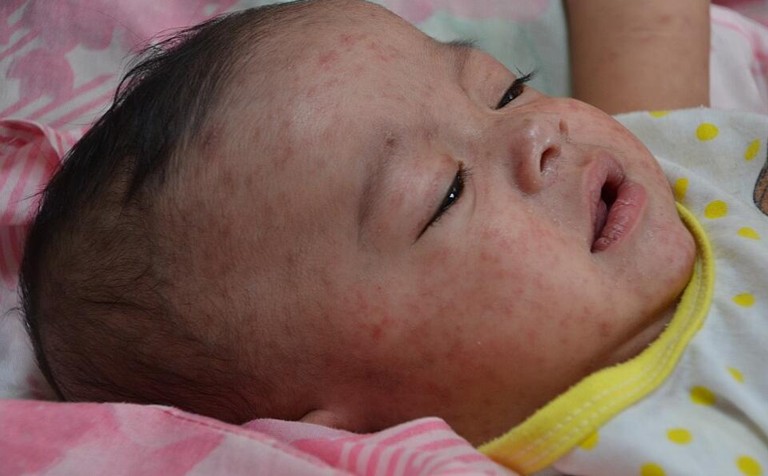
Measles is sometimes regarded primarily as a childhood illness characterised by fever and a distinctive rash, but the infection can cause serious complications. Young children and people with weakened immune systems can be particularly vulnerable.
The dispute surrounding the Pennsylvania deaths is therefore about more than the difference between zero, one or two fatalities.
Accurate public-health data helps clinicians, policymakers and communities understand the severity of an outbreak and the risks associated with an infectious disease. How deaths are classified can consequently influence the picture presented to the public.
There can be legitimate medical complexity when determining whether an infection directly caused somebody’s death, contributed to it or was simply present when they died, particularly when a patient already has a serious underlying condition.
In Pennsylvania, that complexity is evident in the different conclusions reached about the two infants.
In one case, the local coroner says measles was present but did not cause the death. In the other, he has now concluded that measles itself was responsible despite the infant having an extremely serious pre-existing condition.
What makes the current situation unusual is that the CDC’s national statistics have yet to reflect even the death the coroner has now attributed to measles.
As America’s measles outbreak continues, resolving that discrepancy will matter.
The national tally may currently say zero. The latest finding from Pennsylvania’s coroner says at least one infant has died because of the disease.
Register with The Daily Round for the latest sector news, inspections & reports, wellbeing content, workforce insights, expert features and practical updates—delivered free to your inbox.
Posted by:
M Ramalani
Editorial Assistant – The Daily Round


Busy day? We’ve got you covered. Get FREE daily news, practical insights, opportunities and wellbeing content, carefully curated for busy health and social care professionals. Just enter your details below to get The Daily Briefing delivered straight to your inbox.
Busy day? We’ve got you covered. Get FREE daily news, practical insights, opportunities and wellbeing content, carefully curated for busy health and social care professionals. Just enter your details below to get The Daily Briefing delivered straight to your inbox.