
 newsdesk@dailyround.news
UK News

Stay up to date with the latest health and social care news from across the UK. From breaking stories and sector developments to the people, organisations and issues making the news.
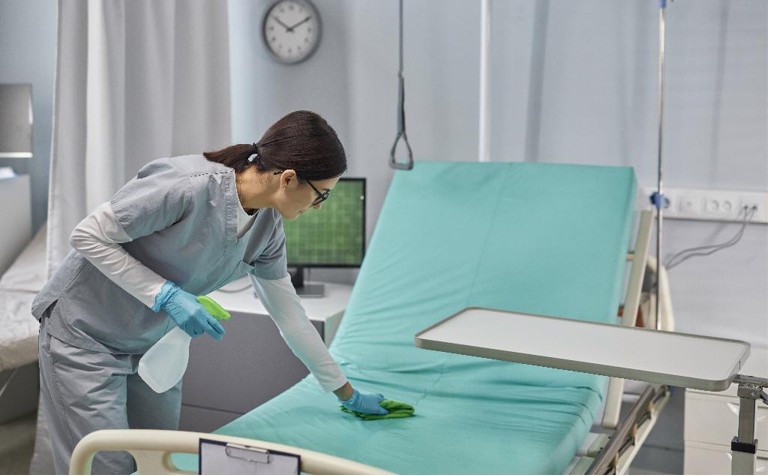
Around 300 hospital cleaners, porters and other support workers have begun three days of strike action at one of London’s largest NHS trusts following a dispute over pay and a series of workplace concerns.
Band 2 workers at Guy’s and St Thomas’ NHS Foundation Trust walked out on Wednesday, with industrial action expected to continue until 11 September.
The employees include cleaners, porters, stores operatives and food service assistants, whose work helps keep hospitals clean, move patients and equipment around sites and ensure food and supplies reach the people who need them.
Workers taking part in the action are represented by Unite, which has described their current £15.89 hourly rate as “poverty pay” for people living and working in London.
The rate is 7.4% above the London Living Wage and reflects the current NHS Band 2 pay scale for staff working in inner London. NHS pay bands are set nationally rather than independently by individual hospital trusts.
However, the dispute extends beyond the amount workers receive in their pay packets.
Unite says its members have raised a series of long-running workplace concerns which they believe have not been adequately addressed by trust management.
These include allegations of racist and bullying behaviour within facilities management, concerns about bank contracts and working hours, and claims that staff have not been provided with adequate welfare facilities such as showers and changing areas.
The union has also raised concerns about safety equipment provided to security workers.
Unite general secretary Sharon Graham said the workers perform essential jobs within the hospital but are struggling to survive on their current wages.
The union argues that cleaners, porters and other support staff are fundamental to the operation of hospitals, despite often occupying some of the lowest-paid positions within the NHS workforce.
Guy’s and St Thomas’ NHS Foundation Trust said it was unfortunate that industrial action was taking place while negotiations remained ongoing.
A trust spokesperson said it valued the staff involved and urged workers to call off the strike so discussions could continue towards reaching what it described as a fair deal.
The dispute highlights the role of a workforce that can sometimes be less visible than doctors and nurses but remains essential to the safe and effective running of hospital services.
Cleaners are responsible for maintaining environments where infection prevention is critical, while porters move patients, equipment and supplies throughout hospitals. Stores teams help ensure departments have the materials they require, while food service assistants contribute to the day-to-day care and nutrition of patients.
The strike therefore brings attention not only to the wider debate about NHS pay, but to the working conditions experienced by some of the health service’s lowest-paid employees.
At £15.89 an hour, the Band 2 inner-London rate is equivalent to an annual salary of £31,066 under the NHS’s 2026/27 Agenda for Change pay scales.
For Unite, however, the combination of pay and unresolved workplace complaints has left its members feeling that industrial action is now necessary.
The current walkout is not expected to be the end of the dispute. Unite has said further strike dates are planned during the autumn if the issues remain unresolved.
With negotiations continuing, there remains an opportunity for the trust and union to reach an agreement before further action takes place.
For now, hundreds of the people who clean hospital wards, transport patients and help keep services functioning have left their workplaces and joined the picket line.
Their dispute is a reminder that the NHS workforce extends far beyond its clinical professions, and that the conditions experienced by the people carrying out its least visible jobs can have consequences for the wider health service too.
Register with The Daily Round for the latest sector news, inspections & reports, wellbeing content, workforce insights, expert features and practical updates—delivered free to your inbox.
Posted by:
M Ramalani
Editorial Assistant – The Daily Round



Busy day? We’ve got you covered. Get FREE daily news, practical insights, opportunities and wellbeing content, carefully curated for busy health and social care professionals. Just enter your details below to get The Daily Briefing delivered straight to your inbox.
Busy day? We’ve got you covered. Get FREE daily news, practical insights, opportunities and wellbeing content, carefully curated for busy health and social care professionals. Just enter your details below to get The Daily Briefing delivered straight to your inbox.