
 newsdesk@dailyround.news
UK News

Stay up to date with the latest health and social care news from across the UK. From breaking stories and sector developments to the people, organisations and issues making the news.
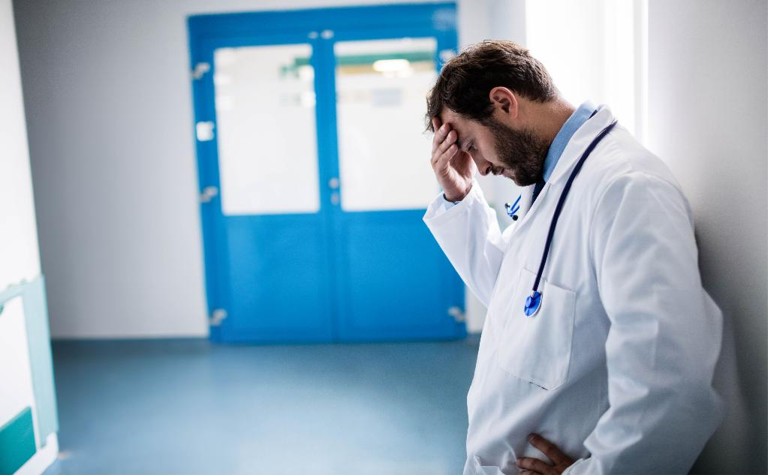
A GP who was jailed after damaging petrol pumps during a climate protest has had his suspension from the medical register extended for another 10 months after telling a tribunal he could not honestly say his actions were wrong.
Dr Patrick Hart, a GP from Bristol, was sentenced to 12 months in prison in January 2025 for criminal damage after disabling and damaging petrol pumps at an Esso station in Essex using a hammer and paint in 2022.
He was subsequently suspended from the UK medical register for 10 months by a medical practitioners tribunal in October 2025.
That suspension has now been reviewed, but rather than allowing Hart to return to practice, the tribunal has imposed a further 10-month suspension after concluding that he had not demonstrated sufficient insight or remediation.
At the heart of the case is an unusual conflict between Hart’s convictions as a doctor and the standards expected of members of the medical profession.
Hart maintains that his climate activism was undertaken in good faith and with integrity because of the threat climate change poses to human health. He told the review hearing that he would be lying if he claimed to believe his actions had been wrong simply to satisfy the requirements necessary to regain his place on the medical register.
He described the situation as an “impasse” and compared his position with historical protest movements whose participants broke laws they believed to be unjust.
Hart also challenged the General Medical Council’s argument that his actions had damaged public confidence in the medical profession.
The tribunal acknowledged the sincerity of his beliefs and accepted that future generations might judge his actions differently. However, it concluded that being strongly committed to a cause did not allow a doctor to choose which laws should be followed.
Tribunal chair Sarah Hamilton said Hart had demonstrated contempt in some circumstances for both the law and the tribunal.
Despite those concerns, the tribunal decided removing him permanently from the medical register at this stage would be disproportionate.
Instead, Hart has been suspended for another 10 months and will face a further review towards the end of that period.
At his next hearing, he will be expected to demonstrate that he has developed insight and undertaken remediation, as well as showing that his clinical skills and knowledge remain up to date.
The tribunal has warned that the full range of sanctions will be available at that point, including erasure from the medical register.
Hart told the hearing that he is no longer participating in forms of climate activism that risk arrest. He said this was because he did not want to spend the rest of his life in prison and believed increasingly restrictive protest laws had made that form of action ineffective.
His case has attracted support from within the medical profession as well as criticism of the regulatory action taken against him.
The British Medical Association has publicly supported Hart in his dispute with the GMC. At its 2025 annual representative meeting, members backed a motion condemning punitive action, including regulatory complaints, against doctors involved in non-violent climate activism.
The BMA’s position is that climate change constitutes a public health emergency and that doctors have an ethical responsibility to advocate for action.
The case has also attracted international attention.
While Hart was serving his prison sentence, he was visited by Michel Forst, the United Nations special rapporteur on environmental defenders, who criticised the UK’s treatment of climate protesters and questioned the regulatory action being taken against Hart.
Forst argued that subjecting Hart to professional sanctions following his criminal punishment amounted to punishing him again for actions motivated by concerns about climate change.
The GMC’s position, however, is shaped by its responsibilities as the regulator of the medical profession. Where a doctor receives a custodial sentence following a criminal conviction, the GMC is legally required to refer the case to a medical practitioners tribunal.
Hart has also pointed to the outcomes of other climate protest cases when challenging the suggestion that his activism necessarily damages public confidence.
He has twice been acquitted after putting a climate defence before a jury. Most recently, in February, he was one of six healthcare professionals found not guilty after admitting breaking glass at JP Morgan’s London headquarters during a protest. The damage was valued at £190,000.
The latest tribunal was therefore not being asked to determine whether climate change represents a threat to health, nor whether doctors should be permitted to campaign on political or environmental issues.
Instead, it was considering whether Hart’s criminal conviction, his subsequent imprisonment and his continuing refusal to accept that his actions were wrong remained incompatible with the standards expected of a registered doctor.
That distinction leaves a difficult question at the centre of the case.
Doctors are expected to uphold professional standards and public confidence in medicine, but they are also citizens who retain the right to campaign, protest and advocate for issues they believe affect public health.
Hart believes those responsibilities led him towards civil disobedience. The tribunal has concluded that his medical status does not exempt him from the consequences when that disobedience becomes criminal.
For now, the result is another 10 months away from medical practice.
When Hart returns before a tribunal at the end of that period, the question of whether he has developed sufficient insight will again be considered. If the same impasse remains, however, the consequences could become considerably more serious, with permanent removal from the medical register among the options available.
Register with The Daily Round for the latest sector news, inspections & reports, wellbeing content, workforce insights, expert features and practical updates—delivered free to your inbox.
Posted by:
M Ramalani
Editorial Assistant – The Daily Round



Busy day? We’ve got you covered. Get FREE daily news, practical insights, opportunities and wellbeing content, carefully curated for busy health and social care professionals. Just enter your details below to get The Daily Briefing delivered straight to your inbox.
Busy day? We’ve got you covered. Get FREE daily news, practical insights, opportunities and wellbeing content, carefully curated for busy health and social care professionals. Just enter your details below to get The Daily Briefing delivered straight to your inbox.