
 newsdesk@dailyround.news
UK News

Stay up to date with the latest health and social care news from across the UK. From breaking stories and sector developments to the people, organisations and issues making the news.
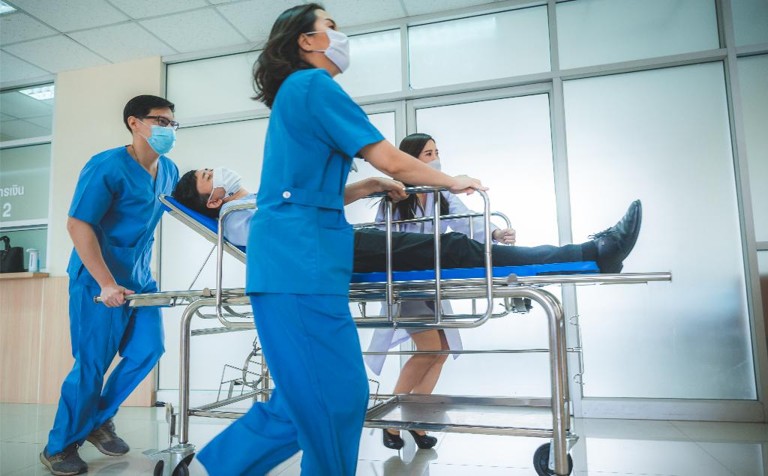
Violence, intimidation and abuse have become a routine part of working in Britain’s emergency departments, with almost three-quarters of A&E staff experiencing or witnessing aggression on a daily or weekly basis.
A survey of more than 2,000 emergency department workers by the Royal College of Emergency Medicine (RCEM) has revealed the scale of the problem facing staff on the NHS frontline, with long waits, overcrowding, staffing shortages and corridor care all identified as factors making already difficult working environments increasingly volatile.
Some 73% of those surveyed said violence or aggression occurred daily or weekly in their emergency department, while 96% said they had experienced abuse from patients or members of the public.
Perhaps most strikingly, just 4% of respondents said they always felt safe while working in A&E.
The findings suggest the impact is extending well beyond individual incidents. Three-quarters of staff reported experiencing short-term stress or anxiety, 40% said they had experienced burnout and 28% reported longer-term stress or anxiety.
Discrimination is also a significant concern. Almost two-thirds of respondents, 63%, said they had experienced discrimination including racism, sexism and homophobia.
RCEM has warned that the conditions in which emergency care is increasingly being delivered are contributing to the problem.
Overcrowded departments, lengthy waits and patients receiving treatment in corridors or other unsuitable spaces can increase frustration while simultaneously reducing privacy and placing additional pressure on the staff trying to provide care.
The latest NHS England figures show 47,000 patients waited more than 12 hours for an emergency admission in July 2026, while an average of around 2,300 patients received corridor care each day.
RCEM president Dr Ian Higginson said healthcare workers should not have to begin a shift expecting that they could be attacked, intimidated or abused, warning that the reality faced by many emergency department staff was making some question whether they wanted to remain in emergency medicine or healthcare at all.
Accounts shared by workers illustrate what those statistics can mean in practice. One resident doctor described experiencing direct and racially charged verbal abuse, while a senior emergency doctor reported being kicked in the face by an aggressive patient while they were lying on a trolley.
The College is clear that pressure within emergency departments does not justify violence towards staff. However, it argues that tackling the problem requires action on both the behaviour itself and the environment in which incidents are occurring.
That means protecting staff and ensuring there are meaningful consequences for people who intimidate, abuse or assault healthcare workers, while also addressing overcrowding, excessive waiting times and the use of corridor care.
Those pressures remain substantial.
The NHS was expected to ensure 78% of A&E patients were treated within four hours by March. Performance reached 77.6% that month but has subsequently fallen back.
RCEM is now calling for faster action from government, employers and other organisations, warning that years of discussion about violence and aggression have failed to prevent the problem from worsening.
The Department of Health and Social Care said violence, harassment and abuse towards NHS staff are unacceptable and that everyone working within the health service has a fundamental right to be safe at work.
The government has recently introduced new NHS staff standards setting out steps employers should take to prevent and reduce violence and abuse and support employees when incidents occur.
The latest findings, however, suggest the challenge is considerable.
Separate figures previously obtained from 212 NHS trusts in England recorded more than 295,000 incidents of physical violence and aggression by patients against staff between 2022 and 2025.
The annual number increased from 91,175 incidents in 2022/23 to 104,079 in 2024/25, equivalent to around 285 reported incidents every day in the most recent year.
Behind those figures are people trying to provide emergency care in circumstances that are already among the most pressured anywhere in the health service.
Patients arriving at A&E may be frightened, in pain, distressed or frustrated after waiting for hours. Staff may simultaneously be caring for more people than their department was designed to accommodate, including patients on trolleys in corridors because appropriate clinical spaces are unavailable.
Understanding those pressures is important. Accepting violence as an inevitable consequence of them is not.
When almost three-quarters of emergency department workers encounter violence or aggression every week or every day, and only 4% consistently feel safe at work, the issue can no longer be treated as an occasional occupational hazard.
The warning from emergency doctors is that unless conditions improve and staff feel properly protected when incidents occur, the NHS risks losing some of the very people it relies upon to provide care when patients need it most.
Register with The Daily Round for the latest sector news, inspections & reports, wellbeing content, workforce insights, expert features and practical updates—delivered free to your inbox.
Posted by:
M Ramalani
Editorial Assistant – The Daily Round


Busy day? We’ve got you covered. Get FREE daily news, practical insights, opportunities and wellbeing content, carefully curated for busy health and social care professionals. Just enter your details below to get The Daily Briefing delivered straight to your inbox.
Busy day? We’ve got you covered. Get FREE daily news, practical insights, opportunities and wellbeing content, carefully curated for busy health and social care professionals. Just enter your details below to get The Daily Briefing delivered straight to your inbox.