newsdesk@dailyround.news
UK News

Stay up to date with the latest health and social care news from across the UK. From children’s mental health crisis and new inspection guidance for prison education to women’s mental health after childbirth and employment reforms affecting UK employers, discover the stories and developments shaping the sector.
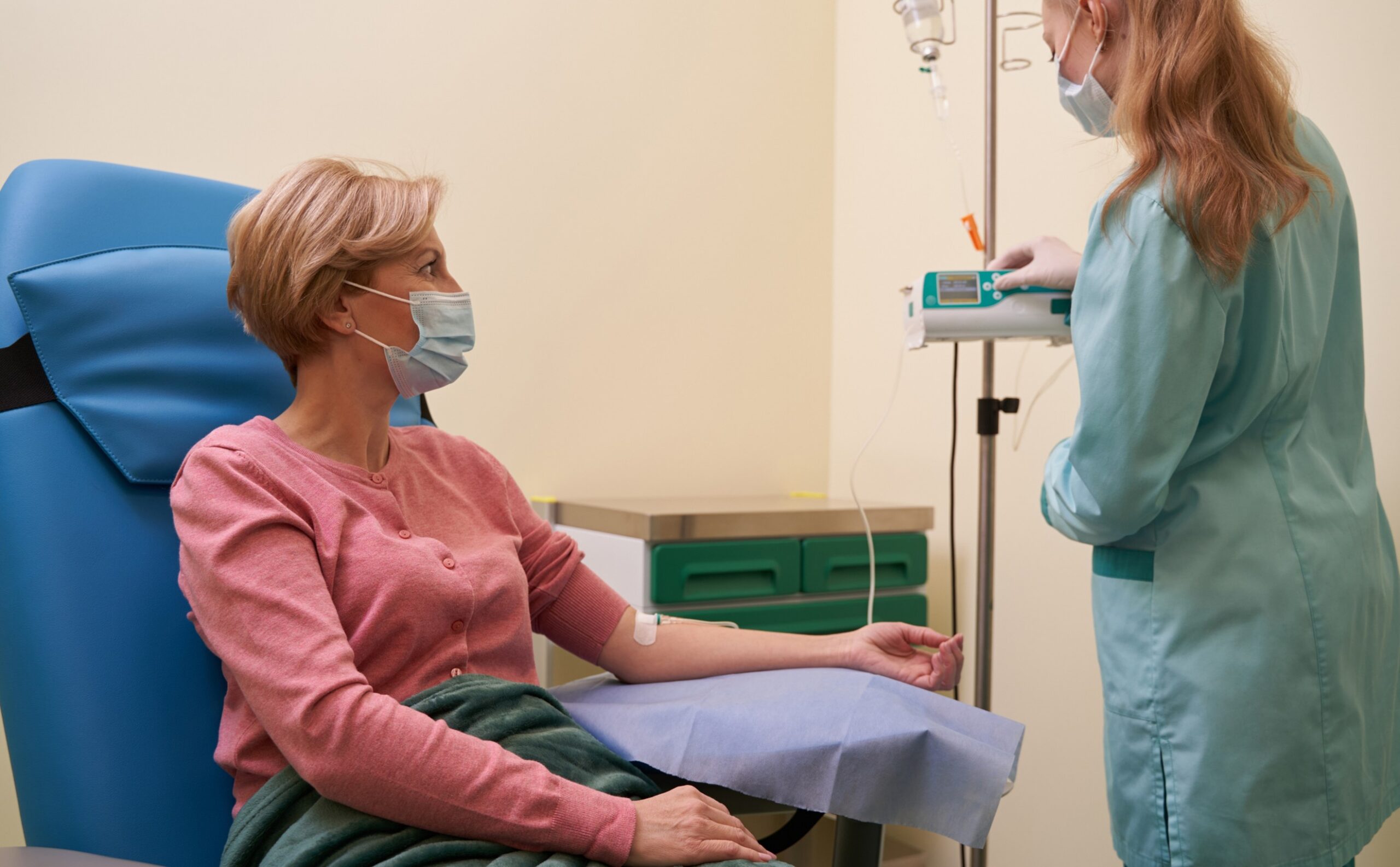
Cancer patients who received immunotherapy earlier in the day lived longer than those predominantly treated later, according to a major new study, but researchers and independent experts have urged extreme caution over interpreting the findings.
Researchers at The Christie NHS Foundation Trust in Manchester analysed the outcomes of 2,631 people with advanced cancer who received immune checkpoint inhibitor immunotherapy between January 2018 and December 2023.
Across the study, patients who received most of their treatment earlier in the day had a median overall survival of 21.4 months, compared with 13.1 months among those whose treatment was predominantly given later.
Differences were particularly striking among some individual cancer groups. Patients with melanoma who predominantly received earlier treatment had a median survival of 43.1 months, compared with 21.1 months among those treated later. Among lung cancer patients receiving atezolizumab or pembrolizumab, median survival was 24.2 months in the earlier group and 11.8 months in the later group.
The findings have inevitably attracted attention because they raise the possibility that something as straightforward as changing the time at which treatment is delivered could potentially influence how well it works.
However, they do not prove that receiving immunotherapy in the morning makes somebody live longer.
The research was retrospective, meaning researchers looked back at what had happened to patients rather than randomly allocating people to morning or afternoon treatment and comparing the outcomes. That makes it impossible to know whether treatment timing itself was responsible for the difference.
There could be several other explanations. Patients who are less well may require additional medical assessments before receiving treatment and consequently have their infusions later in the day. Frailty, difficulties travelling to hospital, socioeconomic circumstances and the way appointments are scheduled could also influence both when somebody receives treatment and their overall health outcomes.
Professor Paul Lorigan, consultant medical oncologist at The Christie and senior author of the study, said the most important finding was that there appeared to be a signal worthy of further investigation, rather than evidence that clinical practice should immediately change.
Researchers are particularly interested in whether the body’s circadian rhythm could play a role. Our internal biological clock influences numerous processes throughout the day, including the activity of the immune system.
Immunotherapy works by helping the immune system recognise and attack cancer cells. Scientists are therefore investigating whether changes in immune activity at different times of day could potentially influence the effectiveness of treatment.
Individual biological differences could complicate that theory further. Some people naturally function better earlier in the day while others have later biological rhythms, meaning there may not ultimately be one ideal treatment time that applies to everybody.
The researchers attempted to account statistically for some of the differences between patients receiving earlier and later treatment, and the association remained significant. The pattern was also observed across several types of advanced cancer, including lung cancer, melanoma, kidney cancer, head and neck cancer and bladder cancer.
Nevertheless, researchers say a prospective randomised trial is needed before it can be established whether changing treatment times genuinely improves survival.
There is another reason for caution surrounding this particular area of research. A separate randomised trial examining the timing of immunochemotherapy in people with non-small cell lung cancer was published earlier this year and appeared to provide compelling evidence that earlier treatment could improve outcomes.
That study was subsequently retracted by Nature Medicine in June after concerns were identified involving its study protocol and data. The journal’s editors ultimately said they no longer had confidence in the integrity of its results.
The Christie researchers are now seeking funding for further prospective randomised research, working with colleagues at the University of Southampton and Cardiff University. The proposed work would investigate treatment timing in people with melanoma and haematological cancers while also exploring the biological mechanisms that might explain any effect.
If rigorous trials eventually confirm that timing makes a meaningful difference, the implications could be significant. Unlike developing a new cancer medicine, changing when existing treatment is administered could potentially improve outcomes without introducing another drug, additional toxicity or substantial extra costs.
Researchers have suggested that any future change might only need to involve the first three or four cycles of immunotherapy, potentially making adjustments to scheduling more manageable for cancer services.
But that possibility remains exactly that: a possibility.
The Christie has stressed that patients should continue attending their immunotherapy appointments as scheduled and should not assume that receiving an afternoon appointment means their treatment will be less effective.
For now, the study has raised a fascinating question rather than provided a new treatment recommendation. The possibility that the body’s own biological clock could influence cancer treatment deserves further investigation, particularly when the potential intervention could be as simple as changing an appointment time.
But when the difference being discussed involves months or even years of someone’s life, the evidence needs to be exceptionally strong before an intriguing association becomes medical advice.
Posted by:
Mehala
Editorial Assistant – The Daily Round


Busy day? We’ve got you covered. Get FREE daily news, practical insights, opportunities and wellbeing content, carefully curated for busy health and social care professionals. Just enter your details below to get The Daily Briefing delivered straight to your inbox.
Busy day? We’ve got you covered. Get FREE daily news, practical insights, opportunities and wellbeing content, carefully curated for busy health and social care professionals. Just enter your details below to get The Daily Briefing delivered straight to your inbox.