newsdesk@dailyround.news
Care Sector Insights

Explore in-depth articles covering the issues, trends and changes shaping UK health and social care.

When an older or disabled relative lives alone, news about power cuts, communication failures or national emergencies can feel frightening. The most useful response is not to imagine every possible disaster, but to agree a simple plan for the kinds of temporary disruption that are most likely to affect them.
Begin by asking what your loved one depends upon each day. This may include medication, heating, a stairlift, an electric wheelchair, oxygen equipment, a personal alarm or support from visiting carers. Check which devices require electricity or an internet connection, whether they contain backup batteries and how long those batteries will last. Equipment suppliers and clinical teams should be able to explain what to do if power or communications are lost.
Agree how you will check on one another. If mobile phones stop working, decide whether a nearby relative, friend or trusted neighbour can visit the property. Exchange contact details and consider giving someone local a spare key or using a properly managed key safe. It can also help to choose a familiar meeting place in case family members cannot communicate for an extended period.
Keep essential information somewhere accessible on paper. This should include family numbers, the GP, pharmacy, care provider, utility companies and anyone living nearby who can help. Add a current list of medicines, doses, allergies and important health information. A mobile phone contact list is little use if the device is lost, its battery is empty or the network is unavailable.
The Government recommends keeping enough bottled water and non-perishable food to manage for three days. Other useful items include a torch and batteries, a charged power bank, blankets, basic first-aid supplies, hygiene products and a small amount of cash. The aim is to build a modest supply gradually, not to panic buy or fill the home with items the person would never normally use.
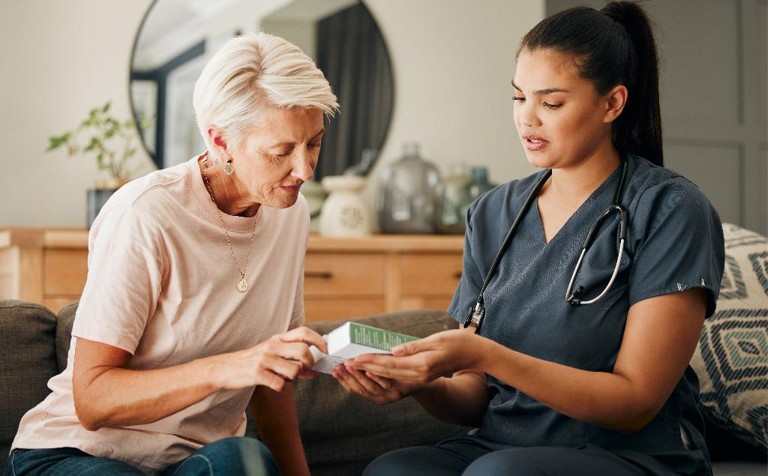
Medication needs a little more thought. Repeat prescriptions should be requested with enough time to avoid running out, but medicines should not be stockpiled without professional advice. If a drug must be refrigerated or taken at a precise time, ask the pharmacist or clinical team what to do during a prolonged power cut or interruption to normal services.
Make sure your loved one is registered for priority support if they are eligible. Energy suppliers and network operators maintain Priority Services Registers for people who have reached State Pension age, live with a disability or health condition, use powered medical equipment or otherwise need additional assistance. Registration may provide advance notice of planned cuts and priority support during an emergency, although it does not guarantee an uninterrupted supply.
If the person receives homecare, ask the provider how visits would be managed during severe weather, fuel shortages or communication problems. Confirm who the family should contact, which visits are considered time-critical and how the provider would alert you to a delay. Families should not be expected to take over skilled or personal care without agreement, training and a proper assessment of what is safe.
During an outage, preserve phone battery power and use a battery-powered or wind-up radio for official information. A mobile 999 or 112 call should attempt to connect through any available network, even if the person’s usual provider has no service. If no emergency call can be connected and there is an immediate danger, official guidance advises seeking help directly from emergency responders or going to a police, fire or ambulance station, or hospital, where it is safe to do so.
None of this needs to become a frightening conversation. Frame it in the same way as checking smoke alarms or preparing for winter: a small amount of planning that may never be needed but makes everyone feel more secure. For someone living alone, the most valuable emergency resource is often not an expensive piece of equipment. It is knowing that somebody nearby has a plan to notice, check and act.
This article provides general information and does not replace personalised medical, care or emergency advice. Call 999 or 112 if someone is in immediate danger.
Register with The Daily Round for the latest sector news, inspections & reports, wellbeing content, workforce insights, expert features and practical updates—delivered free to your inbox.
Posted by:
M Ramalani
Editorial Assistant – The Daily Round


Busy day? We’ve got you covered. Get FREE daily news, practical insights, opportunities and wellbeing content, carefully curated for busy health and social care professionals. Just enter your details below to get The Daily Briefing delivered straight to your inbox.
Busy day? We’ve got you covered. Get FREE daily news, practical insights, opportunities and wellbeing content, carefully curated for busy health and social care professionals. Just enter your details below to get The Daily Briefing delivered straight to your inbox.