
 newsdesk@dailyround.news
Industry Insight

Stay up to date with the latest health and social care news from across the UK. From breaking stories and sector updates to emerging trends, challenges and innovations shaping care.
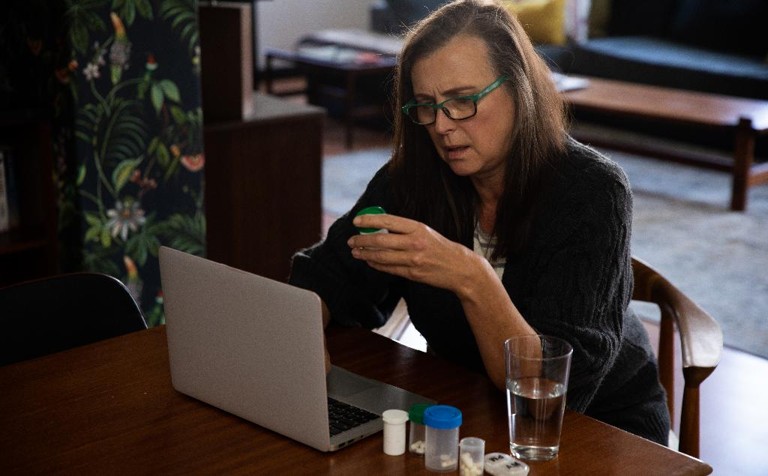
Menopausal women are posing as men to obtain testosterone from online pharmacies after struggling to access the hormone through the NHS, prompting warnings that some are putting their health at risk by using the treatment without appropriate monitoring.
Menopause specialists in Wales have reported a sharp increase in demand for testosterone among post-menopausal women, but access to the treatment varies considerably between health boards and even individual GP practices.
Dr Michelle Olver, who runs the menopause clinic within Aneurin Bevan University Health Board, said she had encountered women who had bought testosterone online and subsequently recorded hormone levels up to 12 times higher than the safe female range.
Women naturally produce testosterone as well as oestrogen and progesterone, although testosterone levels gradually decline with age. For some post-menopausal women experiencing persistent problems with low sexual desire, testosterone can be considered when conventional hormone replacement therapy has not been effective.
NHS guidance states that testosterone gel or cream can help improve low libido for some women. However, its use during menopause has historically created an unusual prescribing problem because testosterone products used by women have generally been formulations designed and licensed for men, administered at a much lower dose.
That can make some clinicians less confident about prescribing the treatment, while local NHS prescribing policies also differ.
In Wales, the seven health boards use different prescribing arrangements. In some areas testosterone can only be prescribed by specialists, while elsewhere GPs may prescribe following specialist advice or through a shared-care arrangement.
Dr Rebeccah Tomlinson, a GP who works within an NHS menopause clinic and trains other doctors in menopause care, described access as a “postcode lottery”, with a woman’s ability to obtain testosterone sometimes depending on her GP practice and the confidence of the individual clinician.
She said reluctance to prescribe an off-licence medicine can lead some GP practices to direct all requests towards secondary care, adding further pressure to gynaecology services and potentially leaving women facing lengthy waits.
One woman interviewed by BBC Wales had previously been prescribed testosterone by her NHS GP but said her new surgery refused to continue the prescription after she moved into a neighbouring health board area.
After paying privately for consultations, prescriptions and blood tests, she found a considerably cheaper alternative. Once her testosterone levels had stabilised, she completed an online pharmacy questionnaire pretending to be a man and obtained testosterone that way.
It demonstrates one of the unintended consequences of inconsistent access. Testosterone itself is not an inappropriate treatment simply because it is prescribed off licence, and established clinical guidance supports its use for particular women. The concern arises when patients obtain a medicine intended for male use without clinicians knowing they are taking it or without the blood testing used to ensure the dose remains appropriate.
Women prescribed testosterone for menopausal symptoms should have baseline blood tests and further monitoring after starting treatment to ensure testosterone remains within the normal female physiological range.
Using too much can cause androgenic side effects including acne, increased facial or body hair and scalp hair loss. At substantially excessive levels, some effects, including deepening of the voice and enlargement of the clitoris, can potentially be irreversible.
The emerging demand for testosterone also reflects the changing conversation surrounding menopause treatment. Awareness of HRT has increased significantly in recent years, and women are increasingly approaching healthcare professionals with greater knowledge of the different treatment options available.
However, specialists caution against presenting testosterone as a universal solution to menopause symptoms.
Current evidence most strongly supports testosterone treatment for post-menopausal women experiencing persistent low sexual desire after other factors have been considered and conventional HRT has not resolved the problem. There is not currently sufficient evidence to routinely recommend it as a treatment for symptoms such as low mood, fatigue, poor concentration or so-called brain fog.
That distinction has become increasingly important as women share their experiences of testosterone through social media and online menopause communities, where improvements in energy, confidence, mood and cognitive function are sometimes attributed to the treatment.
Some women report significant benefits, but others experience little improvement or unwanted effects.
One woman interviewed about her experience said testosterone substantially increased her energy and libido but also left her feeling jittery and on edge. She ultimately decided the treatment was not right for her, while maintaining that women should be given sufficient information and access to different options to establish what works for them.
Dr Olver said around 60% of women using testosterone for the recognised indication experience an improvement in libido, but stressed that it should not be regarded as a wonder drug. Sexual desire can be affected by numerous physical, psychological and relationship factors, meaning hormone treatment will not necessarily address the underlying cause for every woman.
The prescribing landscape may now be beginning to change. A testosterone product formulated specifically for women has received a UK licence, according to specialists interviewed in Wales, although it would still need to pass through the relevant NHS appraisal and commissioning processes before becoming routinely available.
Cost will also form part of those discussions. The female formulation currently costs considerably more than testosterone products formulated for men, which can be prescribed in carefully controlled smaller quantities to women.
The Welsh Government said health boards are expected to follow National Institute for Health and Care Excellence guidance on identifying and managing menopause and provide individualised care when prescribing HRT. It acknowledged that this can include testosterone for some women and said health boards would be expected to follow future NICE recommendations on its prescribing.
The experience in Wales nevertheless highlights a wider challenge for menopause care. Having national clinical guidance does not necessarily mean women encounter the same treatment options when they walk into different GP surgeries.
There are legitimate clinical reasons why testosterone will not be suitable for every woman, and a decision not to prescribe can be entirely appropriate following individual assessment. The concern raised by menopause specialists is inconsistency that arises from where someone lives or which clinician they happen to see rather than from differences in their medical needs.
When that happens, some women are evidently finding their own way around the system.
Pretending to be a man on an online pharmacy questionnaire may make testosterone easier and cheaper to obtain, but it also removes some of the safeguards that make its use appropriate for women in the first place. A product designed to deliver male levels of testosterone requires particularly careful dosing when used by women, and blood monitoring is intended to identify excessive exposure before it causes harm.
Improving access therefore does not mean making testosterone freely available to every menopausal woman who requests it. It means ensuring women can receive consistent, evidence-based assessments from clinicians who understand when the treatment is appropriate, can prescribe it safely and can monitor what happens afterwards.
The fact that some women feel their easiest route to treatment is to tell an online pharmacy they are male suggests there is still a significant gap between those principles and women’s experience of menopause care.
Posted by:
K Jadon
Editorial Assistant – The Daily Round



Busy day? We’ve got you covered. Get FREE daily news, practical insights, opportunities and wellbeing content, carefully curated for busy health and social care professionals. Just enter your details below to get The Daily Briefing delivered straight to your inbox.
Busy day? We’ve got you covered. Get FREE daily news, practical insights, opportunities and wellbeing content, carefully curated for busy health and social care professionals. Just enter your details below to get The Daily Briefing delivered straight to your inbox.