
 newsdesk@dailyround.news

UK News

Stay up to date with the latest health and social care news from across the UK. From children’s mental health crisis and new inspection guidance for prison education to women’s mental health after childbirth and employment reforms affecting UK employers, discover the stories and developments shaping the sector.
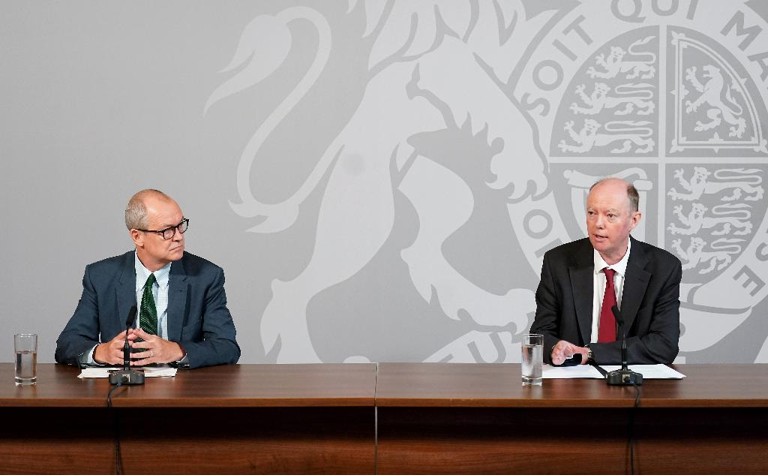
Doctors should be trained more systematically to manage uncertainty and take responsibility for difficult clinical decisions, England’s chief medical officer has said.
Professor Sir Chris Whitty said “holding risk” was a fundamental part of medical practice because doctors frequently have to choose whether to act without having complete information. Both intervening and waiting can expose a patient to harm.
Speaking at the inaugural BMJ lecture, held with the Academy of Medical Sciences, Whitty warned that responsibility for higher-risk decisions had increasingly shifted towards senior doctors. This meant resident doctors could have limited opportunities to develop the necessary judgement before facing a sudden increase in responsibility when they became consultants.
He called for the level of risk doctors should be expected to manage at each stage of their careers to be clearly defined and incorporated into postgraduate training, supervision and assessment. Stable clinical teams would also allow senior doctors to understand trainees’ abilities and delegate decisions safely.
Whitty said advances in medical science had reduced many risks for patients while making clinical decision-making more complicated. More tests, treatments and specialist options could create additional uncertainty rather than producing one clear answer.
He also acknowledged that artificial intelligence could accelerate diagnosis but warned that public-facing systems may present conclusions with misleading certainty. Technology should support clinical judgement without concealing the risks and limitations surrounding a diagnosis.
Register with The Daily Round for the latest sector news, inspections & reports, wellbeing content, workforce insights, expert features and practical updates—delivered free to your inbox.
Posted by:
M Ramalani
Editorial Assistant – The Daily Round




Busy day? We’ve got you covered. Get FREE daily news, practical insights, opportunities and wellbeing content, carefully curated for busy health and social care professionals. Just enter your details below to get The Daily Briefing delivered straight to your inbox.
Busy day? We’ve got you covered. Get FREE daily news, practical insights, opportunities and wellbeing content, carefully curated for busy health and social care professionals. Just enter your details below to get The Daily Briefing delivered straight to your inbox.