newsdesk@dailyround.news
Care Sector Insights

Explore in-depth articles covering the issues, trends and changes shaping UK health and social care.
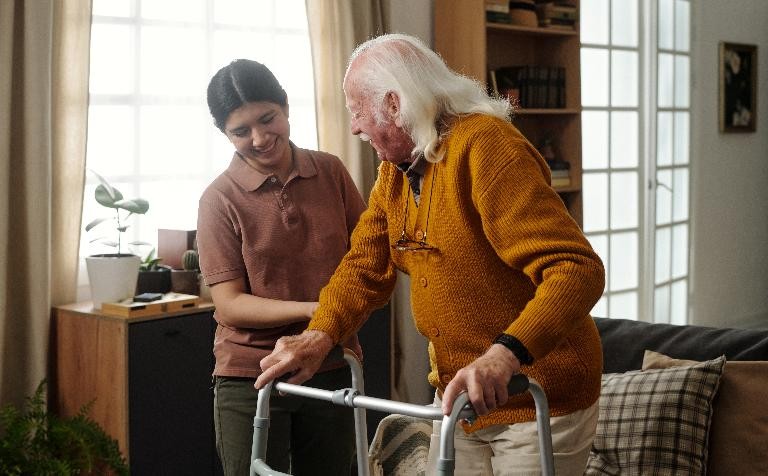
Being told that somebody is ready to leave hospital can come as a relief, but for many families it is also the moment a new set of worries begins. A parent who was living independently before being admitted may now struggle to walk, wash or prepare food. Someone recovering from a stroke might need rehabilitation, while a person whose dementia has deteriorated during an admission may no longer appear safe to return to the life they had before. Families can suddenly find themselves being asked about discharge while still trying to understand how much the person has changed.
In England, being medically ready to leave hospital does not necessarily mean that somebody has completely recovered or no longer needs care. Acute hospitals are designed to treat people who require hospital-level care, and remaining in hospital unnecessarily can itself have consequences, particularly for older people who may lose strength and independence during prolonged stays. The health and social care system therefore aims to discharge people once they no longer require an acute hospital bed, with appropriate recovery, rehabilitation or care provided elsewhere.
This is where the principle known as “discharge to assess” becomes important. Rather than keeping somebody in an acute hospital while every decision about their long-term future is made, the aim is generally to establish what they need to leave hospital safely and, where appropriate, assess their longer-term needs after they have had an opportunity to recover. That assessment might happen at home or in another community setting. For families, this means that discharge should not necessarily be interpreted as a final decision about whether somebody will eventually need homecare, supported accommodation or residential or nursing care.
Discharge planning should begin early, rather than starting on the morning somebody is expected to leave. Where a patient is likely to require additional support, health and care professionals should consider their immediate needs and determine what arrangements are necessary for a safe discharge. Depending on the individual, this can involve doctors and nurses alongside occupational therapists, physiotherapists, social workers, pharmacists and community health or social care professionals.
The assessment should consider more than whether the person’s immediate medical treatment has finished. Their mobility, cognition, medication, ability to wash and dress, home environment, existing care arrangements and any equipment they require can all be relevant. If someone cannot safely climb the stairs to their bedroom, prepare food or transfer from their bed to a chair, for example, those issues do not disappear simply because the medical reason for their hospital admission has been treated.
National guidance describes several discharge pathways. Many people return home without new support, while others return home with additional health or social care services. Some people require a temporary community bed with rehabilitation or recovery support before returning home, while a much smaller group with particularly complex needs may need to move into a care-home setting while their longer-term requirements are established. The appropriate route depends on the person’s individual circumstances rather than there being a single discharge process that applies to everyone.
Where somebody needs formal care and support following discharge, the immediate priority should be making sure they can leave hospital safely and continue their recovery. Longer-term decisions can often be made once the person has reached a more stable point and professionals have a clearer understanding of what they can regain. Someone who appears to need substantial assistance immediately after a serious illness may become considerably more independent following several weeks of rehabilitation or reablement, which is one reason major long-term care decisions should not automatically be made while somebody is still recovering in an acute hospital.
Intermediate care is short-term support designed to help somebody recover, regain independence or avoid an unnecessary hospital admission. It can be provided at home or in a community bed and may involve professionals such as physiotherapists, occupational therapists, nurses and care workers. The objective is not simply to do everything for the person, but where possible to help them recover the ability and confidence to perform everyday activities themselves.
Reablement follows a similar principle and can be particularly valuable after somebody’s ability to manage everyday life has declined. Rather than permanently taking over tasks such as washing, dressing or preparing food, a reablement service may work with the person to help them relearn skills or develop different ways of managing them. Someone who initially requires several visits each day might therefore need considerably less support after a successful period of recovery.
Where intermediate care, including reablement, is provided by a local authority under the relevant provisions, it must be provided free of charge for up to six weeks. That does not mean every person leaving hospital automatically receives six weeks of free care, or that all support provided after discharge is free for six weeks. The type of service being provided, the person’s needs and local arrangements matter, and longer-term social care may subsequently become subject to the usual financial assessment.
If it appears that somebody will have ongoing social care needs, the local authority may carry out a Care Act needs assessment. This considers the person’s ability to manage everyday activities and the effect their needs have on their wellbeing. If they have eligible needs, a care and support plan can then establish how those needs should be met, which might involve homecare, equipment, adaptations, day opportunities or, where appropriate, residential or nursing care.
The question of who pays for longer-term support is considered separately. Adult social care in England is generally means-tested, so somebody may receive council funding, contribute towards their care or pay the full cost themselves depending on their financial circumstances. Where somebody has significant health needs, NHS funding may also need to be considered, including NHS Continuing Healthcare in appropriate cases. A person’s funding arrangements immediately after hospital discharge are therefore not necessarily the same as the arrangements that will apply to their long-term care.
Families can sometimes find this transition confusing because several organisations may be involved at different stages. The hospital is responsible for the person’s acute treatment and discharge process, community NHS services may provide rehabilitation or ongoing clinical support, and the local authority may become responsible for assessing longer-term social care needs. Integrated care boards also have responsibilities within the wider system, while independent and voluntary-sector organisations may provide some of the actual services. For the person receiving care, these organisational boundaries should ideally feel joined-up, even though different bodies may ultimately be responsible for different parts of their support.
Families and unpaid carers can have information that professionals do not. A daughter may know that her father tells hospital staff he can manage the stairs when he has not used them safely for months, while a husband may understand that his wife’s dementia means she will not remember to take medication even if she appears capable of discussing it on the ward. National guidance says patients and, where appropriate, their families and unpaid carers should be involved in discharge planning, and the willingness and ability of an unpaid carer to provide support should be considered.
If you believe a proposed discharge is unsafe, explain specifically why. Rather than simply saying that you do not think the person should leave hospital, describe what you believe will happen when they do. Explain if there is nobody available overnight, if the person cannot get to the toilet safely, if they are confused and likely to wander, if essential equipment has not arrived or if the proposed care package does not cover the times when support is actually required. Ask the discharge team what arrangements have been made to manage those risks and who will be responsible for the person’s immediate support.
An important distinction is that a family member cannot necessarily insist that somebody remains in an acute hospital simply because they disagree with the decision to discharge them. If the person no longer requires acute hospital care, the question becomes what safe and appropriate arrangements are needed elsewhere. However, national guidance is equally clear that nobody should be discharged until it is safe to do so, and relevant unpaid carers should be consulted about whether they are willing and able to provide the care being relied upon.
This matters because relatives should not simply be treated as an unpaid care package. If a discharge plan only works because a daughter is expected to visit four times a day, prepare meals and stay overnight, but she has never agreed to do that, the professionals planning the discharge need to know. Where a person wishes to return home but their family or unpaid carer cannot provide the required care, health and social care organisations should work together to assess what formal support is needed to enable a safe discharge where possible.
There can also be difficult situations where the patient wants to go home but their family believes that decision is unsafe. Adults who have the mental capacity to make the relevant decision are generally entitled to make choices that others may consider unwise. Where there are genuine concerns about someone’s ability to understand, retain, weigh or communicate information relevant to a particular decision, mental capacity may need to be considered properly rather than simply assuming that the family or the hospital should decide on the person’s behalf.
Before somebody leaves hospital with continuing care needs, families should understand where the person is going, what immediate support has been arranged and who is providing it. They should know what medication the person needs, whether anything has changed during the admission, what equipment is required and what to do if the person’s condition deteriorates or the care arrangements fail. Where somebody is receiving short-term rehabilitation or reablement, it is also worth asking when their needs will be reviewed and what will happen if they still require support afterwards.
Families should also be clear about funding. Ask whether the immediate service is NHS-funded, local-authority intermediate care or another form of short-term support, how long that arrangement is expected to last and whether charges could subsequently apply. If longer-term social care is likely to be required, ask when the Care Act assessment and any financial assessment will take place. Where somebody has complex or substantial ongoing health needs, it may also be appropriate to ask whether NHS Continuing Healthcare should be considered once they are in the right place and sufficiently recovered for their longer-term needs to be properly assessed.
Most importantly, nobody should feel they have to promise to provide care they cannot realistically deliver simply to enable somebody they love to leave hospital. Unpaid carers are an enormously important part of the health and care system, but their own circumstances, health and willingness to provide care matter too. If a proposed discharge depends on you providing support, be precise about what you can do, what you cannot do and whether you need support yourself.
Leaving hospital is not always the end of somebody’s recovery. For many people, it is the beginning of the next stage, during which their independence, abilities and longer-term care needs become much clearer. A good discharge should therefore be more than getting somebody through the hospital doors: it should provide a safe bridge between acute treatment and whatever comes next, with the person receiving care and the people supporting them understanding what has been arranged, who is responsible and where they can turn if those arrangements are not working.
Posted by:
K Jadon
Editorial Assistant – The Daily Round




Busy day? We’ve got you covered. Get FREE daily news, practical insights, opportunities and wellbeing content, carefully curated for busy health and social care professionals. Just enter your details below to get The Daily Briefing delivered straight to your inbox.
Busy day? We’ve got you covered. Get FREE daily news, practical insights, opportunities and wellbeing content, carefully curated for busy health and social care professionals. Just enter your details below to get The Daily Briefing delivered straight to your inbox.