

Wellbeing for Leaders

Practical advice, strategies, and insights to help leaders across the care sector attract, recruit, retain, and develop exceptional teams.




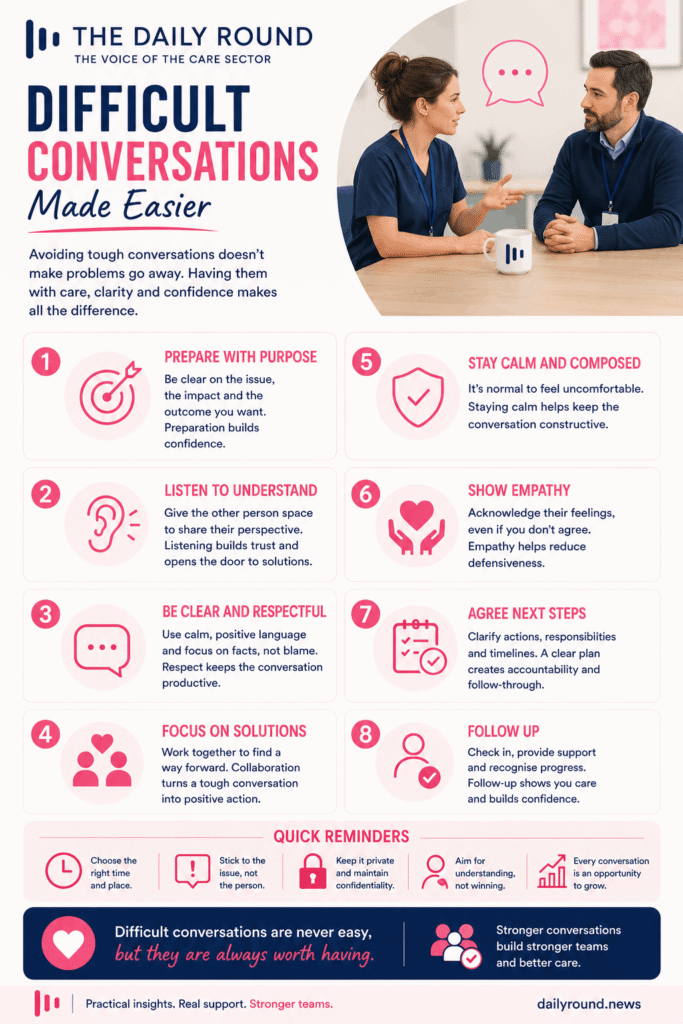
Every manager will face difficult conversations. The difference between a good leader and a great one isn’t avoiding them, it’s knowing how to have them well.
Whether it’s addressing poor performance, discussing attendance, resolving conflict or giving constructive feedback, difficult conversations are an inevitable part of leadership. Yet they’re also one of the tasks many managers dread the most.
Some conversations are delayed because we don’t want to upset someone. Others happen too late, after frustration has built on both sides. The reality is that handled well, difficult conversations don’t damage relationships, they often strengthen them.
Most people don’t enjoy conflict. Healthcare and social care professionals are naturally compassionate, so raising concerns about a colleague’s behaviour or performance can feel uncomfortable. Many managers worry they’ll say the wrong thing, upset someone or make the situation worse.
Unfortunately, avoiding the conversation rarely solves the problem. In fact, delaying feedback often allows issues to grow, creating greater stress for everyone involved.
The most productive conversations begin before anyone enters the room. Take time to think about:
The aim isn’t to win an argument. It’s to reach a positive outcome together. Being prepared helps you stay focused on the facts rather than reacting emotionally.
One of the biggest mistakes managers make is doing all the talking. Effective conversations involve listening just as much as speaking.
Give the other person the opportunity to explain their perspective. There may be circumstances or challenges you weren’t aware of. Listening doesn’t mean lowering expectations. It means making sure you fully understand the situation before deciding what happens next.
Feedback should always relate to actions, not personal characteristics. Instead of saying:
“You’re unreliable.”
Try saying:
“I’ve noticed you’ve arrived late several times this month, and it’s affecting handovers.”
Specific examples make conversations clearer, fairer and easier to resolve.
Even when discussing challenging issues, respect should remain at the centre of every conversation.
People are far more likely to engage positively when they feel respected.
The best conversations don’t finish with identifying the problem. They finish with agreeing on what happens next. Ask questions such as:
Creating a shared action plan gives both parties clarity and accountability.
One conversation rarely changes behaviour on its own. Following up demonstrates consistency and shows that you’re genuinely invested in helping someone succeed. Recognise progress. Offer support where needed.
If expectations haven’t been met, address them early rather than allowing frustration to build again. Leadership is built through consistency, not one-off conversations.
Managers often underestimate the wider impact of difficult conversations. When poor behaviour goes unchallenged, teams notice.
When concerns are addressed fairly and respectfully, teams notice that too. Every conversation sends a message about the standards, values and culture of an organisation.
Handled well, difficult conversations create trust, accountability and stronger relationships.
The conversations we avoid are often the ones our teams need us to have most. Not because people enjoy difficult feedback, but because uncertainty is often far more stressful than honesty.
Great leaders don’t have difficult conversations because they enjoy confrontation. They have them because they care about their people, their teams and the quality of care being delivered. Kindness and accountability aren’t opposites. The very best leaders demonstrate both at the same time.
Join organisations across health and social care that are investing in happier, healthier workplaces with the Daily Round Wellbeing Employer programme.
Download our Employer Wellbeing Brochure to discover what’s included, or become a Daily Round Wellbeing Employer today.
Posted by:
Mehala
Editorial Assistant – The Daily Round
Busy day? We’ve got you covered. Get FREE daily news, practical insights, opportunities and wellbeing content, carefully curated for busy health and social care professionals. Just enter your details below to get The Daily Briefing delivered straight to your inbox.
 newsdesk@dailyround.news