newsdesk@dailyround.news
Industry Insight

Stay up to date with the latest health and social care news from across the UK. From breaking stories and sector updates to emerging trends, challenges and innovations shaping care.
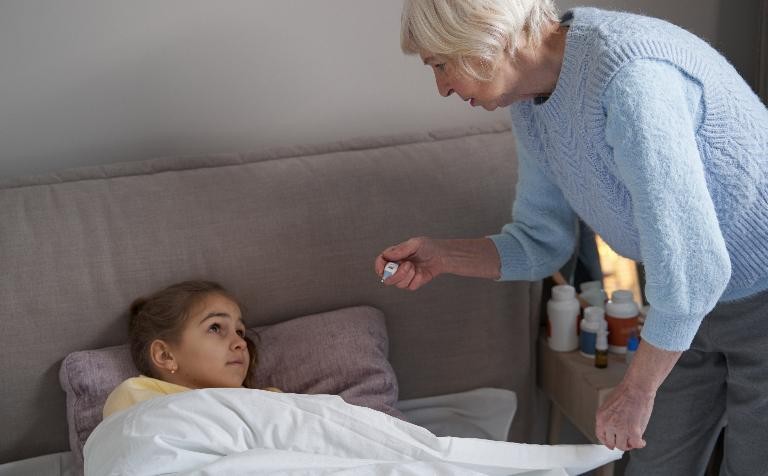
Seriously ill children are being denied the choice to spend their final days at home because large parts of England still do not provide round-the-clock community end-of-life care, new research has found.
Freedom of Information requests by children’s palliative care charity Together for Short Lives found that 15 of England’s 42 integrated care boards (ICBs) – more than a third – do not commission 24-hour end-of-life care at home for children.
Only 13 ICBs, representing 31% of the total, were able to demonstrate that they commissioned the care required. Another 10 provided some but not all of the support expected, while three said they were still in the process of arranging services.
The findings mean that whether a seriously ill child can spend their final days at home with their family can depend significantly on where they live.
Almost 89,000 children and young people under 19 in England are estimated to be living with a life-limiting or life-threatening condition, with advances in medicine allowing more children with complex illnesses to survive for longer. The number has almost trebled since 2003/04, while approximately 1,600 children die each year.
For some families, being able to care for their child at home towards the end of life is enormously important. It can allow a child to remain in familiar surroundings with parents, siblings and other family members rather than spending their final days on a hospital ward.
Doing that safely, however, requires substantial support. Children approaching the end of life can have highly complex medical needs, meaning families may need access to specialist nurses, doctors and therapists alongside appropriate medicines, equipment and professional advice at any time of the day or night.
Without those services in the community, families can be left with little realistic choice but to seek help through A&E or return their child to hospital when their condition deteriorates.
Nick Carroll, chief executive of Together for Short Lives, described the gaps as unacceptable and said families were being deprived of precious time together because the health and care system had failed to ensure appropriate community support was available.
He said it was particularly concerning that some seriously ill children were waiting in hospital because the services necessary to care for them safely in the community had not been arranged.
The latest findings are particularly significant because access to children’s palliative care is not simply intended to depend on individual local priorities. The Health and Care Act 2022 introduced an explicit legal requirement for integrated care boards to commission palliative care services that meet the reasonable requirements of the people for whom they are responsible.
National standards also state that children and young people approaching the end of life should have access to nursing care and advice from a consultant in paediatric palliative medicine at any time of the day or night when needed.
Despite those expectations, provision has remained inconsistent.
Research published by Together for Short Lives last year found that just 19% of ICBs formally commissioned services meeting the 24/7 end-of-life care at home standard. Although the latest figures suggest provision has subsequently improved in some areas, substantial gaps remain.
The charity has identified workforce shortages, funding pressures and inconsistent local accountability as major barriers to developing sustainable services.
Its previous analysis estimated a £310 million funding gap in children’s palliative care across England and found that only half of families responding to its survey felt well supported. More than a quarter said they felt poorly supported, while 9% did not feel supported at all.
Children’s palliative care also relies heavily on charitable organisations, including children’s hospices, alongside NHS services. Together for Short Lives has previously warned that some specialist services provided by NHS trusts are not fully reimbursed by local commissioners, while voluntary organisations are being expected to fill gaps left by statutory provision.
The consequences can extend well beyond where a child eventually dies. In March, Children’s Commissioner for England Dame Rachel de Souza highlighted what she described as a hidden crisis involving children who were medically ready to leave hospital but could not be discharged because appropriate community care, social care, housing or placements were unavailable.
Her investigation found examples of children remaining in hospital for months and, in some cases, years after they no longer needed to be there for medical reasons.
For children with life-limiting conditions, difficulties arranging community care can create a particularly painful dilemma. A hospital may be able to provide the clinical support a child requires, but remaining there can prevent families spending their remaining time together in the environment they would have chosen.
Sarah Buchan Cooke experienced what appropriate community support can make possible when her son Dylan died at home in January 2023, shortly before his fourth birthday.
Dylan had Sandhoff disease, a rare inherited neurodegenerative condition, and required round-the-clock care. After spending an extended period in hospital, support from Great Ormond Street Hospital and children’s hospice Haven House enabled his family to bring him home for the final stage of his life.
Buchan Cooke has described having Dylan at home at the end of his life as enormously important to her family and said it was heartbreaking to know that other parents in the same circumstances might not have that choice simply because the necessary support was unavailable where they lived.
Not every family will want their child to die at home. Some may prefer a children’s hospice or hospital, while a child’s clinical condition may mean one setting is more appropriate than another. Good palliative care is therefore not about establishing home as the correct place to die, but allowing children and families meaningful choice wherever clinically possible.
The NHS itself advises that people approaching the end of life may receive care at home, in hospital, in a hospice or in other appropriate settings and that palliative care teams should try to organise care according to a person’s wishes wherever possible.
The NHS Alliance, which represents ICBs, said every child with a life-limiting condition and every family supporting them should be able to access high-quality palliative and end-of-life care regardless of where they live.
It acknowledged that commissioning can be complex because services are delivered through combinations of children’s hospices, community teams, specialist NHS services and voluntary organisations, with arrangements differing between areas.
The organisation said ICBs remained committed to reducing unwarranted variation and increasing access to care closer to people’s homes.
However, Together for Short Lives argues that complexity does not remove the responsibility to ensure services exist. The charity is calling for greater national accountability, sustainable funding and sufficient specialist staff to ensure children can receive palliative care wherever they and their families choose.
The government is currently developing a new modern service framework for palliative and end-of-life care. Campaigners are pressing ministers to ensure the specific needs of babies, children and young people are explicitly addressed within it rather than assuming a system predominantly designed around adult end-of-life care will also meet children’s needs.
That distinction matters. A child with a life-limiting condition may require years of highly specialised palliative support involving education, play, development, respite and support for parents and siblings alongside medical treatment. Their needs can be very different from those of an adult approaching the end of life.
For families facing the death of a child, there are few decisions more personal than where those final days should be spent. There will not always be a choice, and circumstances can change rapidly when a child becomes seriously unwell.
But that decision should not be taken away simply because one NHS area has commissioned the necessary community team and another has not.
For the thousands of families caring for seriously ill children across England, equitable palliative care means having appropriate support available before a crisis occurs – and, when the end comes, having the greatest possible choice over where and how their child is cared for.
Posted by:
K Jadon
Editorial Assistant – The Daily Round


Busy day? We’ve got you covered. Get FREE daily news, practical insights, opportunities and wellbeing content, carefully curated for busy health and social care professionals. Just enter your details below to get The Daily Briefing delivered straight to your inbox.
Busy day? We’ve got you covered. Get FREE daily news, practical insights, opportunities and wellbeing content, carefully curated for busy health and social care professionals. Just enter your details below to get The Daily Briefing delivered straight to your inbox.