newsdesk@dailyround.news
Policy Watch

<p>Clear, concise updates on the regulations, legislation, and decisions shaping the care sector.</p>
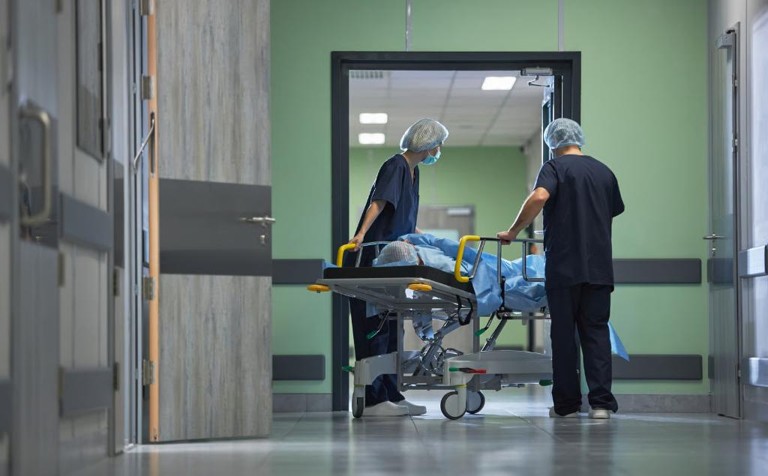
Scottish hospitals have been told that treating patients in corridors is unacceptable and should be eradicated as part of a new five-year plan designed to tackle overcrowding, long waits and delays moving patients through the NHS.
The Scottish Government’s Health and Care Improving Flow Plan sets out a series of changes intended to reduce pressure on hospitals by providing significantly more healthcare at home and within communities. Hospitals would increasingly concentrate on emergencies, life-threatening conditions and specialist treatment, while patients who can safely receive care elsewhere would be directed towards alternative services.
Corridor care has become one of the most visible signs of pressure across NHS emergency services, with patients sometimes treated on trolleys or beds in corridors when departments do not have sufficient appropriate space. The new Scottish plan explicitly states that patients should never receive care in an environment that compromises their dignity, privacy or experience and says health boards will be expected to take sustained action to tackle the practice.
There is no single measure intended to eliminate corridor care. Instead, ministers are attempting to address several of the problems that contribute to overcrowded hospitals, including delays in emergency departments, high hospital occupancy, unnecessary admissions and patients remaining in hospital after they are clinically ready to leave.
One of the biggest changes will involve discharge planning. Patients admitted to hospital will be given a planned discharge date from their first day, with the majority expected to leave within three days where it is clinically safe. The government also wants barriers preventing patients from being discharged at weekends to be removed.
All health boards are expected to implement the government’s Discharge Without Delay approach by this winter. This includes greater use of Acute Frailty Units and closer working between health and social care teams so that arrangements for a patient’s return home, or transfer to another appropriate setting, begin immediately rather than towards the end of their hospital stay.
Ministers argue that keeping people in hospital for longer than medically necessary can itself cause harm, particularly for older people and those living with frailty. Extended hospital stays can contribute to physical and cognitive decline, leaving some patients less able to manage independently when they eventually return home.
At the other end of the hospital journey, the government wants to prevent unnecessary admissions in the first place. Same-day emergency care will be expanded so more patients can receive diagnostic tests and specialist assessment without needing to stay overnight, while new Integrated Navigation Centres involving NHS 24, the Scottish Ambulance Service and health boards will help direct patients towards the most appropriate service.
Hospital at Home services will also expand significantly. More than 10,000 patients are expected to receive this form of care during the coming winter, allowing people who would otherwise require hospital treatment to receive clinical care in their own homes where appropriate. Community health and care hubs will meanwhile build on services including GP walk-in provision, mental health hubs and healthy heart and lung checks.
The changes come against a backdrop of sustained pressure on Scotland’s hospitals. The government’s own assessment acknowledges that people continue to wait too long for urgent and unscheduled care, emergency departments and ambulance services face significant pressure, hospitals frequently operate at very high occupancy levels and too many patients remain in hospital after they are clinically ready to leave.
Scotland has a longstanding target for 95% of people attending A&E to be admitted, transferred or discharged within four hours, but performance has remained considerably below that level. Ministers have also been attempting to tackle lengthy waits for planned hospital treatment, with progress made in reducing some of the longest waits but previous targets to eliminate them having been missed.
Health Secretary Angela Constance said improving hospital flow was ultimately about ensuring people could receive care when and where they needed it. She said more treatment would be offered through pharmacies, community hubs and other services closer to people’s homes, although some patients could be required to travel further for highly specialised treatment.
The government is also asking the public to use services differently, including calling 999 only for emergencies and using NHS 24 on 111 for non-emergency urgent healthcare. A national campaign is due to launch this autumn to encourage people to access what ministers describe as the right care, in the right place and at the right time.
The ambition to eradicate corridor care will ultimately depend on whether improvements elsewhere in the system create enough capacity inside hospitals. Moving patients through emergency departments more quickly relies not simply on the availability of hospital beds, but on community healthcare, social care, discharge arrangements and suitable support being available when patients are ready to leave.
The Scottish Government acknowledges that there is no single solution to corridor care and says the measures within the plan are intended to work collectively to reduce pressure across the system. Health boards that fail to make sufficient progress could face additional government support and, where necessary, intervention.
The plan runs until 2031, but ministers say patients should begin seeing changes during the next 12 months. Its success will therefore be measured not simply by a commitment to end treatment in corridors, but by whether Scotland can create enough capacity outside hospital to prevent patients ending up there in the first place.
Posted by:
K Jadon
Editorial Assistant – The Daily Round



Busy day? We’ve got you covered. Get FREE daily news, practical insights, opportunities and wellbeing content, carefully curated for busy health and social care professionals. Just enter your details below to get The Daily Briefing delivered straight to your inbox.
Busy day? We’ve got you covered. Get FREE daily news, practical insights, opportunities and wellbeing content, carefully curated for busy health and social care professionals. Just enter your details below to get The Daily Briefing delivered straight to your inbox.