newsdesk@dailyround.news

The UK’s fastest-growing news and insight platform for the care sector.
Recommended reading to support learning, reflection, and wellbeing across health and social care.
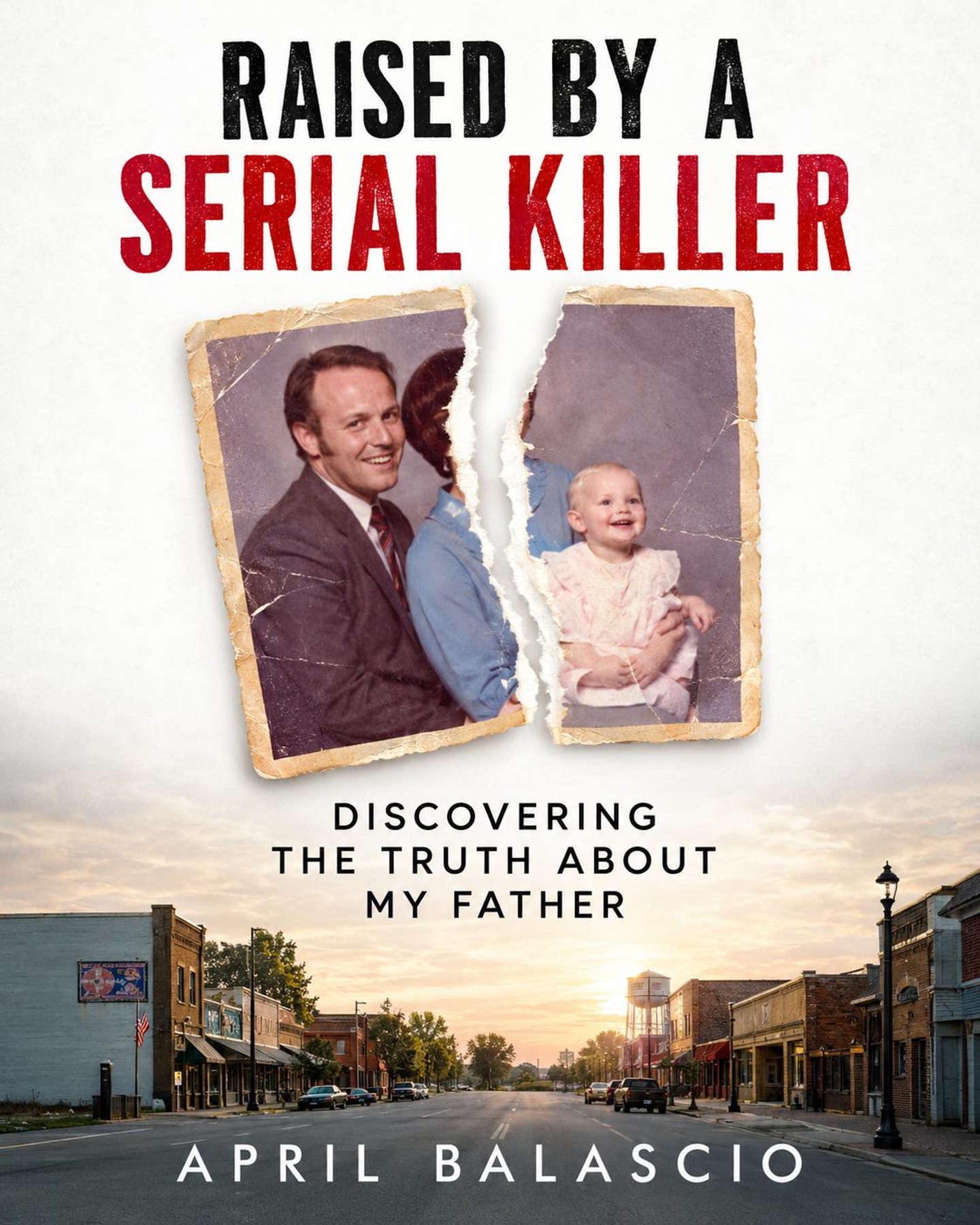
There are books you enjoy, books you recommend and then there are books that leave you sitting in silence for a while after you’ve finished them. Raised by a Serial Killer by April Balascio was one of those books for me.
I actually found it difficult to read this casually. I remember sitting on my balcony while a friend was staying with me and realising that I didn’t want to talk. I needed to be left alone with this story because what I was reading was so extraordinary, and so awful that I needed time to absorb it.
April Balascio is the daughter of Edward Wayne Edwards, an American serial killer who was eventually convicted of multiple murders. But this isn’t really his story. That’s important. It’s hers.
It’s the story of a child growing up in an extraordinarily unstable and frightening environment, of an adult gradually beginning to question what she remembered, and ultimately of a daughter making the almost unimaginable decision to contact the police because she suspected her own father might be responsible for murder.
This was the part of the book that really affected me, and it’s also where I think Raised by a Serial Killer has particular relevance for The Daily Round. Long before April knew the full truth about her father, she and her siblings were children living within an environment of violence, manipulation, instability and fear. The family moved repeatedly across different states, and April describes severe physical abuse and psychological manipulation within the home. Contemporary accounts of the memoir have also documented the deprivation and chaotic living conditions the children sometimes experienced.
We need to be careful here because it’s very easy, looking backwards, to start diagnosing somebody from the pages of a memoir. I don’t think that’s appropriate. But there is a wider healthcare conversation worth having about children who grow up in frightening or unstable homes. Childhood adversity doesn’t simply belong to childhood. Experiences involving violence, abuse, neglect and household instability are recognised in public health as potentially having consequences that can extend into adult health and wellbeing.
Reading April’s story made me think about those children. Not every unsafe childhood looks unsafe from outside. Not every frightened child has the language to explain what is happening at home. And children inevitably develop ways of understanding and surviving the environment they’re raised in because, to them, that environment is simply their life.
That part of the book stayed with me just as much as the crimes themselves.
In 2009, April began searching online for unsolved murders in places where her family had lived. When she came across information about the 1980 murders of teenagers Tim Hack and Kelly Drew in Wisconsin, memories and details from her childhood began to connect in a way she could no longer ignore.
She contacted the authorities. That phone call contributed to the investigation that led to her father’s arrest. Edwards was subsequently convicted in connection with multiple murders. I can’t imagine what it takes to make a call like that.
This wasn’t a stranger she suspected. It was her father. Whatever he had done, April still had an entire childhood and a complicated family history attached to this man. One of the things the book does particularly well is resist turning that reality into something emotionally simple.
For me, April’s courage is the story.
I read true crime, but I wouldn’t recommend this simply because it’s an extraordinary crime story. What made Raised by a Serial Killer so powerful for me was April herself. There is something very different about hearing this story from the perspective of the daughter who lived inside that family and then had to reconcile the father she knew with the crimes he had committed.
It raises difficult questions about family, memory, responsibility, survival and what it means to discover that somebody central to your life was capable of something almost impossible to comprehend.
The book also avoids making Edward Wayne Edwards into some fascinating antihero. I appreciated that. There is already enough true crime content that places the killer at the centre of the story.
Here, I was far more interested in the people who had to live around him.
April’s story first reached a large audience through the acclaimed 2019 podcast The Clearing, which explored her father’s crimes and her role in bringing him to the attention of investigators.
Raised by a Serial Killer: Discovering the Truth About My Father gives April the space to tell that story in her own words, including the childhood that came before the investigation and what followed afterwards. The book was first published in the US in December 2024 by Gallery Books, an imprint of Simon & Schuster.
I’m actually glad I read the memoir before listening to the podcast. There was something about sitting quietly with April’s own account that made this incredibly personal.
★★★★★ 5 out of 5 stars.
This is one hell of a story, but I don’t mean that in the sensational true-crime sense. What stayed with me wasn’t simply that April Balascio discovered her father was a serial killer. It was the childhood that came before that discovery, the children growing up within circumstances they couldn’t possibly fully understand, and the adult woman who eventually had to decide what to do with the suspicions she could no longer ignore.
It also made me think about how important it is that healthcare professionals, teachers and other adults who come into contact with children recognise that what happens at home can profoundly shape a child’s world, even when that child isn’t able to explain what is wrong.
This isn’t an easy read and I certainly wouldn’t describe it as enjoyable. But I couldn’t put it down, and I have never forgotten it. For me, Raised by a Serial Killer isn’t really a book about a serial killer at all. It’s about the daughter who survived being raised by one, and ultimately chose to tell the truth.
Posted by:
Mehala
Editorial Assistant – The Daily Round
Busy day? We’ve got you covered. Get FREE daily news, practical insights, opportunities and wellbeing content, carefully curated for busy health and social care professionals. Just enter your details below to get The Daily Briefing delivered straight to your inbox.
Busy day? We’ve got you covered. Get FREE daily news, practical insights, opportunities and wellbeing content, carefully curated for busy health and social care professionals. Just enter your details below to get The Daily Briefing delivered straight to your inbox.