newsdesk@dailyround.news
UK News

<p>Stay up to date with the latest health and social care news from across the UK. From breaking stories and sector developments to the people, organisations and issues making the news.</p>
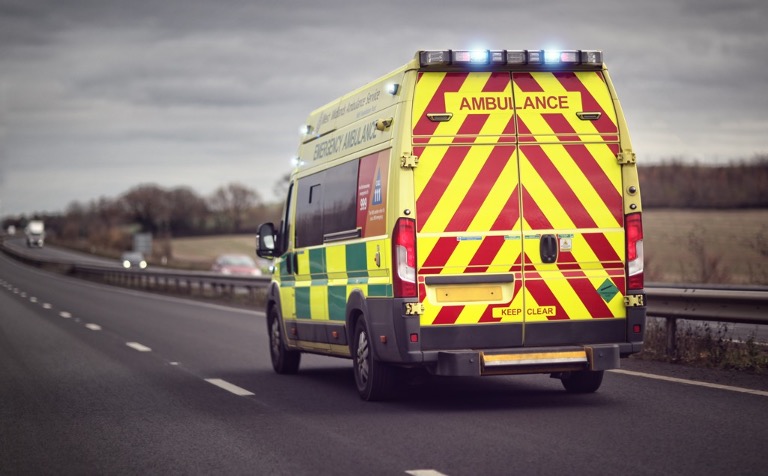
Every ambulance trust in southern England has missed this year’s interim response target for urgent calls including suspected strokes and heart attacks, according to NHS England data.
Ambulance services are expected to reach category two emergencies in an average of 25 minutes during 2026/27, as part of a longer-term effort to restore the national constitutional standard of 18 minutes. Between April and August, the average response across England was 29 minutes, almost one minute slower than during the same period last year.
South Western Ambulance Service recorded the longest average among southern trusts at 38 minutes and 41 seconds. South Central averaged 32 minutes and eight seconds, London 31 minutes and 24 seconds, and South East Coast 27 minutes and 26 seconds. The East Midlands and East of England services also remained outside the target.
In contrast, the North East Ambulance Service recorded an average response of 19 minutes and 13 seconds. Yorkshire and North West ambulance services also remained within 25 minutes, at 24 minutes and 13 seconds and 24 minutes and 22 seconds respectively.
The figures cover only the first five months of the financial year and do not include winter, when demand, staff sickness and pressure on hospital beds can worsen delays. Ambulance performance is closely connected to the wider health system, particularly the time crews spend waiting to transfer patients into busy emergency departments.
For people experiencing time-critical conditions such as stroke or heart attack, a rapid clinical response can affect treatment options and outcomes. NHS services are working to improve hospital handovers, provide more telephone-based clinical advice and direct suitable patients towards alternatives to A&E, but the regional differences show that access to timely emergency care remains uneven.
Posted by:
Mehala
Editorial Assistant – The Daily Round


Busy day? We’ve got you covered. Get FREE daily news, practical insights, opportunities and wellbeing content, carefully curated for busy health and social care professionals. Just enter your details below to get The Daily Briefing delivered straight to your inbox.
Busy day? We’ve got you covered. Get FREE daily news, practical insights, opportunities and wellbeing content, carefully curated for busy health and social care professionals. Just enter your details below to get The Daily Briefing delivered straight to your inbox.