newsdesk@dailyround.news
UK News

Stay up to date with the latest health and social care news from across the UK. From breaking stories and sector developments to the people, organisations and issues making the news.
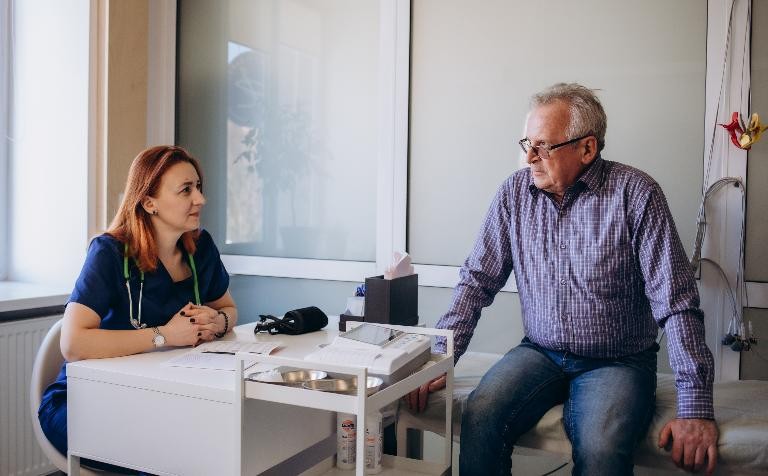
The chair of NHS England has called for faster reform of hospital outpatient care, describing the current model as outdated and an inefficient use of patients’ and clinicians’ time.
Speaking at a King’s Fund conference, Penny Dash said the NHS continues to provide around 120 million outpatient appointments each year, despite repeated calls to replace traditional hospital follow-ups with more efficient forms of care. Approximately two-thirds of those appointments are follow-ups.
Dash said healthcare leaders had discussed moving away from outpatient clinics for two decades, but the system had failed to make the necessary changes.
“Pretty much every conference I’ve been to in 20 years, someone has said we don’t need outpatients. It’s an outdated model. Let’s get rid of outpatients,” she said.
Her remarks did not amount to a formal proposal to abolish every face-to-face specialist appointment. Instead, she argued that many patients could receive advice and continuing support through redesigned services, including the forthcoming NHS Online hospital.
Expected to launch in 2027, NHS Online will allow GPs to refer eligible patients to specialist clinicians elsewhere in the country through the NHS App. Its initial services are expected to cover conditions including suspected endometriosis, fibroids, enlarged prostate and raised prostate-specific antigen levels.
Dash said the online service would move away from the conventional system of referrals and outpatient appointments by providing patients with specialist advice more quickly.
She also called for greater cooperation between GP practices, community care, mental health services and hospital specialists. This would include multidisciplinary working, individual care plans and shared patient records.
However, the proposed changes are likely to raise questions about which appointments can safely be delivered remotely and whether additional work will be transferred to already stretched primary and community care services.
Modernising outpatient care could save patients unnecessary journeys and reduce repetitive hospital visits, but reform must be based on clinical need rather than appointment numbers alone. For some patients, particularly those requiring physical examinations, diagnostic procedures or close monitoring of complex conditions, access to an in-person specialist will remain essential.
Posted by:
K Jadon
Editorial Assistant – The Daily Round


Busy day? We’ve got you covered. Get FREE daily news, practical insights, opportunities and wellbeing content, carefully curated for busy health and social care professionals. Just enter your details below to get The Daily Briefing delivered straight to your inbox.
Busy day? We’ve got you covered. Get FREE daily news, practical insights, opportunities and wellbeing content, carefully curated for busy health and social care professionals. Just enter your details below to get The Daily Briefing delivered straight to your inbox.