
 newsdesk@dailyround.news
Industry Insight

Stay up to date with the latest health and social care news from across the UK. From breaking stories and sector updates to emerging trends, challenges and innovations shaping care.
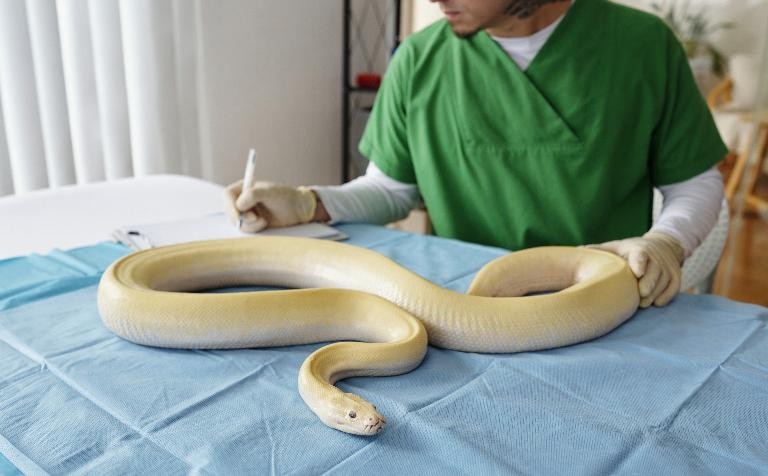
A 15-foot python named Jodie Foster has made a remarkable recovery after becoming what is believed to be the first snake in the world to receive a pioneering cancer treatment normally used in humans.
The 23-year-old reticulated python, who lives at Chester Zoo, underwent electrochemotherapy after a cancerous tumour returned following earlier surgery and began invading her jawbone. Keepers had initially noticed something was wrong when Jodie started eating less and became less active than usual. Tests later revealed a fibrosarcoma, a malignant tumour, in her jaw.
Although vets initially removed the tumour through surgery, it later returned and began destroying part of her jawbone. With the growth making it increasingly difficult for Jodie to eat, vets feared they could lose her and began exploring whether a different approach could be used.
Specialists from Chester Zoo worked alongside cancer experts at the University of Liverpool to adapt electrochemotherapy for Jodie. The treatment combines the chemotherapy drug bleomycin with carefully controlled electrical pulses delivered to the affected area. The pulses temporarily make cancer cells more permeable, helping the drug enter them more effectively.
Jodie’s size presented another challenge. At around 15 feet long, she could not fit on a conventional operating table, so the veterinary team pushed two tables together to create an operating area roughly the size of a double bed.
During the 90-minute procedure, vets removed the tumour and part of the diseased jawbone before using electrochemotherapy to target cancer cells that may have remained. She was kept warm throughout the operation using heated blankets and warmed air before recovering from the anaesthetic.
Months later, the treatment appears to have been a success. Jodie is eating normally, exploring her habitat and has returned to what her keepers describe as her usual “bright and feisty” self. Despite losing part of her jawbone, her ability to strike, grip and swallow food has not been affected.
A final check carried out this week found no signs that the cancer had returned.
The veterinary team now plans to formally publish details of the procedure so other specialists around the world can learn from the case. Experts involved in Jodie’s treatment say the breakthrough demonstrates how collaboration between zoo medicine and cancer specialists could open up new treatment possibilities for animals in the future.
Posted by:
K Jadon
Editorial Assistant – The Daily Round



Sign up for FREE daily news, practical insights, opportunities and wellbeing support. Complete the short form below to personalise your experience with The Daily Round.
Sign up for FREE daily news, practical insights, opportunities and wellbeing support. Complete the short form below to personalise your experience with The Daily Round.