newsdesk@dailyround.news
UK News

Stay up to date with the latest health and social care news from across the UK. From breaking stories and sector developments to the people, organisations and issues making the news.
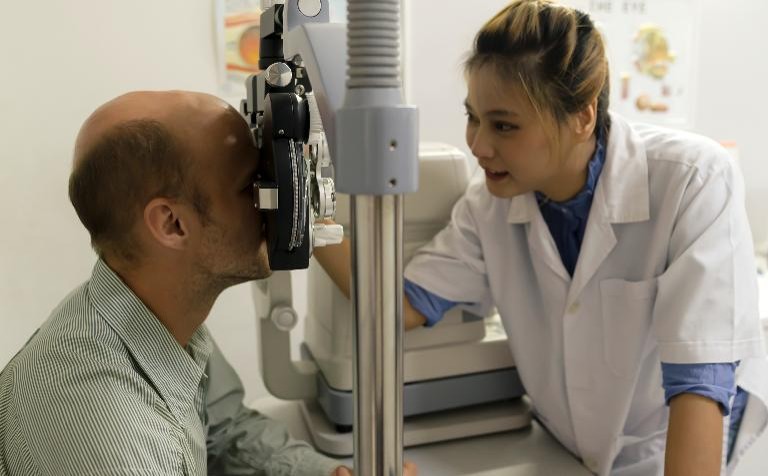
Routine eye scans could potentially help identify people at risk of atrial fibrillation years before the heart condition is diagnosed, according to new research led by University College London and Moorfields Eye Hospital.
Researchers analysed retinal images from more than 90,000 people and discovered differences in the structure of the retina among those with atrial fibrillation (AF), the UK’s most common heart rhythm disorder.
The study found that people with AF consistently had thinning in a layer of nerve cells at the back of the eye known as the macular ganglion cell-inner plexiform layer. The thinner this retinal layer was, the more likely someone was to have AF.
Importantly, researchers also identified the changes in people who had not yet been diagnosed. Those who subsequently developed AF had thinner retinal layers an average of four years before they presented to hospital with the condition, even after researchers accounted for factors including age, sex, ethnicity, high blood pressure, diabetes, smoking and alcohol consumption.
AF affects more than 1.5 million people in the UK and increases the risk of stroke, heart failure and death. The condition can occur intermittently and sometimes causes no symptoms, meaning it may not be detected during a standard electrocardiogram, or ECG.
Researchers believe the retinal thinning could potentially be associated with small strokes and reduced blood flow to nerve cells in the retina, although further research will be needed to understand the relationship.
The researchers are not suggesting eye scans should replace ECGs for diagnosing atrial fibrillation. Instead, retinal imaging could eventually provide an additional way of identifying people who may benefit from further cardiac assessment.
Dr Josef Huemer, from the UCL Institute of Ophthalmology and Moorfields Eye Hospital NHS Foundation Trust, said that if the findings are confirmed by further research, routine eye examinations could potentially help identify people who need closer heart monitoring and enable earlier treatment to reduce their risk of stroke.
The research, published in PLOS Digital Health, adds to a growing area of science known as oculomics, which explores how changes within the eye could provide clues about health conditions elsewhere in the body.
Posted by:
K Jadon
Editorial Assistant – The Daily Round




Busy day? We’ve got you covered. Get FREE daily news, practical insights, opportunities and wellbeing content, carefully curated for busy health and social care professionals. Just enter your details below to get The Daily Briefing delivered straight to your inbox.
Busy day? We’ve got you covered. Get FREE daily news, practical insights, opportunities and wellbeing content, carefully curated for busy health and social care professionals. Just enter your details below to get The Daily Briefing delivered straight to your inbox.