newsdesk@dailyround.news
UK News

Stay up to date with the latest health and social care news from across the UK. From breaking stories and sector developments to the people, organisations and issues making the news.
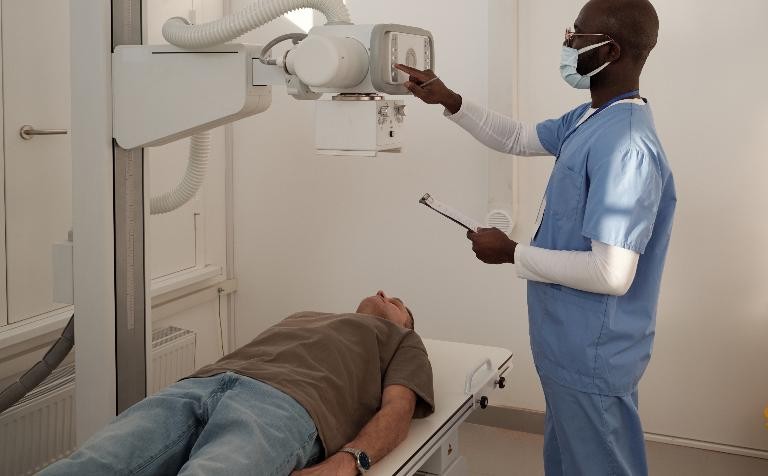
A coroner has raised concerns about the risk of future deaths after a woman who was physically unable to undergo a colonoscopy was recorded as having refused the investigation, with no evidence that she was offered an alternative test.
Marie Bell had been referred for a colonoscopy in February 2025 but was unable to position herself appropriately for the procedure because of problems with her hip. Rather than her records reflecting that the test could not be carried out for physical reasons, she was recorded as having declined it.
A cancerous mass was subsequently discovered and Bell later underwent bowel surgery to remove it. She died four months after the original colonoscopy referral following complications during the operation.
Sunderland coroner Abigail Combes has now issued a Prevention of Future Deaths report to NHS England after identifying concerns about what happens when a patient cannot undergo a particular diagnostic procedure because of another medical condition.
The coroner found there was no evidence that Bell had been offered an alternative investigation, such as a CT scan, when it became apparent that the colonoscopy could not take place.
At the centre of the case is an important distinction between a patient refusing investigation and a patient being physically unable to undergo one particular type of test.
Combes said that where a person’s existing medical conditions prevent them from undergoing a particular investigation, this should not be treated as though they have declined investigation altogether. Instead, consideration should be given to whether another diagnostic option is available.
The inquest did not conclude that the delay in diagnosing Bell’s cancer caused the surgical complication that ultimately led to her death. However, the coroner found that diagnosing the cancer earlier would have meant the mass was identified sooner and the surgery required to remove it would have been less complex.
Her concern now extends beyond Bell’s individual case. A Prevention of Future Deaths report is issued when a coroner believes action should be considered to prevent similar circumstances contributing to deaths in the future.
The case raises a wider patient-safety issue around how decisions and unsuccessful procedures are recorded in medical notes. Describing a patient as having refused a test can suggest that an informed choice has been made not to proceed with investigation. Being willing to undergo investigation but physically unable to complete one particular procedure is a very different situation.
That difference can be crucial if the information recorded determines what happens next.
NHS England has said systems are already in place to allow alternative investigations to colonoscopy and that trusts in the region are being asked to review the criteria used for patients who cannot undergo the procedure.
South Tyneside and Sunderland NHS Foundation Trust, where Bell later underwent surgery, said the inquest did not criticise the care provided by the trust. It also said it reviews cases such as this to identify learning and opportunities for improvement. The issue surrounding Bell’s colonoscopy involved a different NHS trust.
For healthcare professionals, the case demonstrates why the language used in patient records can matter far beyond administrative accuracy. A record that says someone has declined investigation can potentially send their care down a very different pathway from one which explains that a particular test was clinically or physically unsuitable.
For patients, it also reinforces the importance of having alternatives considered when one diagnostic procedure cannot be completed.
Bell’s case does not establish that an earlier diagnosis would have prevented her death, and the coroner has not made that finding. What it has identified is a gap that could potentially place another patient at risk if it is not addressed.
A patient saying, or demonstrating, that they cannot undergo one particular test should never automatically mean the end of an investigation. Sometimes the next step simply needs to be a different one.
Posted by:
K Jadon
Editorial Assistant – The Daily Round




Busy day? We’ve got you covered. Get FREE daily news, practical insights, opportunities and wellbeing content, carefully curated for busy health and social care professionals. Just enter your details below to get The Daily Briefing delivered straight to your inbox.
Busy day? We’ve got you covered. Get FREE daily news, practical insights, opportunities and wellbeing content, carefully curated for busy health and social care professionals. Just enter your details below to get The Daily Briefing delivered straight to your inbox.