newsdesk@dailyround.news
UK News

<p>Stay up to date with the latest health and social care news from across the UK. From breaking stories and sector developments to the people, organisations and issues making the news.</p>
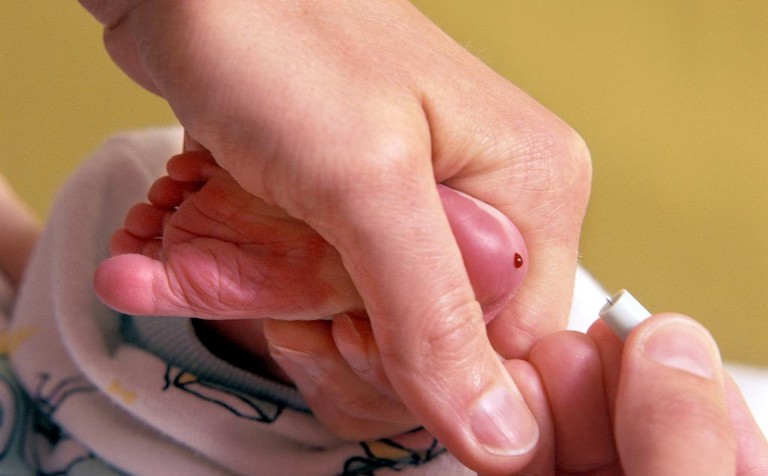
Babies in participating parts of England are being screened for spinal muscular atrophy through the routine newborn heel-prick test, in a development clinicians have described as a major step towards diagnosing and treating the condition before irreversible damage occurs.
The NHS in-service evaluation is examining how screening for spinal muscular atrophy, known as SMA, can be incorporated into the existing newborn blood spot programme. The Robert Jones and Agnes Hunt Orthopaedic Hospital in Shropshire is working with Birmingham Heartlands Hospital as part of the national initiative, which will inform the wider introduction of testing across England.
The heel-prick test is usually carried out when a baby is five days old and already checks for a number of rare but serious conditions, including sickle cell disease, cystic fibrosis and congenital hypothyroidism. In participating areas, the same blood sample will now also be examined for the genetic changes associated with SMA, meaning families will not need to attend an additional screening appointment.
SMA is a rare inherited condition affecting the nerves responsible for muscle movement. It can cause progressive weakness and create serious difficulties with sitting, walking, breathing and swallowing. The condition affects approximately one in every 10,000 babies, although its severity and the age at which symptoms appear can vary considerably.
One of its most serious forms, SMA type 1, usually becomes apparent during the first six months of life and can severely limit life expectancy if left untreated. By the time visible muscle weakness develops, damage to the nerve cells may already have occurred and cannot always be reversed.
That is why screening before symptoms appear is so important. New treatments can substantially change the course of the condition, but their effect is greatest when given as early as possible. Professor Tracey Willis, a consultant paediatric neurologist at the Shropshire hospital, said clinicians had campaigned for SMA to be added to newborn screening because effective treatments are now available.
The programme follows years of campaigning by affected families and charities, who argued that delays in diagnosis were denying some children the best possible chance of benefiting from treatment. Public awareness increased further after former Little Mix singer Jesy Nelson disclosed that her twin daughters had been diagnosed with SMA.
Almost three-quarters of babies born in England are expected to be covered during the initial evaluation. The Government has committed to extending SMA screening to every newborn in England from October 2027, using all 13 laboratories capable of processing the tests.
For families affected by the condition, the change is about far more than receiving an earlier diagnosis. Finding SMA within days of birth could allow treatment to begin before a baby becomes seriously unwell, potentially transforming the child’s development, independence and long-term future.
Register with The Daily Round for the latest sector news, inspections & reports, wellbeing content, workforce insights, expert features and practical updates—delivered free to your inbox.
Posted by:
M Ramalani
Editorial Assistant – The Daily Round

Busy day? We’ve got you covered. Get FREE daily news, practical insights, opportunities and wellbeing content, carefully curated for busy health and social care professionals. Just enter your details below to get The Daily Briefing delivered straight to your inbox.
Busy day? We’ve got you covered. Get FREE daily news, practical insights, opportunities and wellbeing content, carefully curated for busy health and social care professionals. Just enter your details below to get The Daily Briefing delivered straight to your inbox.