Wellbeing for Leaders

Guidance, inspiration, and practical support to help leaders manage wellbeing, build resilience, overcome challenges, and maintain a healthy work-life balance.

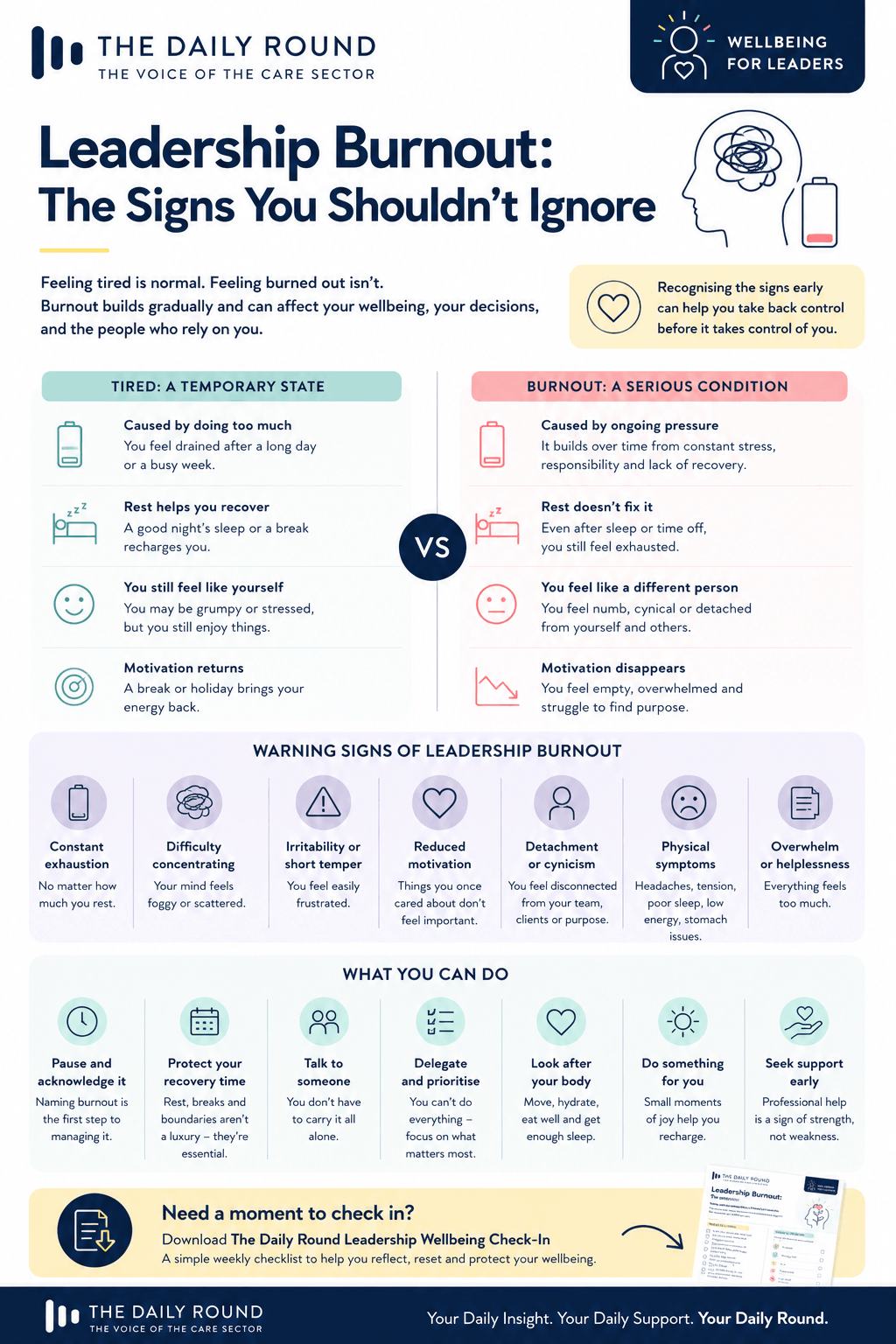
Every leader feels tired from time to time. But burnout is different. It doesn’t disappear after a good night’s sleep or a long weekend, it quietly builds over weeks or months until even the smallest tasks begin to feel overwhelming.
Leadership in healthcare and social care is rewarding, but it also carries an enormous amount of responsibility. You’re supporting staff, caring for the people who rely on your service, managing finances, responding to families, navigating regulations and making difficult decisions every single day. It’s no surprise that many leaders put their own wellbeing at the bottom of the priority list. The problem is that burnout rarely arrives overnight. It develops gradually, making it easy to dismiss the early warning signs as “just another busy week.”
There’s an important difference between being tired and experiencing burnout.
When you’re tired, you usually know why. A demanding week, a late night or a particularly busy period can leave you feeling drained, but with time to rest, your energy gradually returns. Burnout is different. Even after a break, you may still feel emotionally exhausted. Work that once motivated you begins to feel overwhelming, and the enthusiasm you once had is replaced with frustration, detachment or simply going through the motions.
Burnout isn’t about working hard. It’s about carrying relentless pressure without enough time or opportunity to recover.
Burnout looks different for everyone, but there are some common signs that shouldn’t be ignored. You may notice:
Many leaders experience several of these symptoms before recognising that they need support.
Leaders are used to putting other people first. You’re the person colleagues turn to for reassurance, guidance and solutions. That can make it difficult to admit when you’re struggling yourself. It is worth considering what happens when the leader needs support, particularly when the person responsible for supporting others is also struggling to cope. Many leaders also tell themselves that things will improve once the next challenge is over.
Understanding why good leaders can feel lonely may also help explain why some leaders find it difficult to acknowledge that they need support themselves.
But leadership is rarely free from pressure. Waiting for a quieter period may simply mean burnout becomes more deeply rooted.
Recognising burnout early gives you the opportunity to make changes before it begins affecting your health, your relationships or your ability to lead effectively. Start with simple, realistic steps:
You don’t need to change everything overnight. Often, it’s the small, consistent habits that make the biggest difference over time.
Many leaders worry that slowing down means letting people down. In reality, the opposite is often true.
When you’re rested, focused and emotionally well, you’re better equipped to make thoughtful decisions, support your team and respond calmly during difficult situations. Looking after yourself isn’t separate from being an effective leader. It’s one of the foundations of it.
Recognising when you cannot keep pouring from an empty cup is an important part of protecting your wellbeing while continuing to support your team.
Leaders looking for further practical support can explore Wellbeing for Leaders for resources focused on protecting their wellbeing while managing the demands of leadership.
Healthcare and social care are built on compassion, commitment and resilience. But resilience doesn’t mean carrying endless pressure without support. It means recognising your limits, protecting your wellbeing and understanding that even the strongest leaders need time to recover.
Taking steps towards preventing compassion fatigue can also help leaders protect their emotional wellbeing while continuing to support the people who rely on them.
The people who depend on you need you at your best, not simply available.
If this article has resonated with you, download The Daily Round Leadership Burnout Self-Assessment, a simple practical guide designed to help you recognise the early signs of burnout, reflect on your current wellbeing and identify small changes that can help protect your health before exhaustion becomes something more serious.
Posted by:
Mehala
Editorial Assistant – The Daily Round
Busy day? We’ve got you covered. Get FREE daily news, practical insights, opportunities and wellbeing content, carefully curated for busy health and social care professionals. Just enter your details below to get The Daily Briefing delivered straight to your inbox.



 newsdesk@dailyround.news