

Everyday Wellbeing

Advice, information, and resources to help women navigate every stage of life, supporting both physical and mental wellbeing.
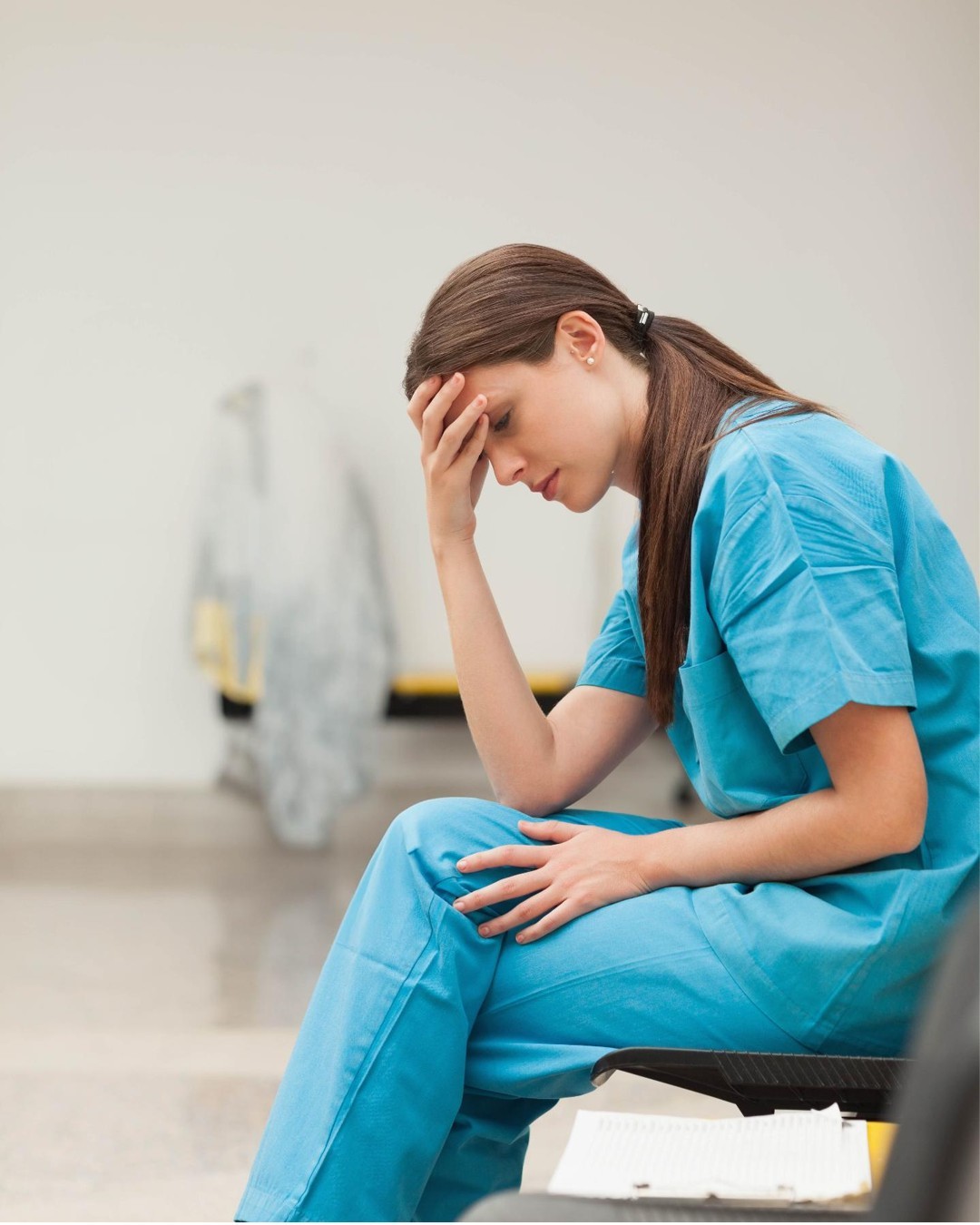



For many women working in health and social care, being tired can feel almost like part of the job description.
Early starts, night shifts, long days, missed breaks and emotionally demanding work can leave anybody exhausted. Add children, ageing parents, household responsibilities, interrupted sleep and the ordinary pressures of life outside work, and it is hardly surprising that so many women reach the end of the day running on empty.
But there is an important difference between being tired after a difficult week and experiencing persistent fatigue that does not seem to improve.
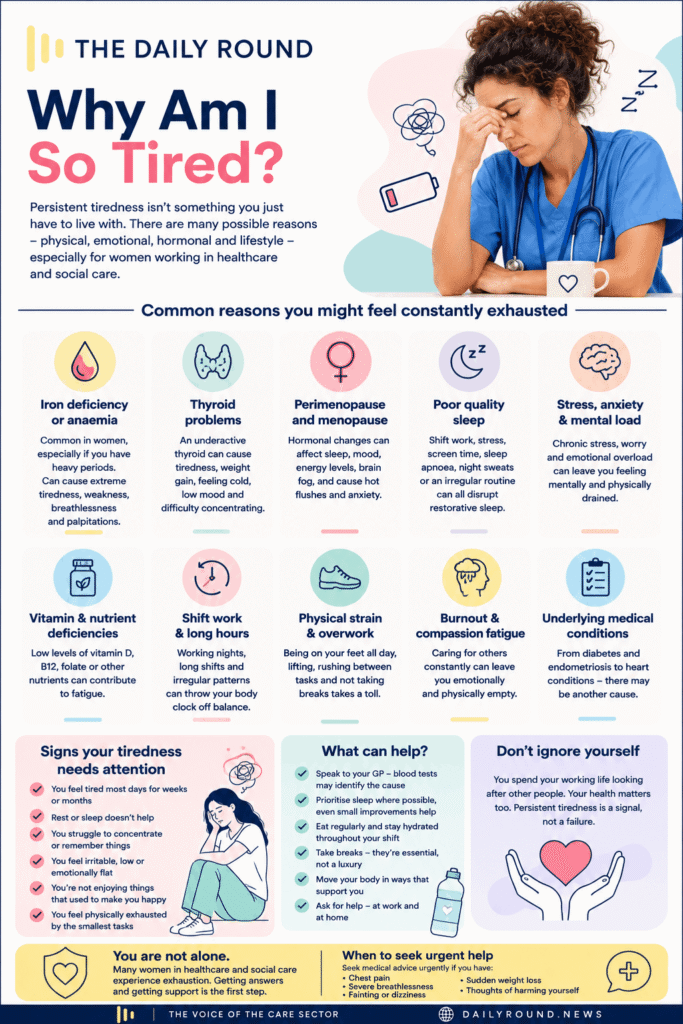
Iron deficiency, anaemia, thyroid problems, sleep disorders, hormonal changes, vitamin deficiencies, mental health difficulties and other medical conditions can all contribute to fatigue. Sometimes the explanation is straightforward. Sometimes several factors are happening at once.
And when you work in a profession where tiredness is normalised, it can be particularly easy to overlook the possibility that something else is going on.
We all get tired.
A run of night shifts, a child waking repeatedly, a stressful week at work or simply staying up too late can leave us desperate for sleep. Usually, when the cause settles and we have an opportunity to rest, we begin to feel better.
Fatigue can feel different. It may be a persistent lack of energy that remains despite sleep or rest. Everyday activities can require more effort than usual, concentration may become difficult and somebody may feel physically or mentally drained without an obvious explanation.
There is no single definition that perfectly describes everybody’s experience, but one thing matters: if tiredness is persistent, unusual for you or interfering with everyday life, it is worth paying attention to.
Working in healthcare does not make unexplained exhaustion medically insignificant.
Health and social care workers are remarkably good at continuing.
That resilience is essential when a ward is short staffed, somebody needs urgent help or a colleague is struggling. But a culture of simply pushing through can have consequences.
You finish the shift despite feeling awful. You skip the break because somebody needs you. You promise yourself you’ll make the GP appointment next week. Then next week arrives and work is busy again.
For women in caring professions, there can also be an uncomfortable irony: spending the entire day noticing changes in other people’s health while ignoring changes in their own.
When everyone around you is tired too, it becomes even easier to assume that exhaustion is simply normal.
Sometimes it is a predictable response to an exhausting job.
Sometimes it isn’t.
One important cause of fatigue in women is iron deficiency.
Women who have periods can be particularly vulnerable to iron deficiency because of blood loss, especially if periods are heavy or prolonged. Iron deficiency can exist before somebody develops iron deficiency anaemia, and symptoms can include tiredness, weakness, headaches, breathlessness, palpitations or difficulty concentrating.
For somebody working a physically demanding care shift, those symptoms can have a significant impact.
Heavy periods themselves should not simply be accepted because they have been happening for years. If you are regularly bleeding heavily, feeling unusually exhausted or experiencing symptoms such as breathlessness or palpitations, speaking to a healthcare professional is sensible.
A blood test can help investigate anaemia and other potential causes of fatigue.
The thyroid is a small gland in the neck, but the hormones it produces have effects throughout the body.
An underactive thyroid, or hypothyroidism, can cause significant tiredness alongside symptoms such as feeling cold, weight gain, constipation, difficulty concentrating, low mood and changes to the skin or hair. Periods may also become heavier or irregular.
Because several of these symptoms overlap with stress, menopause and simply feeling worn out, thyroid problems can sometimes be difficult to recognise from symptoms alone.
They are also another reason why persistent fatigue should not automatically be blamed on working too hard.
For many women, perimenopause arrives at a spectacularly inconvenient time.
It often coincides with the years when careers are demanding, children may still need substantial support and parents may begin needing care themselves.
Changes in hormone levels during perimenopause and menopause can affect sleep, mood and concentration. Night sweats can repeatedly interrupt sleep, while anxiety or changes in sleep patterns may mean somebody wakes feeling exhausted before their working day has even begun.
Then comes the shift.
For women working nights or rotating schedules, an already disrupted sleep pattern can become particularly difficult to manage.
Not every exhausted woman in her forties has menopause-related symptoms, of course. But neither should significant changes automatically be dismissed as “just getting older”.
The human body likes routine. Healthcare does not always provide one.
Nurses, healthcare assistants, carers, emergency workers and many other professionals may work nights, early mornings, weekends and rotating shifts. These patterns can interfere with the body’s circadian rhythm — the internal system that helps regulate when we feel awake and when we feel sleepy.
Sleeping during the day is not always equivalent to sleeping overnight. Light, noise, family life and the body’s natural rhythms can make daytime sleep shorter or more fragmented.
Repeatedly moving between day and night schedules can add another challenge.
This does not mean everybody who works shifts will develop serious fatigue. But when somebody is struggling, their working pattern is an important part of the picture rather than something that should simply be ignored.
Not all fatigue feels physical.
Caring for people requires emotional energy. Staff may support somebody who is frightened, comfort grieving relatives, manage challenging behaviour, deal with emergencies and make important decisions while remaining calm and compassionate.
Then they move on to the next person.
There may be little opportunity to process what has just happened because somebody else already needs help.
Over time, prolonged workplace stress can contribute to burnout, characterised by exhaustion, increasing mental distance or negativity towards work and reduced professional effectiveness.
Feeling emotionally depleted does not mean somebody has stopped caring. Sometimes it means they have been required to care intensely for too long without sufficient opportunity to recover.
Certain nutritional deficiencies can contribute to fatigue.
Vitamin B12 or folate deficiency, for example, can cause anaemia and symptoms including extreme tiredness and low energy. Vitamin D deficiency can also be associated with symptoms such as muscle weakness or bone pain, although fatigue has many possible causes and should not automatically be attributed to a vitamin level.
This is another area where social media can make things unnecessarily complicated.
The answer to unexplained fatigue is not necessarily an enormous collection of supplements.
If there is a genuine deficiency, identifying it means appropriate treatment can be recommended. Taking supplements indiscriminately may be unnecessary and, in some circumstances, excessive amounts can cause harm.
Someone can spend eight hours in bed and still wake exhausted.
Sleep quality matters as well as quantity.
Conditions such as obstructive sleep apnoea can repeatedly interrupt breathing during sleep, preventing restorative rest even if the person does not fully remember waking. Loud snoring, gasping or choking during sleep, morning headaches and excessive daytime sleepiness can be warning signs.
Stress, alcohol, medication, pain, restless legs and hormonal symptoms can also interfere with sleep quality.
For shift workers, the problem may be compounded by trying to sleep at a time when the rest of the world is very much awake.
If you are consistently sleeping but never feel refreshed, it may be worth investigating why.
Anxiety and depression do not always announce themselves as obvious sadness or panic.
Both can affect sleep, concentration, motivation and energy. Chronic stress can also leave somebody feeling mentally and physically depleted.
People working in caring professions can become particularly skilled at putting their own emotions aside because somebody else’s immediate needs feel more important.
But being able to function does not necessarily mean everything is fine.
If exhaustion is accompanied by persistent low mood, anxiety, loss of enjoyment, irritability, withdrawal from other people or a feeling that everything has become overwhelmingly difficult, mental wellbeing deserves the same attention as physical health.
There is a danger at the other end of this conversation too. Not every exhausted woman has an undiagnosed medical condition.
Sometimes somebody is tired because she works 12-hour shifts, sleeps six hours, has two children, cares for a parent, rarely takes a proper break and has not had meaningful downtime in months.
There is no blood test for having too much on your plate.
That does not make the exhaustion less legitimate.
We can become so focused on finding a medical explanation that we overlook an obvious one: human beings have limits.
If somebody’s life provides insufficient opportunity for rest and recovery, another supplement or cup of coffee cannot indefinitely compensate for it.
There is no need to make a doctor’s appointment every time you have a tiring week.
But persistent fatigue that has lasted for several weeks, is getting worse, has no obvious explanation or is affecting your ability to function deserves attention.
It is particularly important to seek advice when fatigue appears alongside other changes, such as unexplained weight loss, significant breathlessness, palpitations, persistent pain, changes in bowel habits, unusually heavy bleeding, fever or other symptoms that concern you.
A healthcare professional can consider your symptoms, medical history, medication, lifestyle and working patterns and decide whether investigations such as blood tests are appropriate.
The important point is not to diagnose yourself.
It is also not to dismiss yourself.
Health and social care depends upon people who routinely give enormous amounts of themselves to others.
But exhaustion should not be worn as evidence of commitment.
A workforce cannot provide safe, compassionate care indefinitely if the people within it are chronically depleted. Employers have responsibilities around working conditions, rest, staffing and wellbeing, while individuals need to feel able to raise concerns about their health without believing they are letting colleagues down.
And for women working in care, there is perhaps an additional reminder worth making.
You would probably notice if somebody you cared for told you they had been exhausted for months, struggling to concentrate and waking every morning feeling as though they had barely slept.
You would not necessarily tell them to drink another coffee and get on with it.
Perhaps you deserve the same consideration.
Being tired after a demanding shift is human. Feeling persistently exhausted is something different.
You spend your working life paying attention to other people’s health.
Don’t forget to pay attention to your own.
Wellbeing looks different for everyone, and sometimes the most useful thing is simply finding the right information at the right time. Explore more from Daily Round with our dedicated Women’s Health, Men’s Wellbeing and Wellbeing for Leaders sections, or head to the Leaders Library for our latest book recommendations, ideas and inspiration for life in and outside work.
Or, if you’re ready to get back to what’s happening across the sector, catch up with today’s Daily News for the latest health and social care stories.
Medical Disclaimer: The information provided in this article is for general information and wellbeing purposes only and is not intended to replace professional medical advice, diagnosis or treatment. If you are concerned about your health or experiencing persistent or worsening symptoms, please speak to a qualified healthcare professional. Always seek urgent medical attention if you believe you may be experiencing a medical emergency.
Posted by:
M Ramalani
Editorial Assistant – The Daily Round
Busy day? We’ve got you covered. Get FREE daily news, practical insights, opportunities and wellbeing content, carefully curated for busy health and social care professionals. Just enter your details below to get The Daily Briefing delivered straight to your inbox.
 newsdesk@dailyround.news