

Women's Health

Practical tips, guidance, and inspiration to support your physical, mental, and emotional wellbeing every day.
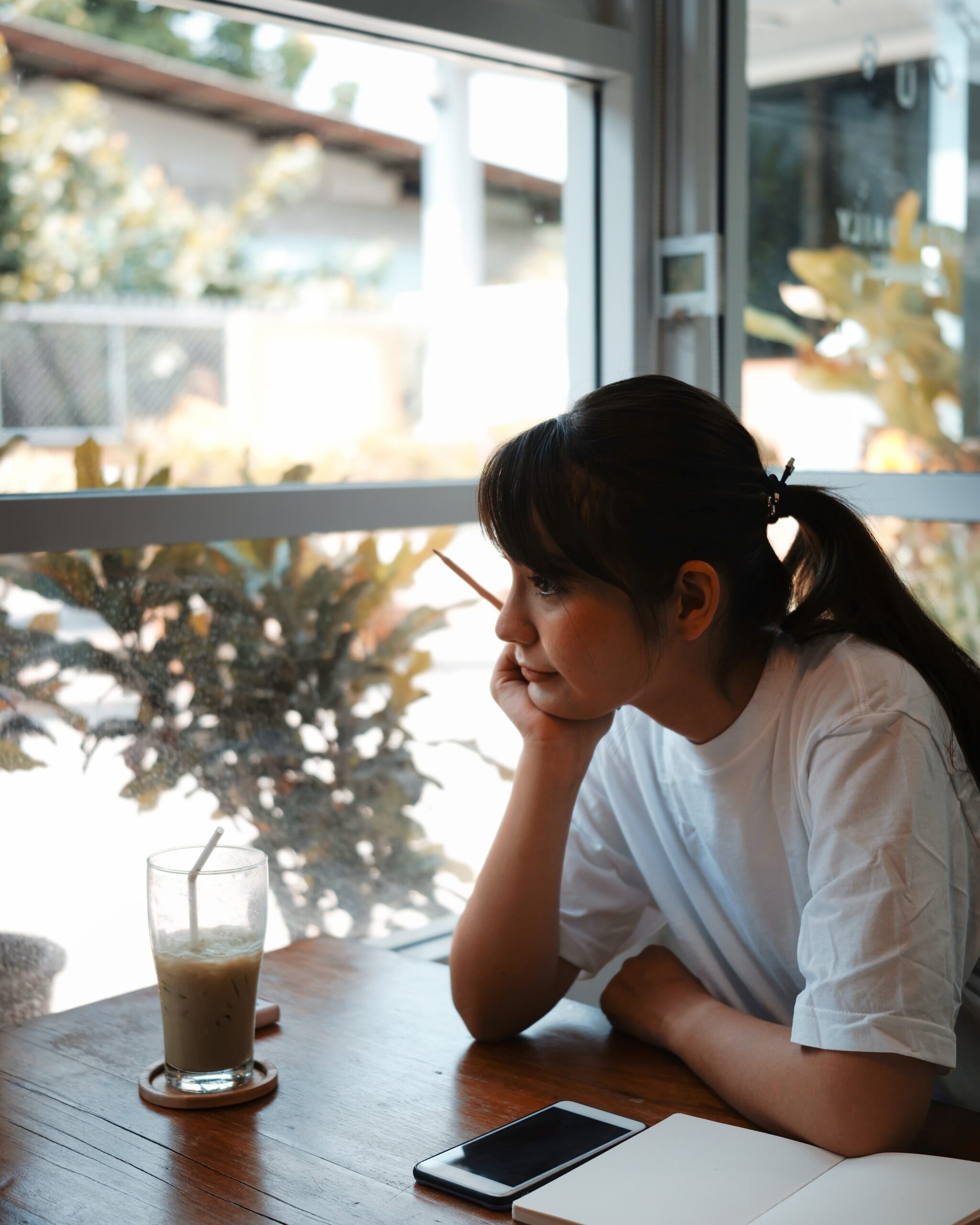



There was a time when waiting meant doing nothing.
You stood in a queue, sat at a bus stop or waited for a friend without immediately reaching for something to occupy your mind. A delayed appointment might involve staring at the wall, reading an old magazine or simply watching other people arrive.
Now even a pause of a few seconds can feel uncomfortable. We reach for our phones while the kettle boils, check messages during television adverts and scroll while waiting for a payment to process. Entertainment, conversation and information are available whenever we want them, which means there is rarely a moment when the mind is not being given something new to absorb.
We complain that we are constantly overwhelmed, yet we have also become remarkably skilled at eliminating every empty moment. Perhaps we need some of them back.
Boredom is not usually described positively. It suggests that nothing interesting is happening, time is being wasted or we have failed to find something useful to do. Parents may feel responsible for preventing children from becoming bored. Adults fill quiet periods with work, podcasts, news, games and social media. Even relaxing activities are often combined so that no part of our attention remains unoccupied.
We listen while walking, scroll while watching and answer messages while eating. There is nothing wrong with enjoying stimulation. The problem is that the mind never receives a break from reacting to what somebody else has created, written, filmed or sent.
When every pause is filled immediately, we lose the opportunity to discover what our own thoughts might do with the space.
A smartphone can rescue us from almost any dull or awkward moment. It gives us something to look at when we are alone, something to do when we are waiting and somewhere to retreat when a social situation feels uncomfortable. That convenience is incredibly appealing. However, reaching for the phone can become so automatic that we no longer make a conscious decision. Our hand moves towards it before we have even noticed the pause.
We might unlock the screen without knowing what we intended to check, move between several apps and put the phone down with no memory of what we just consumed. Nothing particularly enjoyable or useful occurred, but the empty moment has disappeared.
Not every use of a phone needs to have a purpose. Yet it is worth noticing when it is providing genuine enjoyment and when it is simply preventing you from being alone with your mind.
When the mind is not responding to new information, it has room to wander. It may revisit a conversation, imagine a possibility, solve a problem or connect ideas that previously seemed unrelated. This does not mean every bored moment produces a brilliant insight. Often, the mind drifts through completely ordinary thoughts. That is part of the point.
Ideas are not always produced by concentrating harder. Sometimes they emerge while showering, driving, walking or completing a repetitive household task. The conscious mind is occupied lightly enough for thoughts to move more freely.
If every one of those moments is filled with content, we may lose some of the conditions in which reflection and creativity naturally occur.
Constant entertainment protects us from the discomfort of deciding what to do with ourselves. When the distraction is removed, you may initially feel restless. Then you have to choose. Do you want to go outside, call someone, cook, read, make something or simply continue sitting?
Boredom can expose interests that have been hidden beneath convenience. A child who announces that there is nothing to do may eventually invent a game, draw, build something or explore outside. An adult may remember a neglected hobby only after the usual distractions are no longer available.
The first few minutes can feel uncomfortable because the quickest source of stimulation has been removed. If we tolerate that discomfort, a more satisfying activity may eventually replace it.
Hearing “I’m bored” can make parents feel as though they need to produce an immediate solution. A list of activities follows, all of which the child rejects while continuing to complain.
Sometimes boredom is not an emergency requiring adult intervention. Children need safe opportunities to decide how to use unstructured time. This can support independence, imagination and the ability to begin an activity without somebody else organising it for them.
That does not mean leaving children without attention, stimulation or appropriate opportunities. It means recognising that every minute does not need to be scheduled or digitally filled. A child who is never bored may have fewer chances to learn that boredom can be temporary, and that they have some power to change it.
There is an important difference between having nothing to do for a while and feeling disconnected, isolated or unable to enjoy anything.
Short periods of boredom may create space for rest and creativity. Persistent emptiness can feel painful, particularly for people who are retired, unemployed, living alone or limited by illness and caring responsibilities.
If nothing feels interesting, pleasurable or worth beginning over a longer period, boredom may not be the full explanation. Loss of interest can accompany depression and other difficulties that deserve proper support.
We should not romanticise boredom when what somebody actually needs is company, purpose, practical opportunity or mental health care. The beneficial kind of boredom occurs within a life that still contains connection and stimulation. It is a pause, not an entire existence.
If you are accustomed to constant input, quiet can initially make your mind feel louder. You may remember unfinished jobs, replay uncomfortable conversations or become aware of worries you have been avoiding. This is one reason people reach quickly for distraction.
You do not need to force yourself to sit in silence for hours. Begin with moments that already exist. Wait for the kettle without checking your phone. Walk a short distance without listening to anything. Sit outside for ten minutes without trying to make the time useful.
Notice the urge to reach for stimulation without treating it as an instruction you must follow. The aim is not to empty your mind. Minds produce thoughts. The aim is to allow those thoughts to arrive without immediately covering them with somebody else’s content.
Modern life encourages us to optimise time. A journey becomes an opportunity to learn, a walk becomes exercise data and a quiet evening becomes a chance to complete household tasks.
Efficiency can be useful, but not every minute needs to produce a result.
Time spent staring through a window is still part of a life. A slow afternoon does not need to become a self-improvement project. You do not have to transform every queue, delay or empty hour into something productive.
Allowing time to pass without extracting value from it can feel surprisingly freeing. You are not a business that must make every available minute profitable.
You do not need to abandon technology or deliberately make your life dull. There is no virtue in refusing entertainment you genuinely enjoy. But you might protect a few small gaps from automatic distraction.
Leave your phone in another room while you make a drink. Sit in the garden without photographing it. Take a familiar journey without filling your ears. Allow children time in which nothing has been planned for them.
You may feel bored. You may also notice something, remember something or think a complete thought for the first time that day.
Boredom is not always a sign that life needs to become more exciting. Sometimes it is the quiet space between experiences, the place where the mind catches up, imagination begins and we remember how to keep ourselves company.
Wellbeing looks different for everyone, and sometimes the most useful thing is simply finding the right information at the right time. Explore more from Daily Round with our dedicated Women’s Health, Men’s Wellbeing and Wellbeing for Leaders sections, or head to the Leaders Library for our latest book recommendations, ideas and inspiration for life in and outside work.
Posted by:
Mehala
Editorial Assistant – The Daily Round
Busy day? We’ve got you covered. Get FREE daily news, practical insights, opportunities and wellbeing content, carefully curated for busy health and social care professionals. Just enter your details below to get The Daily Briefing delivered straight to your inbox.
 newsdesk@dailyround.news