

Everyday Wellbeing

Practical tips, guidance, and inspiration to support your physical, mental, and emotional wellbeing every day.



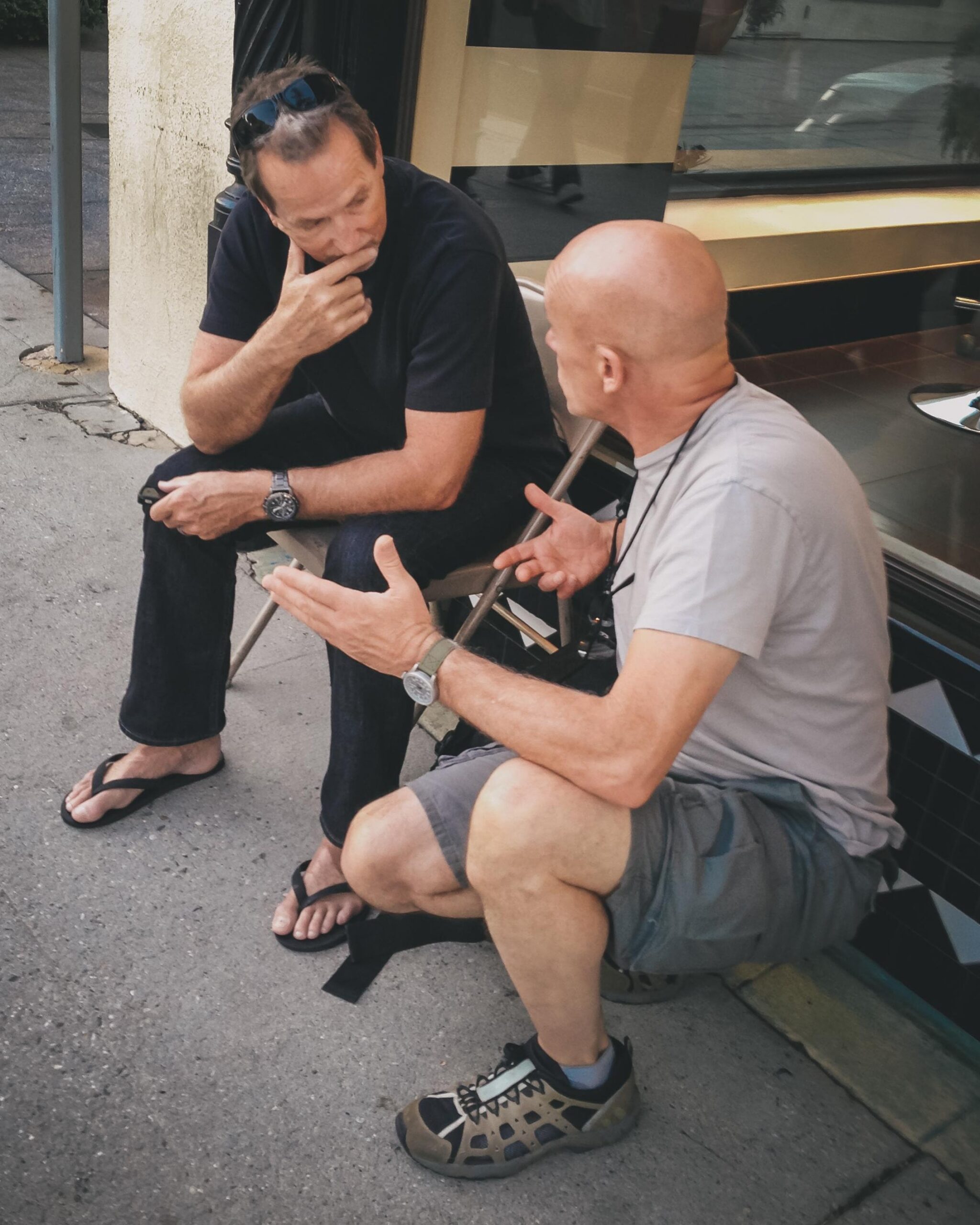
Caring comes in many different forms. We care for our children, check in on elderly parents, help a friend through a difficult period, pick up groceries for a neighbour who can’t get out and support colleagues who are struggling. Most of us probably provide some form of care every week without ever giving it a name.
Caring for a family member who is ill, disabled, elderly or increasingly dependent on you can feel different. It is deeply personal, often emotional and, unlike a job, there isn’t necessarily a point when your shift finishes. You can be somebody’s daughter, son, husband, wife, sister or parent while simultaneously becoming their organiser, driver, advocate, cook, medication reminder and the person who somehow knows when their next hospital appointment is.
All of that might be happening while you’re holding down a full-time job, raising children, maintaining a relationship, paying bills and trying to remember that you are a person with needs of your own too.
There are 5.8 million unpaid carers in the UK, according to the latest Census figures, and 1.7 million are providing at least 50 hours of unpaid care every week. Nearly three million carers are also in paid employment. Yet many people doing this still wouldn’t necessarily introduce themselves as a carer.
They would simply say, “I’m looking after Mum.”
Family caring rarely begins with somebody officially handing you the role. Sometimes everything changes overnight. A parent has a stroke, a partner receives a diagnosis or somebody you love has an accident and suddenly they need significant help. More often, it happens gradually. You start doing Mum’s shopping because she’s finding it difficult to get around. Then you start taking her to appointments. Eventually you’re sorting prescriptions, checking she’s eaten, dealing with paperwork, speaking to doctors and calling every evening to make sure she’s okay.
At what point did you become her carer? There often isn’t a clear answer. That matters because if you don’t think of yourself as a carer, you may not realise that there is support available for you as well as for the person you’re looking after.
One of the things that can make caring for family particularly difficult is that the relationship doesn’t disappear simply because somebody needs care. Your mum is still your mum. Your husband is still your husband. Your adult child is still your child.
There can be enormous love involved in caring for somebody, and there can also be frustration, exhaustion, resentment, guilt, sadness and fear. Those feelings can exist alongside each other.
You might desperately want to help somebody while simultaneously wishing that, just for one weekend, somebody else could take over. You can love a parent enormously and still feel exhausted by the responsibility of caring for them. You can feel irritated and then immediately feel guilty for being irritated. None of that means you don’t care enough.
The emotional side of family caring can also be difficult because you’re often experiencing the changes alongside the person you’re caring for. If a parent develops dementia, for example, you aren’t simply providing practical support. You’re also a son or daughter watching somebody you love change. If your partner becomes seriously ill, you’re dealing with your own fear while trying to be the person reassuring them.
That is a lot for one person to carry.
Perhaps one of the hardest parts of becoming an unpaid carer is that everything else usually continues. Your employer still expects you at work. Your children still need taking to school. Dinner still needs making. The mortgage still needs paying. Your relationship still needs attention. There are birthdays, appointments, laundry, emails and all the ordinary responsibilities that existed before somebody you love needed you.
Carers UK says nearly three million carers aged 16 and over are also in paid employment. Its research also shows the effect caring can have on careers, with many carers reducing their hours, changing the type of work they do or leaving employment altogether. For some people, it can feel as though there simply aren’t enough hours in the day to be everything everybody needs them to be.
This is where carers can begin disappearing from their own lives. Their appointments are postponed because somebody else’s are more important. Exercise disappears. Seeing friends becomes difficult. Sleep suffers. Career ambitions are put on hold and relationships receive whatever energy remains at the end of the day.
The impact can eventually become physical as well as emotional. Carers UK’s State of Caring research found that 74% of carers had felt stressed or anxious and 42% said their physical health had suffered as a result of caring.
Looking after yourself isn’t an indulgence when you’re caring for somebody else. It is part of making that care sustainable.
This sounds obvious, but it can be remarkably difficult to do. Family caring often comes with an enormous sense of responsibility. You might believe nobody else will do things properly, worry that asking for help means you’re failing or feel that because somebody once looked after you, you now owe it to them to manage everything yourself. You don’t.
There is no prize for reaching complete exhaustion before admitting that you need some help. Start with the people around you. If you have siblings or other family members, have an honest conversation about what actually needs doing rather than simply saying that you’re struggling. Specific requests can be much easier to respond to. Perhaps somebody else can take responsibility for prescriptions, do the Saturday shopping, attend one appointment a month or stay with your relative while you have an afternoon to yourself.
Even relatively small pieces of help can remove something from the mental list you’re carrying around all day.
If you regularly look after somebody because they are older, ill or disabled, you can ask your local council for a carer’s assessment. This is about your needs, not simply the needs of the person you care for. The assessment looks at how caring is affecting areas including your physical and mental health, work, relationships and ability to have time for yourself.
Depending on your circumstances, the support identified could include somebody taking over caring so you can have a break, help with practical tasks, training such as safe lifting, assistance with transport or putting you in contact with local support groups.
A carer’s assessment is free, and you do not need to wait until you’re unable to cope before asking for one. If the person you’re caring for has not already had their own needs assessment, it is also worth asking the council about this. Their assessment looks at the support they need and may lead to a care and support plan, which can include services, equipment, adaptations or other assistance.
Caring can affect household finances in ways that aren’t immediately obvious. You may reduce your working hours, spend more on travel, use more energy at home or find yourself regularly paying for things connected with the person you’re caring for.
Depending on your circumstances, you may be eligible for Carer’s Allowance. For 2026/27 it is £86.45 a week, although there are eligibility requirements, including generally providing at least 35 hours of care a week, an earnings limit and the person you care for receiving a qualifying disability benefit.
Even if you don’t qualify for Carer’s Allowance, don’t assume that means there is no other help available. Carer’s Credit, benefits for the person you’re caring for, Council Tax support and other assistance may be relevant depending on individual circumstances. Carers UK provides detailed information about benefits and financial support and can help carers understand what they may be entitled to.
If caring is beginning to affect your own health, tell your GP that you’re an unpaid carer. Don’t spend every appointment discussing the health of the person you look after while forgetting to mention what is happening to you. Your employer may also be able to help. Caring responsibilities can affect working patterns, appointments and your ability to respond when something unexpected happens. You don’t necessarily need to share every personal detail, but letting the right person at work know that you have significant caring responsibilities can open a conversation about what support or flexibility may be available.
Carers UK also provides information specifically for working carers about their rights at work, which can be useful if you’re trying to balance employment with increasing responsibilities at home.
Friends can be incredibly supportive, but there is something different about speaking to somebody who already understands what caring involves. Local carers’ organisations and support groups can give you the opportunity to meet people dealing with many of the same practical and emotional challenges. Carers UK also offers information, online support and a helpline for unpaid carers covering areas including benefits, financial support and rights at work.
Sometimes the most valuable part of that support is simply being able to say something you might feel guilty saying anywhere else.
Someone else who has cared for a family member is unlikely to be shocked by any of those feelings.
There is something extraordinary about the amount of care families quietly provide every day. Unpaid carers help people remain at home, attend appointments, take medication, eat properly, manage their finances and continue living with dignity. Carers UK estimates the economic value of unpaid care across the UK at £184 billion every year. But behind those enormous figures are individual people.
A daughter answering emails from a hospital during her lunch break. A husband helping his wife get dressed before leaving for work. A mum awake during the night with a disabled child and then getting up the following morning to start another day. A son who lives an hour away from his dad but somehow finds himself making the journey several times a week.
Many wouldn’t describe what they’re doing as remarkable. They would simply say they’re looking after somebody they love. Perhaps that is exactly why it can be so easy to forget that the carer needs looking after too.
If you’re caring for somebody in your family, you don’t need to wait until you’re completely overwhelmed before seeking support. Ask what help is available, let other people take some of the responsibility where they can and protect pieces of your own life that have nothing to do with caring.
You can love somebody deeply, want to care for them and still need help yourself. Those things do not contradict each other.
Check out these support channels:
Wellbeing looks different for everyone, and sometimes the most useful thing is simply finding the right information at the right time. Explore more from Daily Round with our dedicated Women’s Health, Men’s Wellbeing and Wellbeing for Leaders sections, or head to the Leaders Library for our latest book recommendations, ideas and inspiration for life in and outside work.
Or, if you’re ready to get back to what’s happening across the sector, catch up with today’s Daily News for the latest health and social care stories.
Posted by:
M Ramalani
Editorial Assistant – The Daily Round
Busy day? We’ve got you covered. Get FREE daily news, practical insights, opportunities and wellbeing content, carefully curated for busy health and social care professionals. Just enter your details below to get The Daily Briefing delivered straight to your inbox.
 newsdesk@dailyround.news