

Women's Health

Practical tips, guidance, and inspiration to support your physical, mental, and emotional wellbeing every day.




When we think about protecting ourselves against dementia, it’s easy to imagine that whatever happens to our brains in later life is largely beyond our control. But a growing body of research is painting a much more hopeful picture: some of the things we do for our heart and general health during middle age may also help protect our brains decades later.
New research published in August has put three familiar health factors firmly in the spotlight. Researchers found that people who reached midlife without high blood pressure, type 2 diabetes or smoking experienced, on average, almost 13 more years of life without dementia compared with people who had all three risk factors. The study followed more than 12,400 adults over 26 years, making it another compelling reason to start thinking about brain health long before retirement.
It doesn’t mean avoiding these three things guarantees you won’t develop dementia – unfortunately, no such guarantee exists. Dementia has many causes and risk factors, including some we cannot change. What the research does suggest is that looking after your cardiovascular health between roughly 45 and 65 could have consequences reaching far beyond your heart.
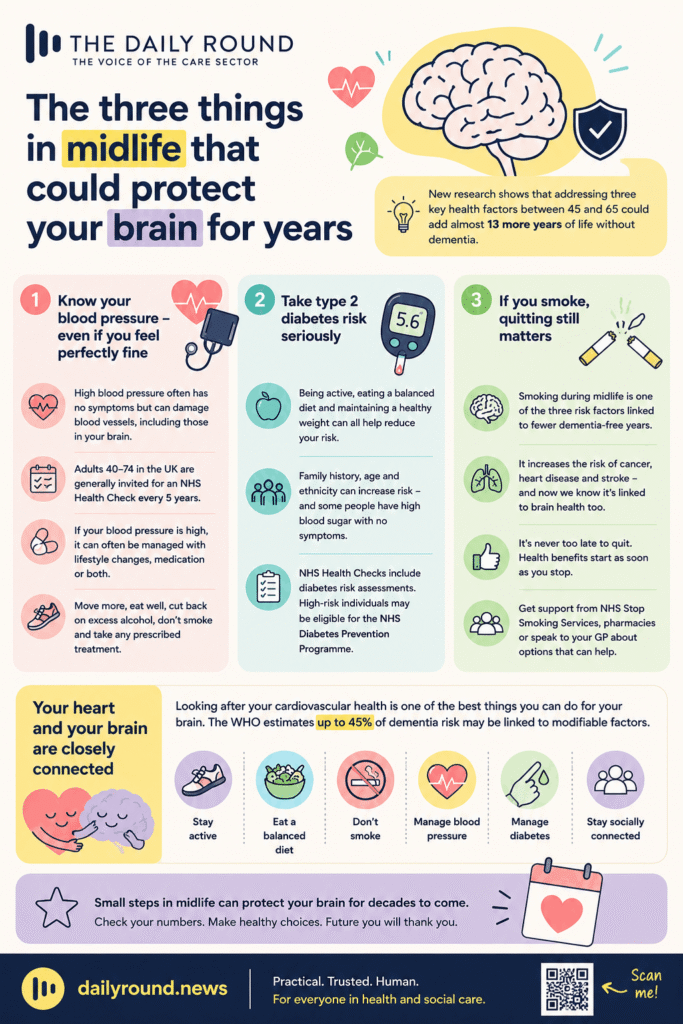
High blood pressure is famously easy to ignore because it often doesn’t make you feel unwell. You can walk around with it for years without knowing it’s there, while the increased pressure damages blood vessels throughout the body – including those supplying the brain.
That makes simply knowing your numbers one of the most practical things you can do in midlife.
In the UK, adults aged 40 to 74 who don’t already have certain pre-existing conditions are generally invited for an NHS Health Check every five years. Blood pressure can also be checked at GP surgeries, many pharmacies and using a validated home monitor.
If your blood pressure is high, that doesn’t mean dementia is in your future. It means you’ve identified something that can often be managed through lifestyle changes, medication or a combination of the two.
Regular physical activity, maintaining a healthy diet, reducing excessive alcohol consumption, not smoking and following prescribed treatment can all form part of managing blood pressure.
The second factor highlighted by the research was type 2 diabetes.
Again, this isn’t about frightening anyone who already has diabetes. Having a risk factor is not the same as having a predetermined outcome, and properly managing existing health conditions remains important.
For people who don’t have type 2 diabetes, however, midlife is a good time to pay attention to prevention. Being physically active, eating a balanced diet and maintaining a healthy weight where appropriate can all help reduce the risk of developing the condition.
It’s also worth knowing whether you may be at increased risk. Family history, age and ethnicity can influence type 2 diabetes risk alongside lifestyle factors, and some people can have high blood sugar without obvious symptoms.
If you’re eligible for an NHS Health Check, diabetes risk is one of the areas that may be assessed. People identified as being at high risk may also be eligible for the NHS Diabetes Prevention Programme.
Most of us already know smoking increases the risk of cancer, heart disease and stroke. Its relationship with brain health gives us another reason to add to an already very long list.
The new research found smoking during midlife was one of the three cardiovascular risk factors associated with fewer dementia-free years.
And if you’ve smoked for decades, don’t fall into the trap of thinking the damage is done and there’s no point stopping now. Giving up smoking provides health benefits whatever your age, and support is available rather than having to rely entirely on willpower.
Nicotine replacement treatments, stop-smoking medications and behavioural support can all help. In England, NHS Stop Smoking Services and pharmacies can provide advice about the options available.
Perhaps the most useful message from this research is how closely brain health appears to be connected with the rest of our health.
We often treat dementia prevention as though it requires some mysterious brain-specific intervention – a particular puzzle, supplement or “superfood” that will somehow keep our memory intact. In reality, some of the strongest evidence points towards considerably more familiar things: looking after our cardiovascular health, staying physically active, not smoking and properly managing conditions such as high blood pressure and diabetes.
The World Health Organization reinforced this message in updated dementia prevention guidance published this summer. It estimates that up to 45% of dementia risk may be attributable to potentially modifiable factors, including tobacco use, physical inactivity, social isolation, high blood pressure and diabetes.
That doesn’t mean 45% of every individual’s personal risk can simply be erased, and it certainly doesn’t mean people who develop dementia have somehow failed to look after themselves. Genetics, ageing and other factors outside our control remain important.
But it does mean there’s something positive we can take from the evidence.
You don’t need to overhaul your entire life tomorrow. Check your blood pressure. Move your body regularly. Don’t smoke – or get help to stop. Know your risk of type 2 diabetes and attend the health checks you’re offered.
They’re fairly ordinary things.
But your brain in 20 or 30 years might be very glad you did them.
Medical Disclaimer: The information provided by Daily Round is for general informational and educational purposes only and should not be considered medical advice, diagnosis or treatment. Dementia has many different causes and risk factors, and reducing risk cannot guarantee prevention. Anyone concerned about their cardiovascular health, diabetes risk, memory or cognitive health should seek advice from an appropriately qualified healthcare professional.
Register with The Daily Round for the latest sector news, inspections & reports, wellbeing content, workforce insights, expert features and practical updates—delivered free to your inbox.
Posted by:
M Ramalani
Editorial Assistant – The Daily Round
Busy day? We’ve got you covered. Get FREE daily news, practical insights, opportunities and wellbeing content, carefully curated for busy health and social care professionals. Just enter your details below to get The Daily Briefing delivered straight to your inbox.
 newsdesk@dailyround.news