
Women's Health

Practical tips, guidance, and inspiration to support your physical, mental, and emotional wellbeing every day.




Walk into almost any supermarket and you could be forgiven for thinking we’ve suddenly developed a nationwide protein deficiency. There are high-protein yoghurts, cereals, puddings, shakes, bars, coffees, breads, pastas and even snacks that once made absolutely no claim to being remotely nutritious now proudly advertising their protein content across the front of the packet. Online, things have gone even further. “Proteinmaxxing” – essentially trying to pack as much protein as possible into your diet – has become one of 2026’s biggest wellness trends, fuelled by fitness culture, social media and the enormous rise in people using GLP-1 weight-loss medications.
Protein is undoubtedly important, but amid all the marketing, shakes and macro-counting, there’s a fairly obvious question worth asking: how much do we actually need?
Protein performs some pretty important jobs. Your body uses it for growth and repair, including maintaining muscles, bones and tissues, and it plays roles in everything from hormones to the immune system. But that doesn’t automatically mean that more is always better.
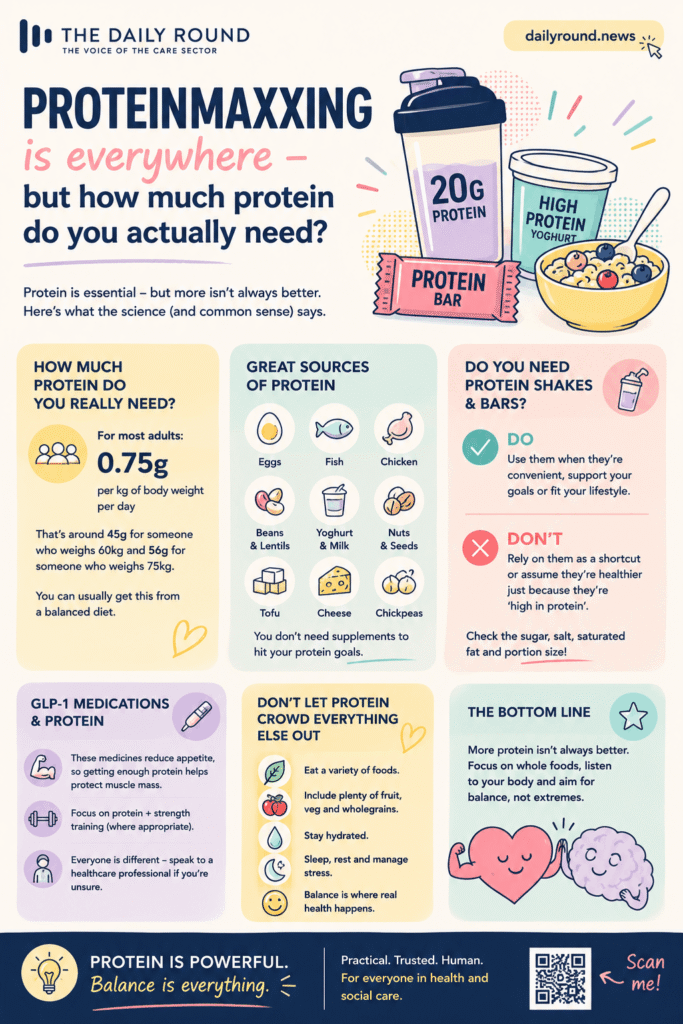
UK dietary reference values put the recommended protein intake for adults at around 0.75 grams per kilogram of body weight per day. As a rough example, that works out at approximately 45g of protein for someone weighing 60kg and around 56g for someone weighing 75kg. Individual requirements can vary, particularly with age, pregnancy, health conditions and levels of physical activity, but for the average healthy adult the target can often be reached through an ordinary balanced diet without having to chase protein numbers all day.
That might come as a surprise when a single protein shake can advertise 20g, 30g or even more in one serving. The explosion of high-protein products can make it feel as though ordinary food somehow isn’t doing the job anymore, but plenty of familiar foods are naturally rich in protein. Eggs, fish, chicken, milk, yoghurt, cheese, beans, lentils, chickpeas, tofu, nuts and seeds can all contribute towards your daily intake.
Eating a mixture of these across your meals can quickly add up, which is why many healthy adults don’t necessarily need specialist protein products at all.
No, although that doesn’t mean there’s anything inherently wrong with them.
Protein shakes and bars can be incredibly convenient. Someone who trains regularly might find a shake an easy way of getting additional protein after exercise, while a busy healthcare worker grabbing a protein yoghurt between shifts may find it considerably more practical than preparing a perfectly balanced meal at 6am.
But the word “protein” on the packaging doesn’t automatically turn something into a health food.
It’s worth looking beyond the enormous 20G PROTEIN printed across the front and checking the rest of the nutritional information. How much sugar, salt and saturated fat does it contain? What is the portion size? What ingredients are actually in it? And how much are you paying compared with an ordinary yoghurt, sandwich or snack that might provide plenty of protein anyway?
Sometimes a protein product is genuinely useful. Sometimes you’re simply paying £2.50 for a chocolate pudding wearing gym clothes.
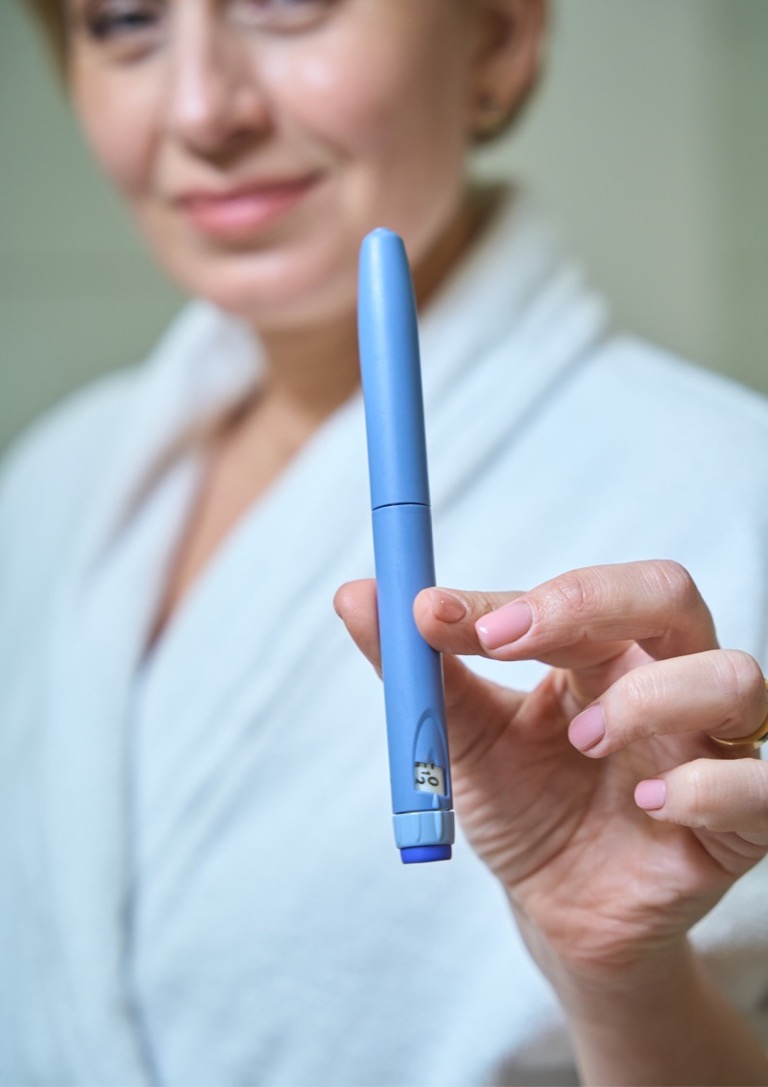
Protein has become a particularly big topic alongside the rise of GLP-1 weight-loss medications such as Wegovy and Mounjaro. These medicines can substantially reduce appetite and food intake, which means getting adequate nutrition from a smaller amount of food becomes increasingly important.
During significant weight loss, some of the weight lost can also come from lean tissue rather than body fat. This is one reason maintaining adequate protein intake and incorporating physical activity – particularly resistance or strength-based exercise where appropriate – has become such a prominent part of the conversation around healthy weight loss.
That doesn’t mean everyone taking a GLP-1 medication needs to adopt an enormous protein target they’ve discovered on TikTok. Nutritional requirements vary between individuals, and anyone struggling to eat enough, losing weight rapidly or concerned about maintaining muscle should discuss their diet with an appropriately qualified healthcare professional.
There are other groups for whom protein deserves additional attention too. People undertaking regular resistance or intensive exercise may need more than the standard recommendation, while preserving muscle becomes increasingly important as we age.
Perhaps the biggest problem with proteinmaxxing is that obsessing over one nutrient can make us forget about everything else.
Fibre, fruit and vegetables, whole grains, healthy fats, vitamins and minerals haven’t suddenly become less important because protein is having its moment. If pursuing a huge protein target means your diet consists largely of shakes, bars, meat and high-protein snacks while fibre-rich plant foods barely get a look in, you’ve probably missed the point of healthy eating.
A better approach is considerably less exciting – and therefore considerably less likely to go viral on TikTok. Eat a varied diet, include good sources of protein throughout the day, choose foods you actually enjoy and don’t assume that adding the word “protein” to something automatically makes it better for you.
If a high-protein yoghurt makes breakfast easier, brilliant. If a shake is convenient after the gym, that’s fine too. But most of us don’t need to turn every meal into a mathematical exercise or feel guilty because our afternoon snack doesn’t contain 25 grams of protein.
Medical Disclaimer: The information provided by Daily Round is for general informational and educational purposes only and should not be considered medical advice, diagnosis or treatment. Individual nutritional requirements can vary according to factors including age, health, pregnancy, medication and physical activity. Anyone with concerns about their diet, nutrition or medication should seek advice from an appropriately qualified healthcare professional.
Posted by:
K Jadon
Editorial Assistant – The Daily Round
Busy day? We’ve got you covered. Get FREE daily news, practical insights, opportunities and wellbeing content, carefully curated for busy health and social care professionals. Just enter your details below to get The Daily Briefing delivered straight to your inbox.
 newsdesk@dailyround.news