

Women's Health

Practical tips, guidance, and inspiration to support your physical, mental, and emotional wellbeing every day.
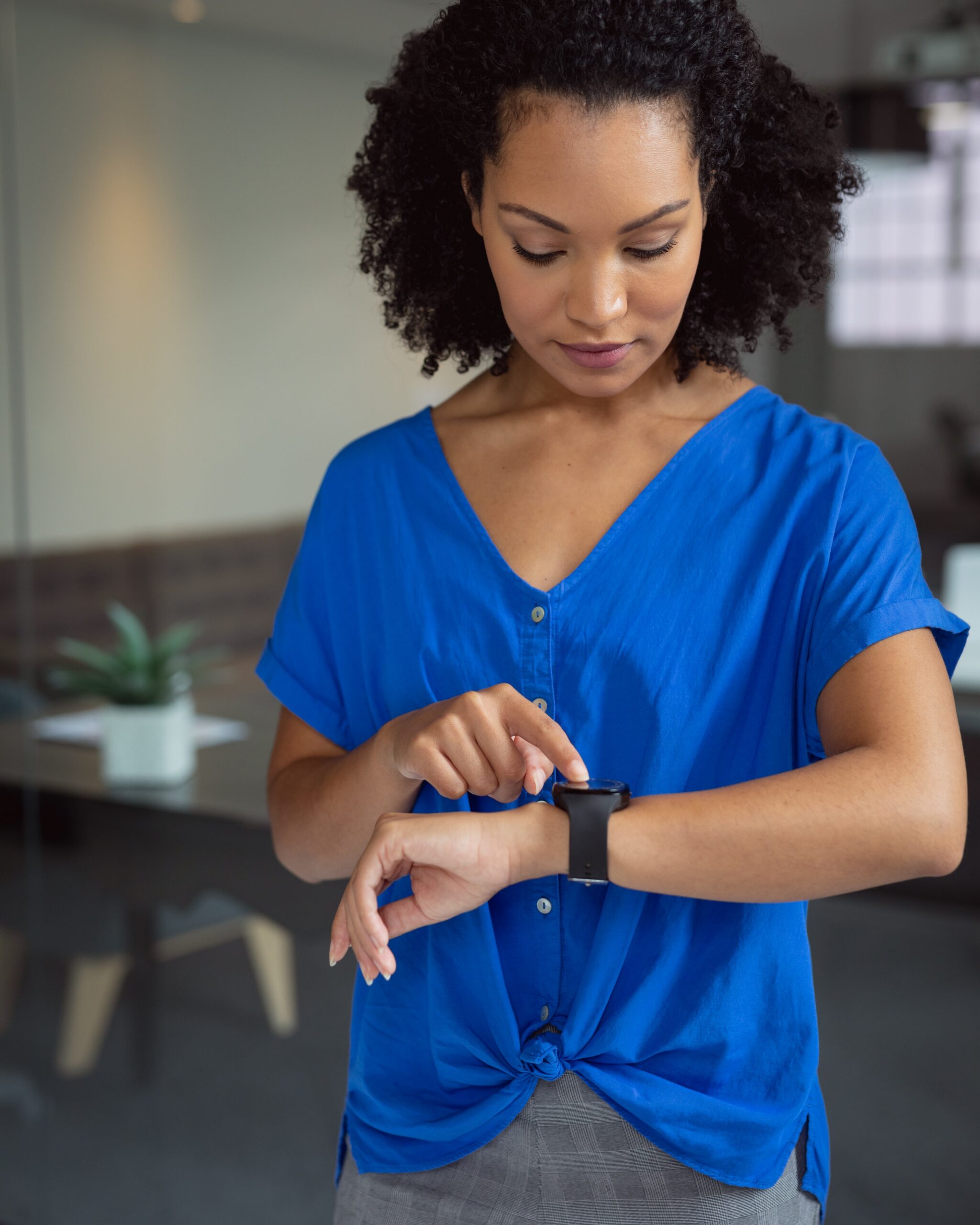



A watch can tell us how many hours we slept, how quickly our heart is beating and whether we have completed enough steps. An app can record our meals, menstrual cycle, mood, weight, water intake and exercise. Some devices even produce daily scores to tell us how well our bodies have recovered.
Access to this information can be incredibly useful. Health data may help people notice important changes, understand symptoms and become more active. It can support conversations with healthcare professionals and give people living with long-term conditions greater insight into their health. However, there can be a point at which tracking stops helping us understand our bodies and starts making us afraid of them.
Instead of asking how we feel, we check what the numbers say. A perfectly ordinary day can suddenly seem unhealthy because a device has given us the wrong score.
One reason health tracking is so appealing is that it offers certainty. The body can feel unpredictable, particularly when someone is experiencing unexplained symptoms, trying to improve their health or recovering from illness. Numbers appear reassuringly definite.
If you know how many steps you completed, how long you slept or how your heart rate changed, it can feel as though you have greater control. Progress becomes visible, and a difficult goal can be broken into something measurable.
For some people, this is genuinely motivating. A reminder to move can interrupt a long period of sitting. Tracking symptoms can reveal a pattern that may otherwise have been missed. Recording medication, blood pressure or blood glucose may form an important part of managing a health condition. The problem is not the existence of the information. It is what happens when every number begins to carry an emotional judgement.
Many health apps do more than provide information. They grade us. A good sleep score can make us feel successful before the day has started. A low recovery score can convince us we are going to struggle, even if we woke feeling reasonably well. Missing a step target may feel like failure rather than a normal consequence of having a busy, painful or exhausting day.
This changes the relationship we have with movement, food and rest. A walk may no longer count unless it has been recorded. Sleep becomes valuable because of the score it produces. Exercise can feel wasted if the watch was left at home.
Our bodies begin to resemble employees whose performance must be monitored and improved. Health, however, is not a perfect sequence of rising graphs. It changes from one day to the next for reasons that may have nothing to do with effort or discipline.
Consumer health devices can provide useful estimates, but they are not infallible. Readings may be affected by how a device is worn, the type of activity being performed and the way its software interprets the information.
The number on the screen may look precise while still being an approximation. This is particularly important with sleep data. A device may estimate different stages of sleep by monitoring movement and heart rate, but it cannot provide the same information as a clinical sleep assessment. You may wake feeling refreshed, see a poor score and immediately begin searching for signs that something is wrong.
Equally, a reassuring reading should not be used to dismiss significant symptoms. Technology can support awareness, but it cannot replace medical assessment where one is needed. Data should be treated as one piece of information—not the final authority on how your body is functioning.
Bodies are not completely consistent. Heart rate changes with movement, stress, temperature, illness, caffeine, hormones and sleep. Weight can fluctuate because of hydration, digestion and other everyday factors. Energy levels rise and fall.
When someone checks repeatedly, these normal variations may begin to look like warning signs. A single unusual reading can lead to hours of searching online, checking again and imagining serious explanations. The resulting anxiety may then affect heart rate, sleep or digestion, producing more sensations to monitor.
This can become a difficult cycle: you track because you feel anxious, the data gives you something new to worry about and you respond by tracking more closely.
More information does not always create more reassurance. Sometimes it creates more opportunities to detect something you do not understand.
Targets can provide direction, but they rarely account for the complexity of a real life.
A fixed step goal does not know that you are unwell, caring for somebody, working a long shift or managing pain. A calorie target cannot understand every person’s nutritional needs or relationship with food. A sleep app does not know why your child woke you during the night.
Yet people can feel compelled to satisfy these targets regardless of what their bodies need. They walk when they require rest, restrict food despite feeling hungry or become distressed when illness interrupts an exercise streak.
A goal intended to support health should not require you to ignore your health to achieve it. Flexibility is not cheating. It is part of responding appropriately to a changing body.
Before wearable devices, people relied more heavily on internal signals. They noticed whether they were tired, hungry, breathless, energetic or in pain. Those signals were never perfect either, but constant tracking can make us increasingly unwilling to trust them.
You may feel pleased after a run until the data suggests your performance declined. You may continue exercising despite exhaustion because your watch says your body has recovered. You might dismiss a sense that something is wrong because the readings appear normal.
Technology should help you become more attentive to your body, not less able to hear it.
Try comparing the data with your lived experience. Before checking a morning score, ask yourself how you actually feel. Notice your energy, mood and physical comfort, then look at the information if it remains useful. Your own experience is also data.
Health is influenced by sleep, movement, food and medical care, but it is also shaped by relationships, purpose, laughter, security and belonging.
A device can count the steps taken during a walk with a friend. It cannot measure the comfort of the conversation. It may record your heart rate during time spent with family but cannot calculate what it means to feel loved, safe or understood.
There is a danger that easily measured behaviours receive all our attention while less measurable parts of wellbeing are neglected. Completing ten thousand steps does not automatically make a day healthy if it was driven by anxiety. Spending an evening sitting with someone who needed you may provide no impressive statistics, but it can still be enormously valuable.
A meaningful life will never fit completely inside a health dashboard.
You do not necessarily need to stop tracking. It may be more useful to examine the effect it has on you.
Does the information encourage reasonable choices, or does it make you feel guilty? Does it help you recognise useful patterns, or are you checking repeatedly for reassurance? Can you miss a target without becoming distressed? Would you still enjoy an activity if it were not recorded?
You might decide to track only one or two things that serve a clear purpose. You could hide unnecessary scores, turn off reminders or take occasional breaks from wearing the device.
If weighing, calorie counting, exercise tracking or checking body measurements is creating significant anxiety or affecting how you eat and exercise, it may be important to discuss this with a healthcare professional.
The aim is not to prove that you have enough willpower to ignore the numbers. It is to protect your relationship with your body.
Health data should not be ignored when it repeatedly shows a concerning change or when it appears alongside physical symptoms. Follow the device manufacturer’s guidance and seek appropriate medical advice if you are worried. However, avoid attempting to diagnose yourself from one isolated reading. Consumer devices can produce errors, and numbers need to be understood within a wider clinical picture.
If you experience serious symptoms such as chest pain, severe breathlessness, fainting or sudden weakness, seek urgent medical help regardless of what a wearable device says. A health tracker is a tool. It is not an emergency service, a doctor or a guarantee that everything is fine.
There is something valuable about understanding our health more clearly. Information can help people make changes, advocate for themselves and recognise when support may be needed. But health data should serve the person collecting it.
You are allowed to take a walk without recording it, sleep without grading it and eat without entering every detail into an app. You are allowed to rest because you feel tired, even if a device believes you have recovered.
Your body is not failing each time a number moves in the wrong direction. It is a living system responding to age, stress, illness, hormones, relationships, responsibilities and the countless other circumstances that make up a human life.
The healthiest choice may sometimes be to examine the data. At other times, it may be to put the device down and return your attention to the life the numbers are supposed to help you live.
Wellbeing looks different for everyone, and sometimes the most useful thing is simply finding the right information at the right time. Explore more from Daily Round with our dedicated Women’s Health, Men’s Wellbeing and Wellbeing for Leaders sections, or head to the Leaders Library for our latest book recommendations, ideas and inspiration for life in and outside work.
Posted by:
Mehala
Editorial Assistant – The Daily Round
Busy day? We’ve got you covered. Get FREE daily news, practical insights, opportunities and wellbeing content, carefully curated for busy health and social care professionals. Just enter your details below to get The Daily Briefing delivered straight to your inbox.
 newsdesk@dailyround.news