
Women's Health

Practical tips, guidance, and inspiration to support your physical, mental, and emotional wellbeing every day.




Gut health has become one of wellness culture’s favourite subjects. Supermarket shelves are filled with probiotic drinks, fermented foods, fibre supplements and products promising to support your microbiome, while online we’re regularly told that everything from our mood to our immune system begins in the gut.
There is some fascinating science behind the attention. Our digestive tract is home to trillions of microorganisms – collectively known as the gut microbiome – and researchers are increasingly interested in the relationship between these microbes and different aspects of human health. But looking after your gut doesn’t necessarily require expensive supplements, elaborate detoxes or drinking something fermented that smells suspiciously like a garden pond.
Some of the most useful things you can do are surprisingly ordinary.
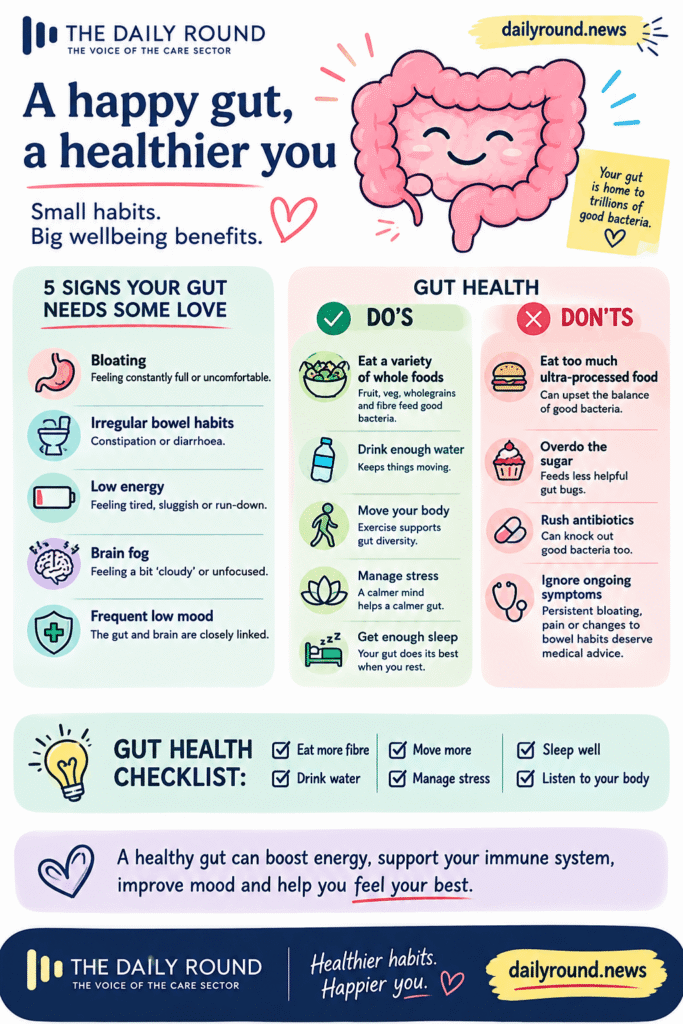
When people talk about “gut health”, they’re usually referring partly to the digestive system itself and partly to the enormous community of microorganisms living within it. The gut microbiome includes bacteria and other microbes, and its composition varies enormously from person to person.
Researchers have linked the microbiome with digestion, metabolism and immune function, while the relationship between the gut and brain – often referred to as the gut-brain axis has become an important area of scientific research.
That doesn’t mean every headache, bad mood or tired afternoon can be blamed on your gut. Social media has a habit of taking an interesting area of emerging science and turning it into “Here are seven signs your microbiome is broken.”Human health is considerably more complicated than that.
What we do know is that our digestive health matters, and there are plenty of evidence-based ways of supporting it.
If you’re looking for somewhere practical to start, look at fibre.
UK government guidance recommends adults aim for around 30g of fibre a day, yet many people don’t get enough. Fibre is found in foods including fruit and vegetables, wholegrain breads and cereals, oats, beans, peas, lentils, nuts and seeds.
Different types of fibre perform different functions. Some help stools move through the digestive system, while certain fibres are fermented by bacteria in the colon and can help support the gut microbiome.
Rather than becoming obsessed with one supposed gut-health superfood, variety is a useful principle. Try different vegetables, fruits, pulses, wholegrains, nuts and seeds across the week rather than eating exactly the same few foods every day.
And increase fibre gradually if your current intake is low. Going from very little fibre to an enormous bowl of bran, three portions of lentils and half a bag of chia seeds overnight may make your digestive system considerably more noticeable than you intended.
This is where things become slightly more complicated.
Probiotics are live bacteria and yeasts found in some foods and supplements. The NHS notes there is some evidence probiotics may be helpful in certain circumstances, including potentially helping restore the natural balance of bacteria in the gut after it has been disrupted.
But probiotics aren’t all identical, and the health claims surrounding them can run considerably ahead of the evidence. Supplements sold as probiotics can contain different strains and quantities of microorganisms, and a product being labelled “gut friendly” doesn’t automatically mean it will transform your health.
Fermented foods such as live yoghurt and kefir can form part of a varied diet, but you don’t need to fill the fridge with expensive probiotic products to look after your digestive system.
Once again, the boring answer wins: your overall diet matters more than any single miracle food.
Looking after digestive health isn’t only about what you eat.
Regular physical activity can help support normal bowel function and brings a huge range of wider health benefits. Drinking enough fluid is particularly important when you’re increasing fibre because fibre absorbs water.
Stress can also affect the digestive system. Anyone who has suddenly needed the toilet before an important interview or experienced a churning stomach during an anxious moment already has first-hand evidence that the brain and digestive system communicate remarkably well.
Sleep is another piece of the wider wellbeing picture. Rather than trying to “hack” your microbiome in isolation, looking after your general health, eating well, moving regularly, getting enough sleep and finding manageable ways to deal with stress, makes considerably more sense.
And antibiotics deserve a sensible mention. Antibiotics can affect bacteria within the gut, but that doesn’t mean you should avoid them when they’re medically necessary. Take antibiotics when prescribed and follow the instructions you’ve been given; don’t stop prescribed treatment because you’re worried about your microbiome.
Bloating occasionally after eating, having an unusual bowel movement or feeling tired doesn’t automatically mean something is wrong with your microbiome.
Our digestive systems aren’t machines that behave identically every day.
Persistent or significant changes are different. Ongoing abdominal pain, persistent bloating, prolonged diarrhoea or constipation, blood in your poo, unexplained weight loss or other concerning digestive symptoms deserve proper medical attention rather than another supplement.
That’s particularly important because digestive symptoms can have many different causes. Trying to “heal your gut” for months when something else is causing your symptoms could delay appropriate investigation and treatment.
Perhaps the nicest thing about genuinely sensible gut-health advice is that it doesn’t require perfection.
You don’t have to ferment your own vegetables. You don’t need a cupboard containing 14 supplements. You certainly don’t need a £7 bottle of something promising to “reset” your digestive system by Tuesday.
Start with food.
Eat more plants and fibre-rich foods. Get some variety into your diet. Drink enough water. Move your body. Enjoy fermented foods if you like them. Sleep. Manage stress where you can. And pay attention when your digestive system is persistently telling you something isn’t right.
Your gut is extraordinarily complicated.
Medical Disclaimer: The information provided by Daily Round is for general informational and educational purposes only and should not be considered medical advice, diagnosis or treatment. Digestive symptoms can have many different causes. Anyone experiencing persistent, severe or unexplained symptoms, blood in their stool, unexplained weight loss or other concerns should seek advice from an appropriately qualified healthcare professional.
Posted by:
K Jadon
Editorial Assistant – The Daily Round
Busy day? We’ve got you covered. Get FREE daily news, practical insights, opportunities and wellbeing content, carefully curated for busy health and social care professionals. Just enter your details below to get The Daily Briefing delivered straight to your inbox.
 newsdesk@dailyround.news