newsdesk@dailyround.news
Global Care Stories

Discover the latest international news and developments affecting health and social care worldwide. From rising measles cases in the US to major global events, including the death of the world’s youngest reigning monarch at 34, explore the stories shaping communities and making headlines around the world.
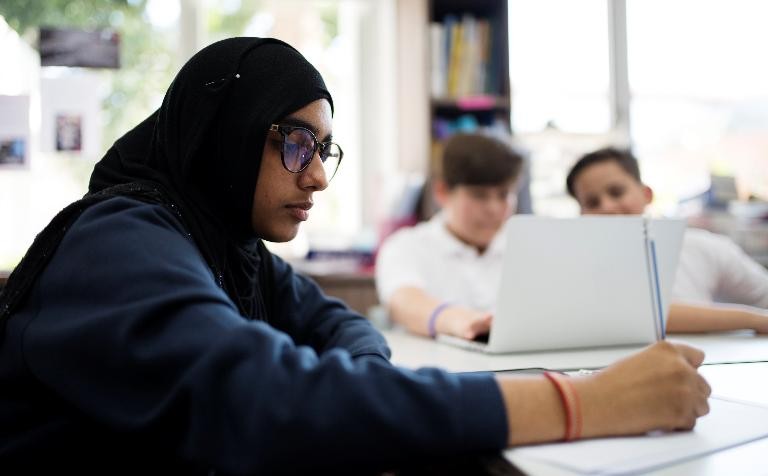
For millions of girls in Afghanistan, formal education now comes with an expiry date. They can attend primary school, but once they reach the end of grade six, at around 12 years old, the classroom door closes.
Five years after the Taliban returned to power, Afghanistan remains the only country in the world where girls and women are effectively prohibited from secondary and higher education. More than 2.6 million girls have now been denied access to secondary school since the restrictions began.
The policy has created an extraordinary divide between children growing up in the same communities. Boys can progress from primary into secondary education and begin thinking about university, qualifications and careers. Their female classmates cannot, regardless of their ability or ambitions.
The restrictions began shortly after the Taliban regained control of Afghanistan in August 2021. Secondary schools reopened for boys, while most teenage girls were told to remain at home. Hopes that the closure would be temporary disappeared as the restrictions continued, and in December 2022 women were also banned from attending university.
The impact becomes greater with every school year that passes. Girls who were already teenagers when the restrictions were introduced have now spent much of their adolescence outside formal education, while younger children who were still in primary school in 2021 are beginning to reach the point where they too must leave.
Before the Taliban’s return, almost one million Afghan girls were attending secondary school. Their exclusion has undone years of progress in increasing female participation in education and created a generation whose opportunities are being dramatically narrowed.
Some girls are still finding ways to learn.
Families, community organisations and groups outside Afghanistan have attempted to keep education going through informal classes, online lessons, educational materials and other forms of remote learning. UNESCO has also supported alternative education programmes involving literacy, vocational skills and psychosocial support.
Those programmes can provide an important lifeline, particularly for girls determined to continue learning, but they cannot reproduce everything that comes with a functioning school system. They also cannot provide the recognised educational pathway that allows a child to move through secondary school and into university or professional training.
The consequences are beginning to stretch far beyond education.
Afghanistan needs teachers, doctors, nurses, midwives and other skilled professionals just like every other country. Preventing girls from completing secondary school dramatically reduces the number of women who will eventually be able to enter those professions.
That is particularly concerning for healthcare. In a society where strict rules can limit contact between women and unrelated men, female healthcare professionals are essential to ensuring women can receive treatment.
Yet the pipeline producing the next generation of those professionals is being steadily restricted.
UNICEF estimates that, if the current situation continues, Afghanistan could have 5,400 fewer female health workers and around 20,000 fewer female teachers by 2030.
The number of women teaching in basic education has already fallen. There were almost 73,000 female teachers in 2022, compared with around 66,000 two years later.
The danger is that the restrictions begin reinforcing themselves. Fewer educated girls means fewer women able to train as teachers. Fewer female teachers can make it harder for girls to access education even where it remains permitted. The same problem applies to healthcare, where losing potential female doctors, nurses and midwives could further restrict women’s access to medical care.
Afghanistan’s children are also growing up within a much broader education crisis. Schools face shortages of resources and trained teachers, while poverty and displacement continue to disrupt learning for boys as well as girls.
But girls face an obstacle that their male classmates do not. Even where a family wants its daughter to continue studying, and even where that child is succeeding academically, the formal system does not allow her to move into secondary education.
International pressure has so far failed to change that position. Governments, human rights organisations and international agencies have repeatedly called for the restrictions to be lifted, but girls remain excluded from secondary schools and women remain unable to attend universities.
Time is becoming one of the most important parts of the story.
A year without school cannot simply be stored up and returned to a child later. Five years of restrictions means some girls have already lost almost their entire secondary education, while another group reaches the end of primary school with each passing year.
The effects will not disappear if the rules eventually change. Afghanistan could be dealing for decades with the consequences of millions of women missing years of education, qualifications and opportunities to enter skilled professions.
Behind those numbers are children whose lives are continuing while their education stands still.
At around 12 years old, children in much of the world are beginning secondary school, meeting new teachers and starting to discover the subjects and careers that interest them.
For millions of girls in Afghanistan, turning 12 can mean something very different: reaching the end of the education they are currently allowed to have.
Posted by:
K Jadon
Editorial Assistant – The Daily Round
Busy day? We’ve got you covered. Get FREE daily news, practical insights, opportunities and wellbeing content, carefully curated for busy health and social care professionals. Just enter your details below to get The Daily Briefing delivered straight to your inbox.
Busy day? We’ve got you covered. Get FREE daily news, practical insights, opportunities and wellbeing content, carefully curated for busy health and social care professionals. Just enter your details below to get The Daily Briefing delivered straight to your inbox.