newsdesk@dailyround.news
Global Care Stories

Discover the latest international news and developments affecting health and social care worldwide. From rising measles cases in the US to major global events, including the death of the world’s youngest reigning monarch at 34, explore the stories shaping communities and making headlines around the world.
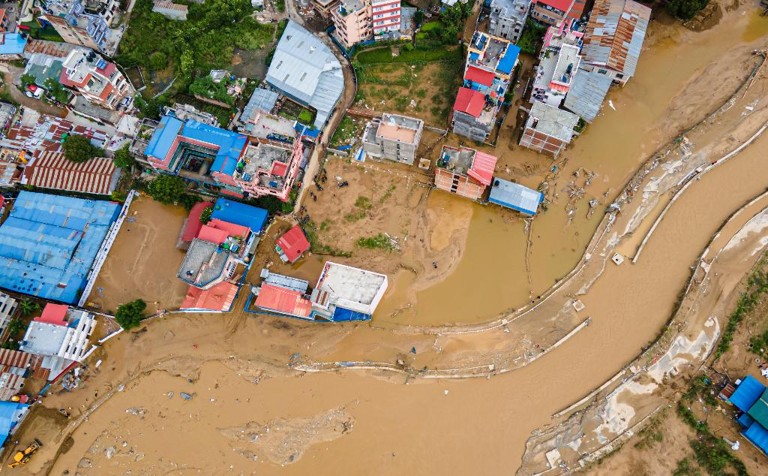
Hundreds of people have been killed and more than 1,400 remain missing after a glacier collapse triggered catastrophic flooding across Nepal and neighbouring Tibet.
The disaster struck on Wednesday 26 August, sending a violent torrent of water, ice, rock and mud through communities close to the Nepal-China border.
At least 359 deaths have been confirmed, although some reports have placed the toll closer to 400. More than 900 people are missing in Nepal, while hundreds more remain unaccounted for in Tibet. Authorities have warned that the figures may continue to rise as rescuers reach isolated communities.
Entire villages have been swept away and homes, roads, bridges, power projects, water systems and telecommunications infrastructure have been destroyed. Some affected areas can now only be reached by helicopter.
The flooding followed the collapse of part of a glacier in the Himalayas, which caused an enormous ice-and-rock avalanche and debris flow. Seismic activity initially led to reports that an earthquake had struck, but the US Geological Survey later established that the signals had been generated by the collapse.
Hundreds of international tourists and pilgrims are among those missing. People from more than 30 countries were travelling through the region, including visitors heading towards Mount Kailash, which is considered sacred by several religions.
At least 33 British nationals are reportedly among those who remain unaccounted for. Indian, American, Australian, Canadian, Malaysian, South Korean and European citizens are also among the missing.
Rescue teams are searching from the air and on the ground, but their work is being hindered by destroyed roads, damaged communications and the mountainous terrain. More than 100 people have been evacuated, while foreign nationals are among those rescued by helicopter.
There are also fears of further flooding after debris blocked waterways and created new lakes upstream. Authorities are evacuating people from areas considered vulnerable in case one of the natural dams collapses and releases another surge of water.
International humanitarian assistance is being mobilised. India and China have sent emergency supplies, while the United Nations, Red Cross, World Health Organization and other aid agencies are supporting the Nepalese government’s response.
The UK has pledged £5 million and offered emergency response support. Other countries have announced financial assistance, rescue personnel, medical supplies and equipment.
UNICEF said thousands of children had been affected and warned that families were facing displacement, separation and uncertainty. Damage to clean water supplies and health infrastructure may also increase the risk of illness among survivors.
Scientists have repeatedly warned that Himalayan communities face a growing threat from unstable glaciers and glacial lakes. Rising temperatures are causing ice to retreat and weakening frozen mountain terrain, although researchers have cautioned that the precise role of climate change in this individual collapse will require further investigation.
The full scale of the disaster remains unclear, with casualty and missing-person figures changing rapidly as information reaches authorities from remote areas.
Search-and-rescue operations are continuing, while officials have warned residents and visitors to avoid rivers and follow evacuation instructions amid the risk of further landslides and flooding.
Posted by:
K Jadon
Editorial Assistant – The Daily Round


Busy day? We’ve got you covered. Get FREE daily news, practical insights, opportunities and wellbeing content, carefully curated for busy health and social care professionals. Just enter your details below to get The Daily Briefing delivered straight to your inbox.
Busy day? We’ve got you covered. Get FREE daily news, practical insights, opportunities and wellbeing content, carefully curated for busy health and social care professionals. Just enter your details below to get The Daily Briefing delivered straight to your inbox.