newsdesk@dailyround.news
Industry Insight

Stay up to date with the latest health and social care news from across the UK. From breaking stories and sector updates to emerging trends, challenges and innovations shaping care.
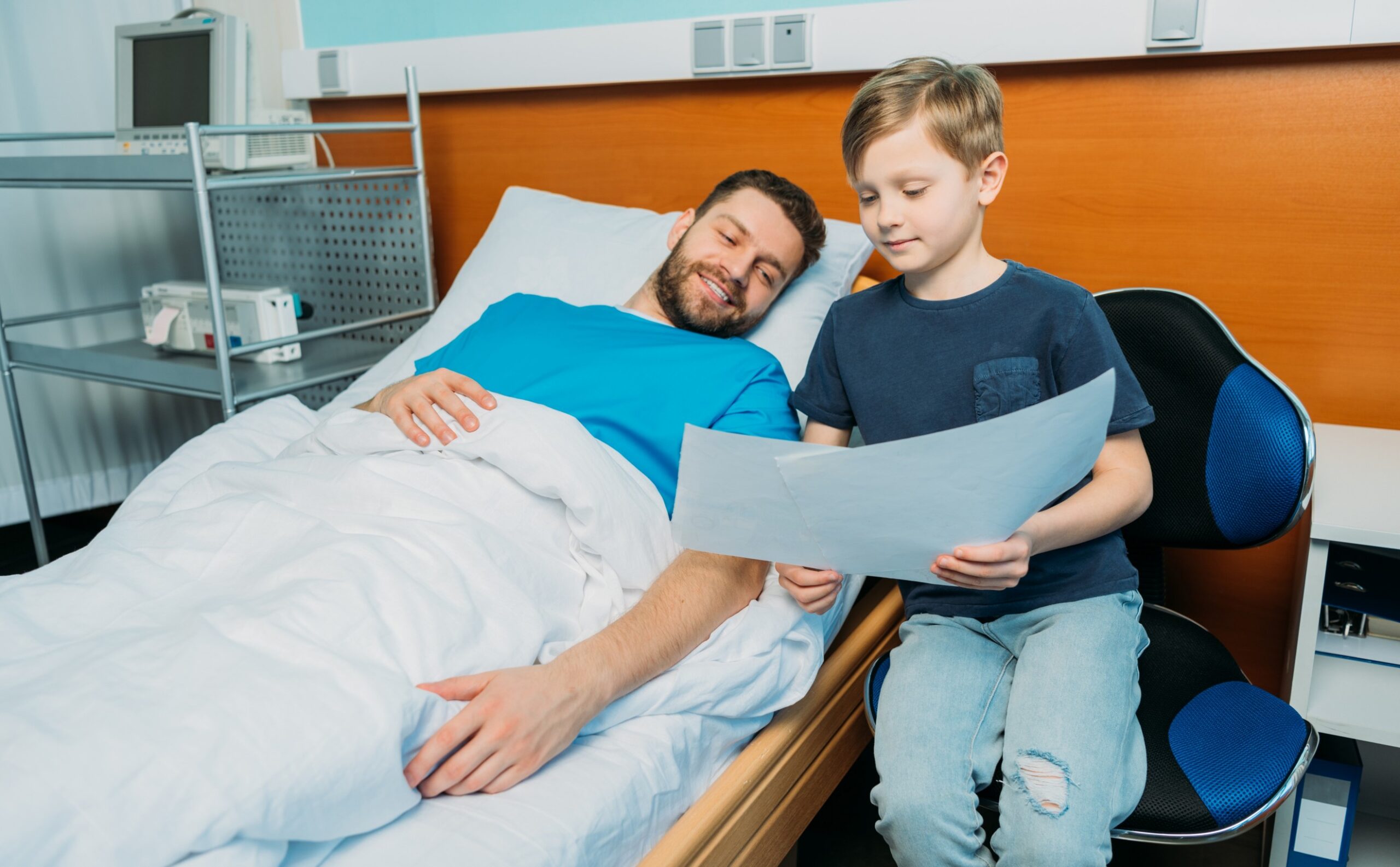
A father who lost six stone and gave up alcohol so he could become an organ donor has helped save the life of his six-year-old son in a transplant so rare that only around 10 cases are known to have been carried out worldwide.
Gary Jackson underwent a 17-hour operation at King’s College Hospital in London, donating around 20% of his liver and 1.5 metres of his small bowel to his son Harry. The combined living donor liver and bowel transplant is one of only two procedures of its kind to have been performed in the UK, according to the hospital’s transplant team.
Harry was born with malrotation, a condition in which the bowel does not develop in its normal position during pregnancy. The abnormality can lead to volvulus, where the bowel twists and cuts off its own blood supply, creating a potentially life-threatening emergency.
Managing Harry’s intestinal condition meant he required total parenteral nutrition, or TPN, which delivers nutrients directly into the bloodstream when the digestive system cannot adequately absorb them. Over time, however, Harry developed intestinal failure-associated liver disease, a progressive condition associated with long-term intravenous feeding.
His parents, Annie Cerveno and Gary, had always known that Harry might eventually require a bowel transplant, but had hoped it would not be necessary for many years. When his liver began to fail, the situation changed and he needed both organs, prompting his parents to ask whether one of them could become a living donor.
Following weeks of medical assessments, Gary was found to be a 98% human leukocyte antigen match with his son, meaning there was a very high degree of similarity between markers used by their immune systems to distinguish the body’s own cells from foreign material. This made it possible for the transplant team to consider the exceptionally unusual procedure.
Becoming a donor required considerable preparation. Gary lost six stone through changes to his diet and exercise, stopped drinking alcohol and spent months working to ensure he was healthy enough to undergo major surgery. Professor Nigel Heaton, consultant transplant surgeon at King’s and a member of the team that operated on Harry, said Gary had taken the responsibility of living donation extremely seriously and remained determined to do everything possible to help his son.
The transplant took place in January 2025. Surgeons removed approximately one fifth of Gary’s liver and around 1.5 metres, or four to five feet, of his small bowel, which were transplanted into Harry. Gary spent around six weeks recovering from the operation and has since described being able to donate to his son as the “greatest privilege” of his life.
Harry has also made significant progress following the procedure. His father said seeing him looking healthier and stronger after the transplant made the physical and mental demands of preparing for surgery worthwhile, while the family has spoken about the enormous difference the operation has made after years of uncertainty surrounding Harry’s health.
Combined living donor liver and bowel transplantation remains exceptionally uncommon. Miriam Cortes-Cerisuelo, liver transplant consultant surgeon and clinical lead for transplant surgery at King’s, said the team knows of only around 10 cases worldwide, all involving children. King’s has carried out two of those procedures, which are believed to be the only two of their kind performed in the UK.
Living donor liver transplantation itself is also relatively uncommon in Britain. Around three in every 100 liver transplants performed in the UK involve living donors, with the majority carried out for children. Unlike many organs, the liver has a remarkable ability to regenerate following the removal of part of the organ, making it possible for a healthy person to donate a portion of their liver while remaining alive.
Living donation can also offer important advantages for the recipient because the donated tissue comes from a healthy person who has undergone extensive assessment, while surgery can be carefully planned rather than depending upon the availability of a deceased donor organ. However, asking a healthy person to undergo major surgery means potential donors themselves must be carefully assessed and the risks considered before a transplant can proceed.
For Harry’s parents, the possibility of living donation offered something particularly valuable: the opportunity to act when much of their son’s illness had previously been outside their control. Rather than waiting for a suitable deceased donor while Harry’s liver continued to deteriorate, Gary was ultimately able to provide both of the organs his son desperately needed.
The transplant comes as the liver unit at King’s College Hospital marks its 60th anniversary. The specialist centre has performed more than 300 living donor liver transplants during its history and is one of only three NHS centres in the UK providing living donor liver transplantation, alongside centres in Leeds and Birmingham.
For Gary, the statistics surrounding the operation may be extraordinary, but his reason for undergoing it was considerably simpler. Faced with the possibility that part of his own liver and bowel could give his son another chance, he has said there was never really a decision to make.
Posted by:
Mehala
Editorial Assistant – The Daily Round


Busy day? We’ve got you covered. Get FREE daily news, practical insights, opportunities and wellbeing content, carefully curated for busy health and social care professionals. Just enter your details below to get The Daily Briefing delivered straight to your inbox.
Busy day? We’ve got you covered. Get FREE daily news, practical insights, opportunities and wellbeing content, carefully curated for busy health and social care professionals. Just enter your details below to get The Daily Briefing delivered straight to your inbox.