
 newsdesk@dailyround.news
UK News

<p>Stay up to date with the latest health and social care news from across the UK. From breaking stories and sector developments to the people, organisations and issues making the news.</p>
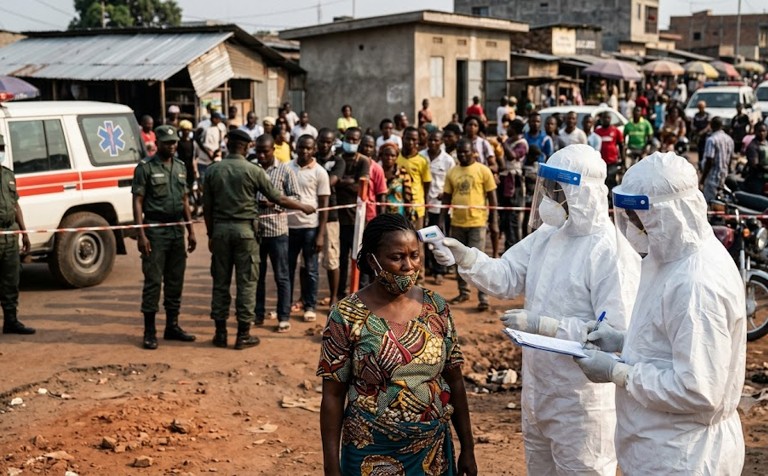
The Democratic Republic of the Congo (DRC) has introduced a ban on mass gatherings in the capital, Kinshasa, along with three additional provinces, as authorities step up efforts to prevent the spread of the country’s ongoing Ebola outbreak.
The current outbreak has been concentrated in eastern DRC, around 1,800 kilometres from Kinshasa. However, officials say restrictions are being introduced as a precaution to reduce the risk of the virus spreading into more densely populated areas, including the capital, which is home to an estimated 18 million people.
According to the government, the restrictions also apply to the neighbouring provinces of Tshopo, Haut-Uele and Bas-Uele, which border the affected regions.
Health officials reported that confirmed Ebola cases had risen to more than 1,270, with 360 recorded deaths across the affected areas. The outbreak has also spread beyond DRC’s borders, with Uganda reporting confirmed cases, while the World Health Organization declared the outbreak a Public Health Emergency of International Concern in May because of the risk of international spread.
The government’s decision has attracted political criticism, with opposition figures questioning the timing of the restrictions ahead of a planned protest in Kinshasa on 8 July. They argue that no Ebola cases have been confirmed in the capital and have suggested the measures may have wider political implications. The government has not publicly responded to those allegations.
Although the outbreak remains centred in eastern DRC, the decision highlights how rapidly infectious disease outbreaks can influence public health policy, emergency preparedness and community life. Healthcare organisations worldwide continue to monitor developments closely, particularly following the WHO’s declaration that the outbreak constitutes a Public Health Emergency of International Concern.
Posted by:
Mehala
Editorial Assistant – The Daily Round



Busy day? We’ve got you covered. Get FREE daily news, practical insights, opportunities and wellbeing content, carefully curated for busy health and social care professionals. Just enter your details below to get The Daily Briefing delivered straight to your inbox.
Busy day? We’ve got you covered. Get FREE daily news, practical insights, opportunities and wellbeing content, carefully curated for busy health and social care professionals. Just enter your details below to get The Daily Briefing delivered straight to your inbox.