

Women's Health

Practical tips, guidance, and inspiration to support your physical, mental, and emotional wellbeing every day.
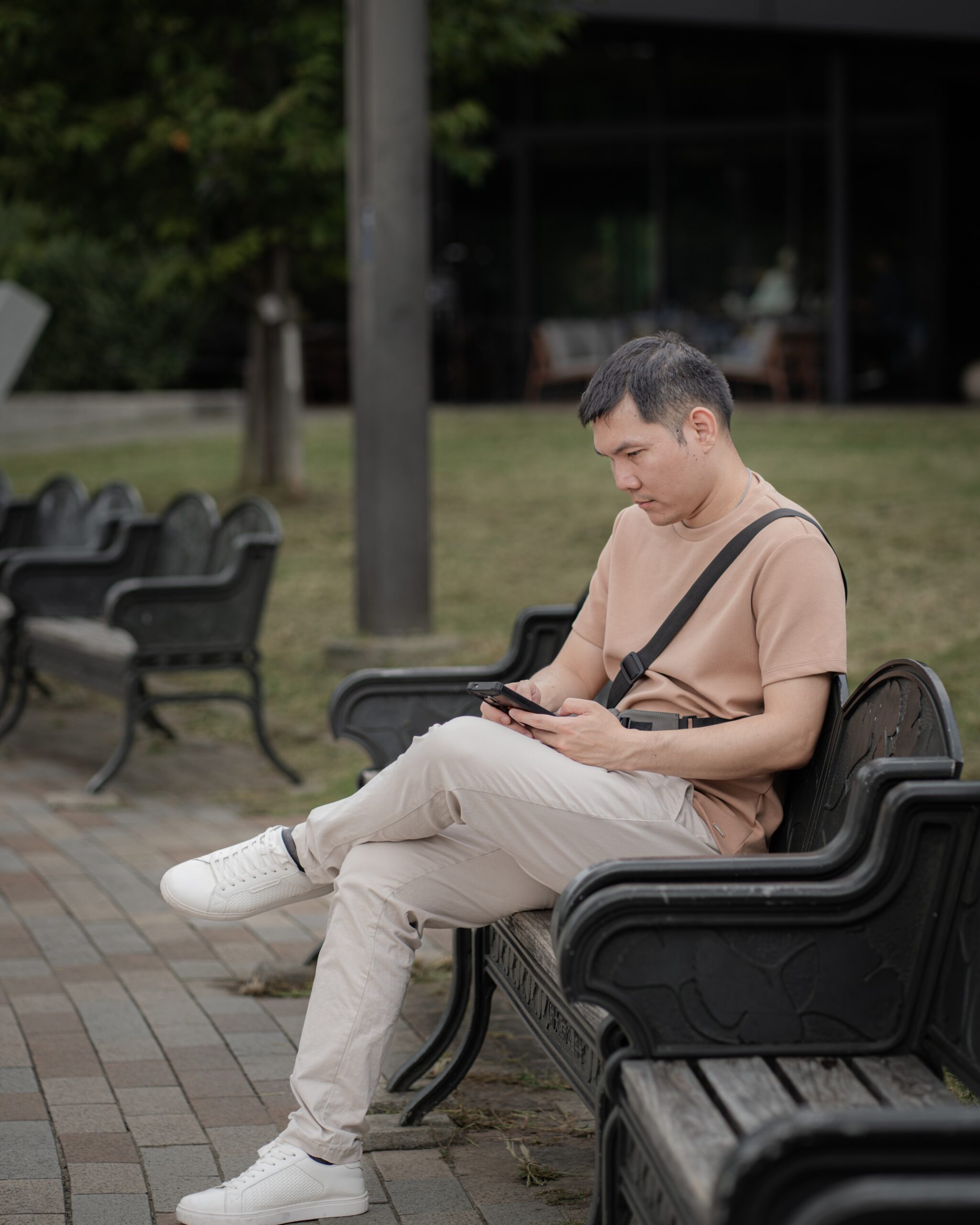



Waiting used to be an unavoidable part of everyday life. We waited for letters, photographs to be developed, television programmes to air and shops to open. If somebody was not at home when we called, we simply tried again later.
Now we can order an item and track its journey to our front door. We can watch an entire series without waiting for the next episode and send a message that reaches another person within seconds. Food, entertainment, information and conversation are available almost immediately. These changes have made life more convenient, but they may also have changed what we expect from it.
A slow website feels intolerable. A delayed reply appears personal. Five minutes in a queue can produce genuine frustration, even when we have nowhere particularly urgent to be. We have become accustomed to speed, and increasingly uncomfortable whenever life refuses to provide it.
The problem is not that people have suddenly become impatient. Technology has trained us to expect rapid results.
When most everyday tasks happen quickly, waiting begins to feel like evidence that something has gone wrong. We refresh a screen, check for updates and wonder why a person or organisation has not responded.
Services promote themselves through speed, promising instant access, same-day delivery and immediate decisions. Any delay can therefore feel like poor service rather than a normal part of a process.
This expectation can follow us into parts of life that cannot be accelerated. Relationships, recovery, grief, learning and trust still take time. When they move slowly, we may assume we are failing because we have become used to systems in which almost every delay can be removed.
Messaging has made communication faster, but it has also created uncertainty around how quickly somebody should reply. We can usually see that a message has been delivered. Sometimes we know it has been read. As the minutes pass, silence can begin to feel like rejection, anger or a deliberate lack of interest.
Often, the other person is simply working, driving, resting, caring for someone or choosing not to look at their phone.
Before constant digital communication, we rarely expected unrestricted access to another person throughout the day. Now an unanswered message can occupy our thoughts because the technology makes an immediate response possible.
Possible does not mean reasonable. People are allowed to be unavailable. A delayed reply does not automatically reveal how much they care, and nobody should have to interrupt every part of their life to prove that a relationship matters.
The most difficult waits usually involve uncertainty. We wait for medical results, job offers, legal decisions, exam grades or news from someone we love. In these situations, speed is not simply about convenience. We want information because we believe it will end the anxiety.
When no answer is available, the mind tries to create one. It imagines the worst outcome, analyses every detail and searches for clues. We check emails repeatedly, keep the phone beside us and struggle to concentrate on anything else. This does not make the result arrive sooner. It simply means we experience the waiting period as though the feared outcome has already happened.
It may help to separate what you know from what your anxiety is predicting. “I have not received the result” is a fact. “The delay must mean something terrible” is an interpretation.
Uncertainty is uncomfortable, but it is not confirmation of bad news.
Waiting in queues, reception areas or traffic once gave the mind a natural pause. Now those moments are usually filled with scrolling, messages or work. There is nothing wrong with making use of time, particularly during a long or inconvenient delay. However, automatically filling every short pause can make waiting itself feel increasingly impossible.
We stop practising it. A two-minute delay becomes uncomfortable because we are no longer familiar with simply standing still. The mind expects stimulation immediately and interprets its absence as a problem requiring a solution.
Occasionally leaving the phone in your pocket while you wait can rebuild some tolerance for these ordinary gaps. You might notice the room, observe the people around you or allow your thoughts to wander without trying to achieve anything.
Waiting does not have to become productive before it is acceptable.
Parents understand how difficult waiting can be for children. A promised event may produce repeated questions, while a slow queue can feel unbearable to someone whose understanding of time is still developing.
Technology offers an easy solution. A screen can remove boredom immediately and make almost any delay quieter. There are moments when this is helpful or necessary. Families do not need to turn every visit to a waiting room into a lesson in character. However, if children never experience manageable periods of waiting, they have fewer opportunities to develop patience. Waiting helps them learn that discomfort can pass, that other people also have needs and that wanting something does not make it immediately available.
The delay should be appropriate for their age, and adults can help them understand what is happening. The aim is not to make children wait unnecessarily. It is to avoid treating every moment of impatience as an emergency.
Some of the most valuable parts of life cannot be delivered instantly. Friendship deepens through repeated contact. Confidence develops by surviving experiences that once felt difficult. A new skill requires practice, and physical or emotional recovery rarely follows the schedule we would choose.
We may become frustrated when progress is not immediately visible. After making a positive change, we want to feel different straight away. When that does not happen, we abandon the effort or decide it is not working. Growth is often taking place before there is obvious evidence of it.
There is a difficult period between beginning and improving, applying and hearing back, planting and seeing something emerge. Learning to remain present during that period is part of reaching what comes next.
Not all waiting should be quietly accepted. People can face unacceptable delays for healthcare, social care, housing, benefits and other essential services. A person who is suffering should not be told to become more patient when the real problem is that the support they need is unavailable.
It is reasonable to follow up, request information, make a complaint or advocate for yourself and someone you support. Patience does not require passivity.
The useful question is whether action is currently possible. If there is something practical you can do, do it. If you have provided the information, made the call and asked the necessary questions, repeatedly checking may only increase your distress.
Waiting becomes easier when you know you have completed the part that belongs to you.
When waiting for important news, decide when and how you will check for updates. You might look at your email at set times or keep your phone audible without holding it constantly.
Make plans that do not depend on the outcome. Continue eating, sleeping, working and seeing people where possible. This is not pretending the decision does not matter. It is refusing to place your entire life on hold while somebody else reaches it.
If your thoughts repeatedly return to the situation, acknowledge them rather than trying to force them away. You can remind yourself: “I am waiting, I do not have the answer yet, and there is nothing more I need to do at this moment.”
Sometimes that is the only certainty available.
Waiting is not always negative. Looking forward to a holiday, celebration, new book or meeting with someone we love can extend the pleasure of an experience. Anticipation allows us to imagine, plan and become excited. If everything were available immediately, we would lose part of that enjoyment.
The days before an event can become part of the memory. Children counting down to a birthday and adults planning a trip are not simply enduring a delay. They are experiencing hope directed towards a particular moment. Not every desire needs immediate satisfaction. Sometimes the wait gives the eventual experience more meaning.
Technology may become faster, but human beings will continue to live inside processes that take time. Bodies heal gradually. People change slowly. Answers arrive when they are ready, and some periods of uncertainty cannot be shortened through effort.
We do not have to enjoy every wait. Delays can be frustrating, frightening and deeply unfair. But the inability to tolerate any pause leaves us in a permanent battle with reality.
Patience is not doing nothing. It is the ability to remain steady when nothing more can be done.
Perhaps we have not completely forgotten how to wait. We have simply had fewer reasons to practise. And in a world designed to remove every delay, learning to wait may be one of the quietest ways to reclaim control over our attention.
Wellbeing looks different for everyone, and sometimes the most useful thing is simply finding the right information at the right time. Explore more from Daily Round with our dedicated Women’s Health, Men’s Wellbeing and Wellbeing for Leaders sections, or head to the Leaders Library for our latest book recommendations, ideas and inspiration for life in and outside work.
Posted by:
Mehala
Editorial Assistant – The Daily Round
Busy day? We’ve got you covered. Get FREE daily news, practical insights, opportunities and wellbeing content, carefully curated for busy health and social care professionals. Just enter your details below to get The Daily Briefing delivered straight to your inbox.
 newsdesk@dailyround.news