

Women's Health

Practical tips, guidance, and inspiration to support your physical, mental, and emotional wellbeing every day.
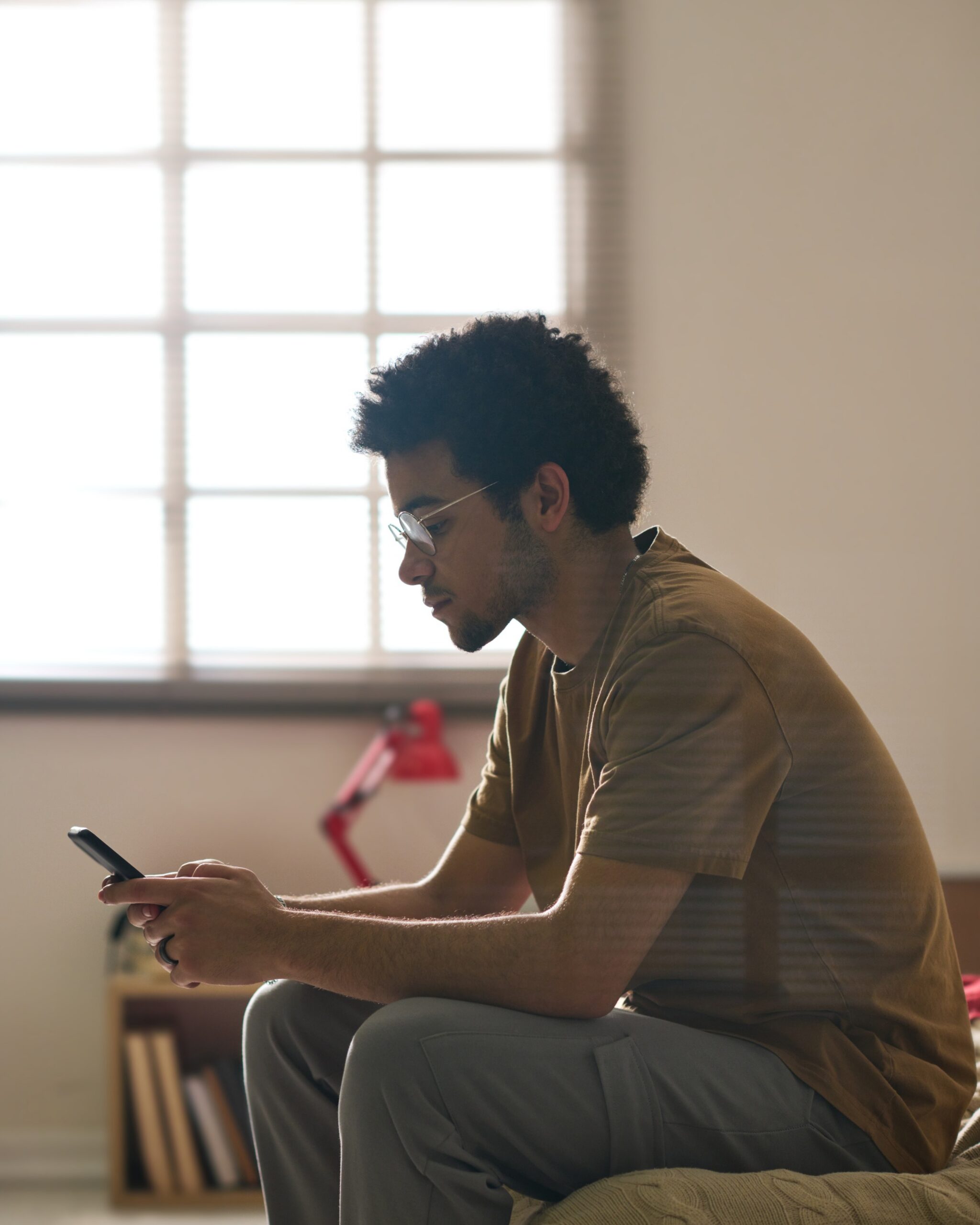



You pick up your phone to check one notification. A few minutes later, you are reading about a war, a natural disaster, political unrest, rising prices and a frightening new health warning.
You keep scrolling because stopping feels irresponsible. There might be another important development. Perhaps reading more will help you understand what is happening or make you feel better prepared. Instead, half an hour passes and you feel anxious, angry and powerless. You have consumed an enormous amount of information, but very little of it has helped you decide what to do next.
This is doomscrolling: repeatedly consuming distressing news or online content, even when doing so is making you feel worse. It can create the impression that you are becoming better informed, when you may simply be exposing yourself to the same fear in slightly different forms.
Human beings naturally pay attention to threats. Noticing possible danger has always been important for survival, which is why frightening information can be so difficult to ignore. Online platforms understand this. Content that produces fear, anger or shock is more likely to hold our attention and encourage a reaction. When you pause on one worrying story, the platform may offer another, followed by increasingly dramatic versions of the same subject.
Your feed is not a balanced representation of the world. It is a stream of material selected partly because it has successfully kept you looking. After enough scrolling, it can appear as though terrible things are happening everywhere, all the time. The stories may be real, but the concentration of them creates an experience no previous generation encountered: carrying a continuous collection of global emergencies in your pocket.
The first reliable report about an event may tell you something important. The twentieth social media post about it may add nothing except further distress. Doomscrolling often involves reading repeated information, unconfirmed claims, personal reactions and speculation about what might happen next. The quantity increases while the quality declines.
Being informed means understanding the essential facts, recognising what remains unknown and knowing whether the situation requires any action from you. It does not mean witnessing every upsetting image, following every argument or reading predictions from people with no relevant expertise.
There is a point at which you stop learning and begin absorbing anxiety.
When a major event is developing, the absence of a clear conclusion can feel unbearable. You may refresh the news because you want certainty: Has the danger passed? What happens next? Is my family safe? Should I be preparing for something? Often, there is no new answer available.
News organisations and social media accounts continue publishing because an audience is waiting, even when confirmed information has barely changed. Commentary fills the gap between genuine developments, while speculation is presented with increasing confidence. Refreshing repeatedly cannot force an uncertain situation to become certain. It only keeps your body in a state of alert while you wait.
If an event directly affects you, choose a reliable official source and decide how often you genuinely need to check it. In many situations, checking at set times will give you the same essential information without consuming your entire day.
The effects do not necessarily end when you put your phone down. You may struggle to concentrate at work, become impatient with the people around you or lie awake replaying distressing images. Ordinary problems can feel harder to manage because your mind has spent hours responding to emergencies over which you have no control.
Repeated exposure may also create a sense of helplessness. When every story concerns a crisis too large for one person to solve, the world can begin to feel permanently unsafe and hopeless. Some people respond by becoming increasingly vigilant, while others become emotionally numb. Neither response means they do not care. It may mean their capacity to process distress has become overwhelmed.
People sometimes feel guilty for stepping away from bad news, particularly when others are experiencing real suffering. Looking away can feel selfish or disrespectful. Your continuous attention does not protect the people involved.
You do not need to watch every video of suffering to prove that you care. You can acknowledge what is happening, support reliable organisations, take relevant action and remain compassionate without repeatedly exposing yourself to traumatic material.
There is also no moral requirement to absorb every crisis occurring around the world. Human beings have limited emotional capacity. Choosing where to place your attention does not mean deciding that everybody else is unimportant.
Caring requires enough emotional energy to respond. Doomscrolling can consume that energy without directing it anywhere useful.
The aim does not have to be avoiding news completely. For many people, that would feel unrealistic and could leave them less prepared to participate in their communities. Instead, decide how you want to stay informed.
Choose a small number of reliable news sources rather than relying on whatever appears in your social feed. Check them once or twice at planned times, giving yourself enough time to understand the main developments without entering an endless stream. Turn off breaking-news alerts that do not relate to your immediate safety. Most “urgent” stories will still be available later, when more accurate information may also have emerged.
Avoid beginning and ending the day with upsetting coverage. Checking your phone before getting out of bed allows events from around the world to enter your mind before your own day has begun. Scrolling at night can leave your body alert when it needs to prepare for sleep.
Before opening another article, ask yourself what you are hoping to learn. Is there a specific question you need answered? Has anything meaningfully changed? Will this information affect a decision you need to make?
If you cannot identify a purpose, you may be scrolling in search of relief rather than knowledge. Unfortunately, the next post rarely provides it. Pay attention to physical signs too. A tight chest, tense shoulders, shallow breathing or the urge to keep refreshing may indicate that your body has moved into a stress response.
That is a reasonable point to stop. You do not have to reach the bottom of a feed that was deliberately designed never to end.
Simply putting the phone down can leave an uncomfortable gap, particularly if scrolling has become automatic. Decide in advance what you will do instead.
You could make a drink, step outside, call someone, begin a practical task or read something with a clear ending. If a particular story has affected you deeply, identify whether there is an appropriate action you can take, such as donating, volunteering, contacting a representative or checking on someone who may be affected. Action is not always possible or necessary. Sometimes returning to your immediate life is enough.
Cook dinner. Help your child with their homework. Walk the dog. Speak to the person sitting beside you. These actions may appear small against the scale of global events, but they reconnect you with the part of the world where your presence can make an immediate difference.
Being informed should help you understand reality, not convince you that disaster is the only thing reality contains. Alongside every crisis, people are working, caring, solving problems, helping strangers and living ordinary lives. These stories may attract less attention, but they are happening too.
You can care deeply about the world without monitoring it every minute. You can step away from the news without becoming ignorant. You can decide that you know enough for today. Doomscrolling does not make you better informed once the useful information has run out. It simply asks your mind and body to remain present at every emergency—and no person was built to carry the entire world at once.
Wellbeing looks different for everyone, and sometimes the most useful thing is simply finding the right information at the right time. Explore more from Daily Round with our dedicated Women’s Health, Men’s Wellbeing and Wellbeing for Leaders sections, or head to the Leaders Library for our latest book recommendations, ideas and inspiration for life in and outside work.
Posted by:
Mehala
Editorial Assistant – The Daily Round
Busy day? We’ve got you covered. Get FREE daily news, practical insights, opportunities and wellbeing content, carefully curated for busy health and social care professionals. Just enter your details below to get The Daily Briefing delivered straight to your inbox.
 newsdesk@dailyround.news