newsdesk@dailyround.news

Global Care Stories

Discover the latest international news and developments affecting health and social care worldwide. From rising measles cases in the US to major global events, including the death of the world’s youngest reigning monarch at 34, explore the stories shaping communities and making headlines around the world.
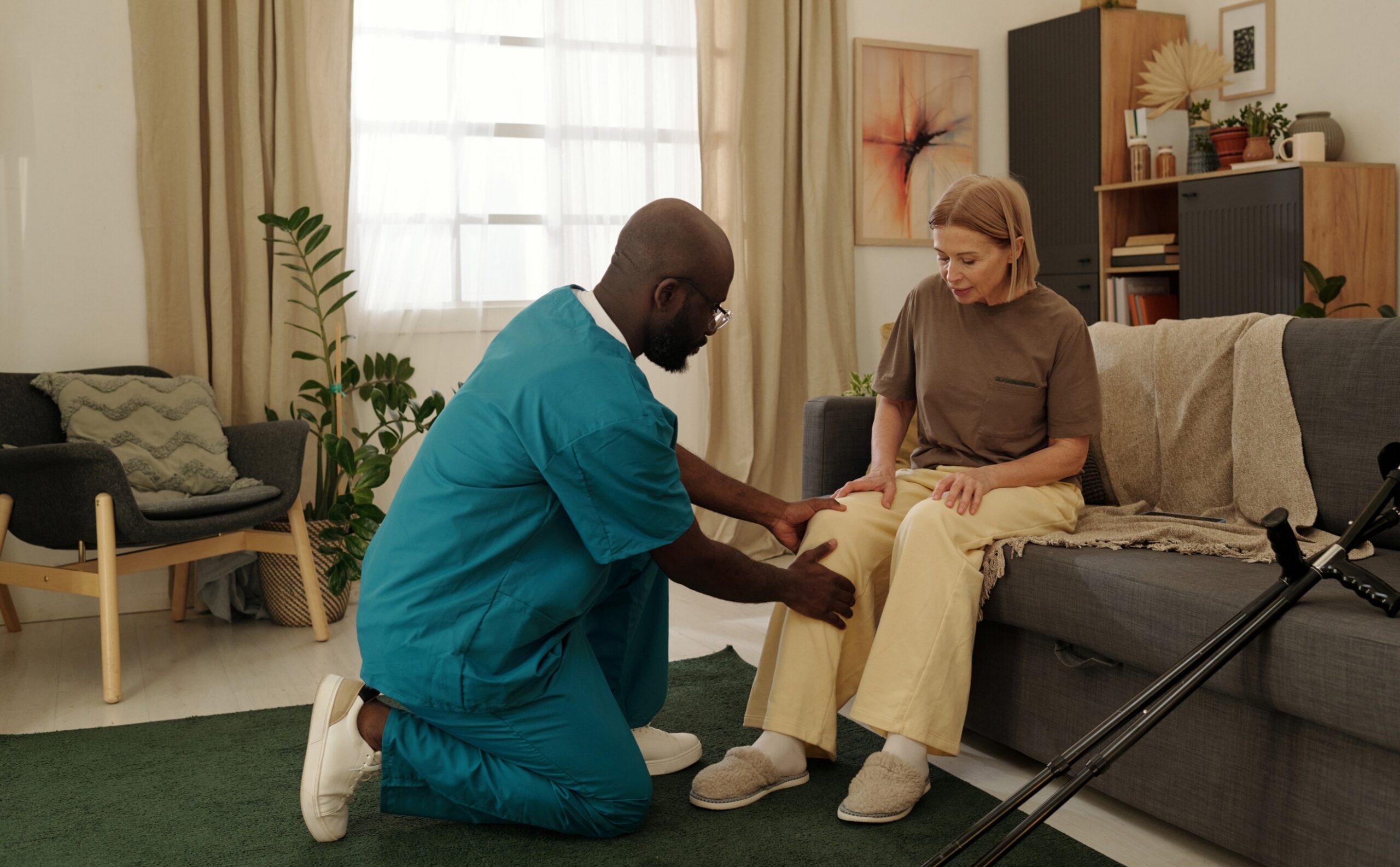
Polio has largely disappeared from hospitals and doctors’ surgeries across much of the world, representing one of the greatest achievements of modern vaccination. But decades after surviving the disease, millions of people could now be confronting another health problem that many younger doctors have never encountered.
An estimated 12 million to 20 million polio survivors are living around the world, and research suggests that as many as 40% could experience post-polio syndrome, a condition in which new muscle weakness, extreme fatigue, pain and other problems emerge years or even decades after the original infection.
The challenge is becoming increasingly urgent as the generation affected by the major polio epidemics of the twentieth century grows older.
Post-polio syndrome does not mean the original infection has returned. Instead, people who may have been stable for decades begin experiencing new or worsening neurological and muscular symptoms, often between 15 and 40 years after their initial illness.
For some, that can mean increasing muscle weakness or severe fatigue. Others experience joint and muscle pain, reduced stamina, difficulties with mobility and problems concentrating. In more serious cases, weakened muscles involved in swallowing and breathing can cause significant complications.
The condition can be particularly difficult to identify because its symptoms overlap with many of the problems associated with ageing and other illnesses.
Someone in their 60s, 70s or 80s who begins experiencing fatigue, weakness, joint pain or deteriorating mobility may therefore undergo investigations for numerous other conditions before the possibility that an infection from childhood is contributing to their symptoms is considered.
Some patients may not even know they had polio. Only a small proportion of people infected with poliovirus developed the paralysis most commonly associated with the disease. Many infections produced no symptoms at all, while others caused relatively mild illness involving fever, fatigue, headache, vomiting, stiffness or muscle pain.
That means some people experiencing symptoms consistent with post-polio syndrome decades later may have no clear history of paralytic polio to alert their doctor. For healthcare systems, there is another problem: success against polio has created a generation of clinicians with little or no direct experience of the disease.
The first successful polio vaccine became available in 1955, followed by mass vaccination campaigns that dramatically reduced infections across much of the world. Global eradication efforts have subsequently reduced wild poliovirus cases by more than 99%. Wild poliovirus type 1 is now endemic in only Afghanistan and Pakistan, while wild poliovirus types 2 and 3 have been declared eradicated. For most doctors practising in countries where polio disappeared decades ago, encountering a new case of paralytic polio during their career would be extremely unusual.
Yet the patients who survived earlier epidemics have not disappeared with the virus. Many are now entering later life with bodies that have already spent decades compensating for neurological damage caused during childhood. Poliovirus can damage motor neurons, the nerve cells responsible for controlling muscles. During recovery, surviving neurons can develop additional branches to reconnect with muscle fibres that have lost their original nerve supply, allowing people to regain considerable function.
That adaptation can work remarkably well for many years. One leading explanation for post-polio syndrome is that the enlarged motor units created during recovery eventually struggle to maintain that additional workload. As people age, the normal gradual loss of nerve and muscle function may place further strain on a system that has already spent decades compensating for earlier damage.
The result can be the appearance of new weakness in muscles that had previously seemed stable. Ageing can create additional problems for survivors even when they do not meet the diagnostic criteria for post-polio syndrome.
Decades of altered movement and muscle weakness can contribute to arthritis, osteoporosis, joint problems, falls and fractures, while some survivors experience respiratory complications, sleep disorders and chronic pain.
A recent review examining ageing among polio survivors warned that the combination of longstanding disability and normal age-related decline can accelerate loss of function and argued that healthcare needs to move away from fragmented treatment of individual symptoms towards coordinated, long-term care.
Researchers have also highlighted substantial gaps in knowledge about exactly how many survivors remain worldwide. Estimates vary partly because countries define and record polio survivors differently, while historical health records may be incomplete or unavailable. Many people who experienced mild or undiagnosed infections are unlikely to appear in official figures at all.
The true number of people potentially affected by the late consequences of polio could therefore be difficult to establish. Different countries are beginning to confront the problem.
New clinical guidelines published in France this summer set out recommendations for diagnosing and managing post-polio syndrome and the effects of ageing among people who survived acute poliomyelitis.
The guidance emphasises the importance of distinguishing post-polio syndrome from other neurological and musculoskeletal conditions that become more common with age.
There is currently no medicine that reverses post-polio syndrome or repairs the original damage caused by poliovirus. Management instead focuses on preserving function and independence while treating individual symptoms and avoiding unnecessary strain on already weakened muscles.
French experts recommend multidisciplinary care and regular review, with rehabilitation playing an important role alongside management of pain, mobility difficulties and other medical conditions.
They also warn that simply telling patients to exercise more can be inappropriate. While carefully planned physical activity can be beneficial, excessive exercise or overuse of weakened muscles can worsen fatigue and functional problems in some polio survivors.
In the UK, where an estimated 50,000 polio survivors are thought to remain, campaigners have raised concerns that knowledge of the condition has declined as clinicians familiar with the original epidemics have retired.
The British Polio Fellowship introduced a new care plan for survivors this year after reviewing existing NHS arrangements and finding there was no single standardised plan being used to record patients’ polio history and ongoing needs.
The organisation hopes the document will help survivors communicate information about their condition to healthcare professionals without repeatedly having to explain a complex medical history that may stretch back more than half a century.
Similar challenges exist internationally. Countries across Europe, North America and Asia have ageing populations of people who contracted polio before widespread vaccination, while migration means survivors may now live in countries where the disease had already disappeared by the time they arrived.
That creates an unusual global healthcare problem. The world is simultaneously trying to eradicate the final remaining transmission of wild poliovirus while learning how to care for millions of people affected by infections that occurred generations ago.
Those two challenges are connected but very different. Continued vaccination remains essential because polio has not yet been eradicated globally, and declining vaccination coverage creates the possibility that the virus could again reach communities where immunity is insufficient.
Post-polio syndrome, however, is not evidence that polio itself is returning. People experiencing the condition are not infectious, and the syndrome cannot be passed to somebody else.
Instead, it represents the extraordinarily long shadow an infectious disease can cast. Someone infected as a child in the 1940s, 1950s or 1960s may have recovered, built a career, raised a family and lived independently for decades before beginning to experience new consequences of that childhood infection in later life.
The success of vaccination means younger generations of doctors have thankfully never had to become experts in treating acute polio. The unintended consequence is that the expertise required to recognise and manage its late effects can disappear at precisely the point when ageing survivors increasingly need it.
For global health systems, eradicating a disease therefore does not necessarily mean the work is finished when transmission stops. Millions of polio survivors remain part of the story.
Their experience is also a reminder that the consequences of infectious diseases can extend far beyond the immediate outbreak. Healthcare systems may be dealing with their effects decades later, when public attention has moved on and much of the specialist knowledge built during the original crisis has disappeared.
Polio may increasingly belong to history for much of the world’s population. For the people still living with what it left behind, however, it remains very much a present-day healthcare issue.
Posted by:
Mehala
Editorial Assistant – The Daily Round


Busy day? We’ve got you covered. Get FREE daily news, practical insights, opportunities and wellbeing content, carefully curated for busy health and social care professionals. Just enter your details below to get The Daily Briefing delivered straight to your inbox.
Busy day? We’ve got you covered. Get FREE daily news, practical insights, opportunities and wellbeing content, carefully curated for busy health and social care professionals. Just enter your details below to get The Daily Briefing delivered straight to your inbox.